Future-proofing utilities: Strategies for navigating technological disruption in India
The adoption of smart technologies is reshaping the utilities industry, with a particular focus on smart grids. Smart grids leverage advanced sensors, Internet of Things (IoT) devices, and real-time data analytics to transform how electricity is generated, distributed, and consumed.

Reactive power management key to advancing grid stability
In its latest monthly column for pv magazine, IEA-PVPS provides a comprehensive overview of the state-of-the-art practices, best practices, and recommendations for managing reactive power amidst the growing integration of distributed energy resources (DERs). The article describes the regulatory frameworks and practical applications, underscoring the essential role of reactive power management in maintaining a stable and efficient power grid.

BluPine Energy secures $28.6 million for solar project in Chhattisgarh
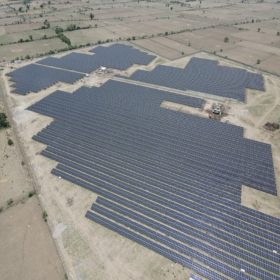
BluPine Energy has secured $28.6 million from a Tata Capital led banking consortium to finance its 75 MWp solar project in the Indian state of Chhattisgarh.

How renewable energy is leading the fight for nature conservation
Even though fossil fuels still dominate global energy production at present, the movement for a changeover to cleaner forms of energy is building up. Renewables presently provide some 29 percent of all electricity generated; a figure bound to enormously rise in the next few years.
World Nature Conservation Day
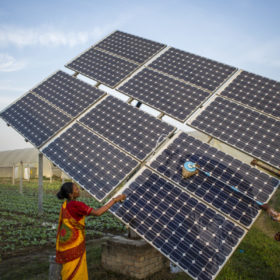
The integration of renewable energy in agriculture plays a significant role in combating climate change. It aligns with global efforts to transition towards sustainable practices and reduce environmental impact.

Tata Power Solar partners Bank of India for low-cost finance to rooftop solar and EV charging station customers
Tata Power Solar Systems has partnered with Bank of India to provide affordable and easy financing solutions for its customers looking to invest in rooftop solar or electric vehicle (EV) charging infrastructure.

China’s solar dominance not an issue
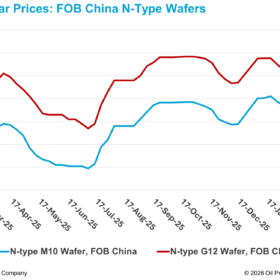
In a new monthly column for pv magazine, the International Solar Energy Society (ISES) explains why potential trade disruptions in the global PV supply chain are substantially different from those related to coal, oil and gas.
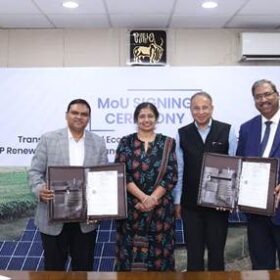
Tata Power’s microgrid arm partners with National Dairy Development Board to solarize milk value chain
TP Renewable Microgrid Ltd and National Dairy Development Board will collaborate to enhance sustainability and operational efficiency within the milk value chain. This includes the solarization of dairy cooperative societies, bulk milk coolers, and milk chilling centers, facilitated by solar microgrid technology.
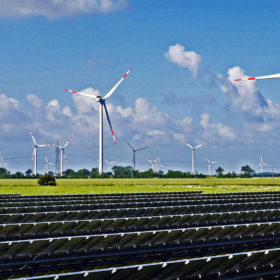
Budget 2024-25: Key highlights and analysis
Employment creation and skill development have been at the core of this budget. While there is a lot of emphasis on skill development, there needs to be an emphasis on how money is allocated for skilling and reselling of people for the clean energy sector.

NSEFI welcomes announcement of pump storage policy in Union Budget 2024-25
National Solar Energy Federation of India (NSEFI) expects budget to accelerate renewable energy uptake across MSMEs and hard-to-abate industrial sectors.