IEA revises India’s 2025-30 renewables growth forecast upward by 10%
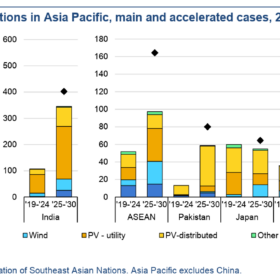
The International Energy Agency (IEA) expects India to add nearly 345 GW of renewable energy capacity between 2025 and 2030 — a 10% increase over last year’s forecast. The upward revision is driven by record auction volumes in 2024, a new rooftop solar scheme, and faster permitting for pumped storage hydropower projects.
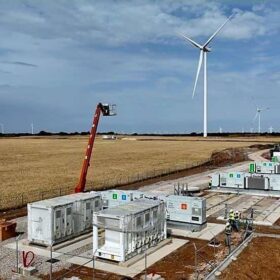
Spain’s solar capacity to hit 152.8 GW by 2035, says GlobalData
GlobalData projects Spain’s renewables to reach 218.1 GW by 2035, while solar will drive growth with 152.8 GW of capacity.
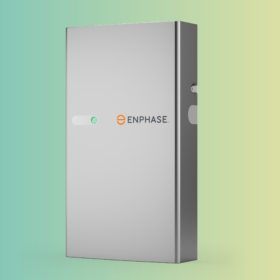
Enphase launches AC-coupled battery for residential and small commercial solar
Enphase Energy’s IQ Battery 5P with FlexPhase supports both single-phase and three-phase applications, addressing the needs of India’s growing residential and small commercial solar markets
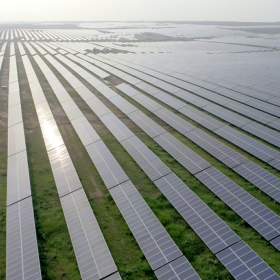
New study reveals 3,343 GWp deployable ground-mounted solar potential in India
India has an estimated 3,343 GWp of deployable ground-mounted solar PV potential (DC capacity), significantly higher than the 2014 total estimate of approximately 748.98 GWp, according to a new comprehensive study by the National Institute of Solar Energy (NISE). This updated figure is based on an analysis of 27,571 km² of technically feasible land — about 6.69% of the country’s total identified wasteland area (412,458.37 km²).
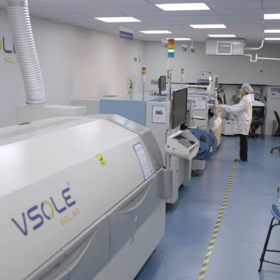
Vsole Solar opens inverter factory
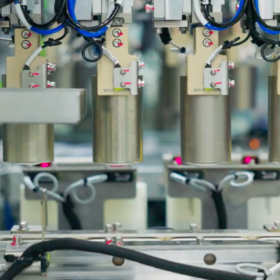
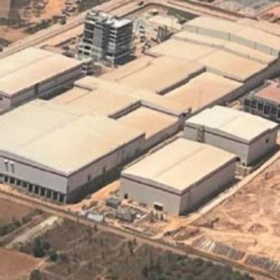
Vsole Solar Energy has inaugurated its fully integrated in-house solar inverter manufacturing facility with a capacity to produce more than 20,000 inverters every month.
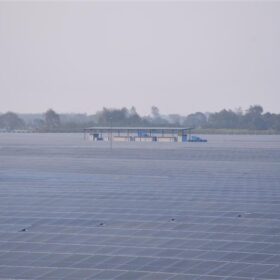
India installed 17.5 GW solar in first five months of this fiscal: ICRA report
India installed 17.5 GW of solar and 2.6 GW of wind power capacity in the first five months of FY2026 (April–August 2025), according to a new report by ICRA.

Premier Energies secures solar electrification orders in West Africa
Premier Energies Ltd has secured contracts worth $19.95 million for the supply and installation of solar power systems in the Republic of Benin, West Africa.
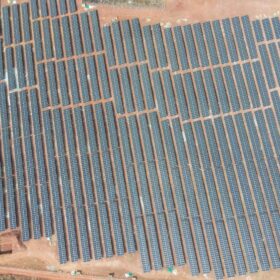
Oyster Renewable secures INR 1,844 crore loan for 342 MW solar-wind hybrid project
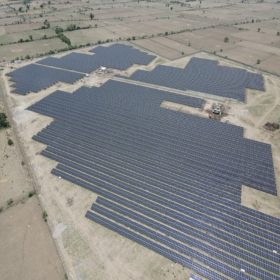
Oyster Renewable Energy has achieved financial closure for its 342 MW solar-wind hybrid power project in Madhya Pradesh by securing a project loan of INR 1,844 crore from Union Bank of India.
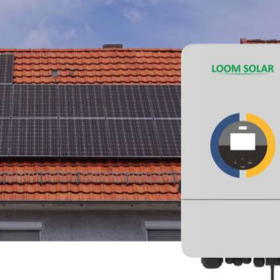
Loom Solar launches 10 kW three-phase hybrid inverter for C&I solar
Loom Solar has introduced the Fusion 103H three-phase 10kW/48V hybrid inverter combining the functions of a traditional solar inverter and a battery inverter in a single device. The inverter is designed for both on-grid and off-grid use and is suitable for larger homes, commercial buildings, and industries.
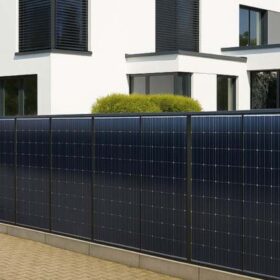
Clickcon launches solar PV fence for residential, commercial sites
The German mounting system specialist has developed a new vertical ground-mounted system compatible with commercially available framed PV modules.