Sunsure Energy secures 19.36 MW round-the-clock wind–solar PPA with Deepak Fertilisers
Sunsure Energy has signed a long-term agreement for supplying hybrid renewable power combining solar and wind to Deepak Fertilisers And Petrochemicals Corp. Ltd’s facility located in Raigad, Maharashtra.
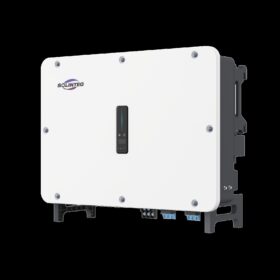
Solinteg unveils hybrid inverter series for C&I applications
The Chinese manufacturer said the product line includes five models with outputs ranging from 25 kW to 50 kW, supporting charge and discharge currents of up to 150 A.
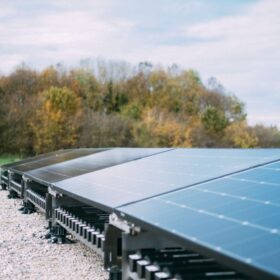
World’s first solar park featuring hydrogen-producing PV modules takes shape in Belgium
A 2 MW solar park in Wallonia, Belgium, will rely 50 kW of hydrogen-producing solar modules developed by Solhyd, a spin-off from KU Lueven. The installation will be the first demonstration of Solhyd’s technology at a commercially-relevant scale.
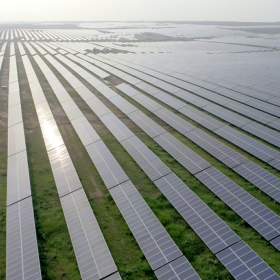
Why India’s solar surge needs a better construction discipline
With over 50 GW of renewable capacity stranded nationwide as of June 2025, the message is clear: identifying and overcoming the challenges in India’s construction sector is no longer optional but essential to sustain the country’s solar growth.
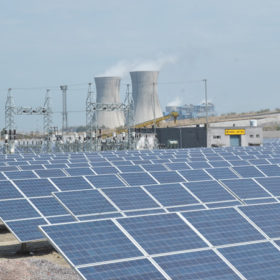
Unlocking renewable energy in Chhattisgarh
Chhattisgarh’s energy sector received over INR 16,672 crore in government support in fiscal year 2024, with fossil fuel subsidies outweighing clean energy support four times. Clear net-zero targets can help government revenues shift from fossil to clean energy, says an analysis by the International Institute for Sustainable Development and Swaniti Initiative.
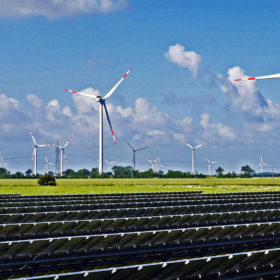
RSWM partners with Adani Energy Solutions for 60 MW renewable energy supply to its plants
Textile manufacturer RSWM has signed an agreement with Adani Energy Solutions Ltd. (AESL) for supply of 60 MW of renewable energy to its manufacturing facilities across Rajasthan. The power will be supplied from a group captive project.

Solis launches 125 kW hybrid inverter for C&I solar applications
Launched under the S6-EH3P series, its 125 kW smart string hybrid inverter for C&I solar systems integrates battery smart charging/discharging (PCS), PV inversion, on-grid/off-grid and genset switching (STS), and a smart energy management system into a single compact unit.
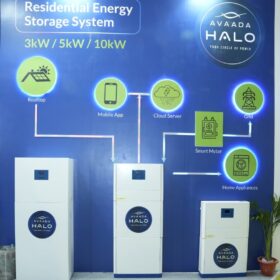
Avaada launches ‘Halo’ hybrid battery inverter at REI 2025
Avaada ‘Halo’ hybrid battery inverter—designed, developed, and manufactured entirely in India—is both scalable and stackable. It is available in 3 kW, 5 kW, and 10 kW configurations, making it suitable for residential, commercial, and small industrial (C&I) applications.
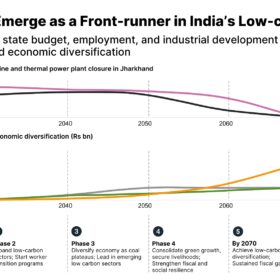
Jharkhand can emerge as a front-runner in India’s low-carbon transition
Jharkhand’s vast renewable energy potential, combined with its industrial base and critical mineral reserves, positions the state to emerge as a hub for low-carbon manufacturing, ranging from EVs, solar panels and battery energy storage systems (BESS) to green hydrogen production.
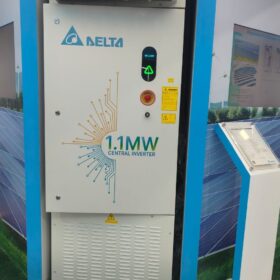
Delta Electronics showcases 1.1 MW modular central inverter for large-scale PV plants
Delta Electronics has showcased its 1.1 MW modular central inverter designed, developed and produced in India. The inverter combines efficiency of up to 99.1%, modular design, and advanced communication and protection features.