The long read: First Solar goes to India
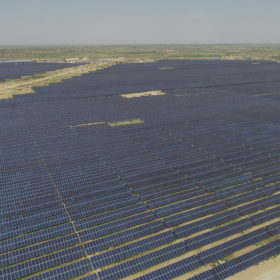
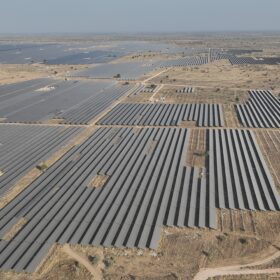
First Solar has announced plans to establish a new 3.3 GW manufacturing facility in India. Representing an investment of $684 million, the move demonstrates the thin-film PV manufacturer’s confidence in India’s solar growth and the increasingly favorable policy environment for domestic solar PV production.
NTPC arm signs green term loan pact for 670 MW solar
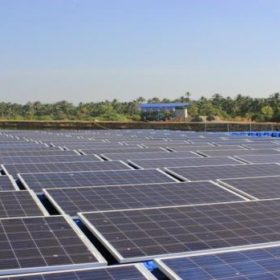
The renewable energy arm of NTPC signed the pact with the Bank of India to finance its 470 MW solar project in Rajasthan and 200 MW in Gujarat.

Sterling and Wilson Solar lands its first waste-to-energy project
The Indian multinational solar EPC player has won a project worth INR 1,500 crore for its recently created business segment of waste-to-energy. The project also marks its first order in the European market.

Adani Green to buy Essel’s 40 MW solar assets in Odisha
The operating solar assets benefit from a long-term power purchase agreement (PPA) with the Solar Energy Corporation of India (SECI) at an INR 4.235/kWh tariff. The remaining PPA life is 22 years.
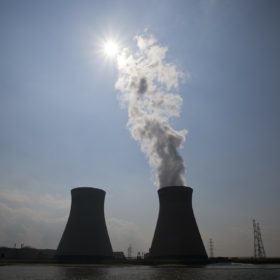
Renewables vs. Nuclear: 256-0
The latest World Nuclear Industry Status Report shows that the world’s operational nuclear capacity grew by just 400 MW in 2020, with generation falling by 4%. By contrast, renewables grew by 256 GW and clean energy production rose by 13%. “Nuclear power is irrelevant in today’s electricity capacity market,” the report’s main author, Mycle Schneider, told pv magazine.
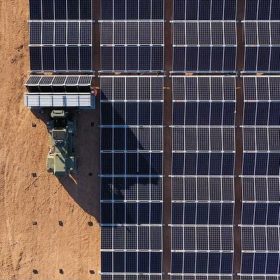
Developer calls world’s largest solar+storage project ‘the first of many’ to come
The Australian-Singaporean group behind a proposed 20 GW solar PV farm and 42 GWh battery energy storage project under development in Australia’s remote far north has hinted that other, similar-sized projects are already in the pipeline.
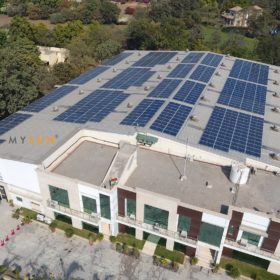
Scaling finance could drive MSME rooftop solar
Rooftop solar growth in India has so far largely been driven by a few large creditworthy organizations in the commercial and industrial sector. However, if accessible financing options are made available, growth can also be replicated in micro, small and medium-sized enterprises (MSMEs) as well, says a new report.

KKR-backed Virescent Infrastructure raises US$62 million
Mumbai-headquartered Virescent Infrastructure, set up by US investor KKR to own and operate renewable energy assets in India, has raised INR 4.6 billion (US$62 million) through its renewable energy-focused infrastructure investment trust (InvIT). Canada’s Alberta Investment Management Corporation (AIMCo) led the funding.

IIT Bhilai researchers develop large-area perovskite solar cell with copper metal contact
An Indian research group has built a perovskite cell that has a metal contact based on copper, instead of expensive gold. The device showed almost the same efficiency as a cell developed with gold metallization but its stability was much lower. In order to overcome this issue, the scientists suggest using a metal contact made of a thin layer of gold and a thicker, overlying copper layer.

628 MW of open-access solar installed in 1H 2021
India’s open-access solar installations in the first half of 2021 were 1,230% up from 47 MW installed in 1H 2020. Uttar Pradesh led the installations, followed by Maharashtra and Tamil Nadu.