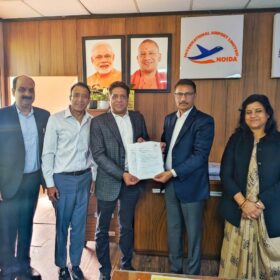
AM Group commences development of 1 GW AI compute facility backed by round-the-clock renewables
AM Group has commenced development of its 1 GW AI and High-Performance Computing data center project in the Indian state of Uttar Pradesh. The facility will be powered by firm and on-demand carbon-free energy at competitive tariffs enabled by renewable generation and pumped storage assets managed through an in-house intelligent cloud energy architecture.

Comparing safety profiles of lithium-ion, sodium-ion and solid-state batteries
New research finds that battery safety rankings are not universal but highly dependent on application scenarios, and shows that LFP batteries can emit high levels of hydrogen fluoride, challenging their reputation as the “safest” chemistry.
Powertrac to set up 1 GWh BESS factory
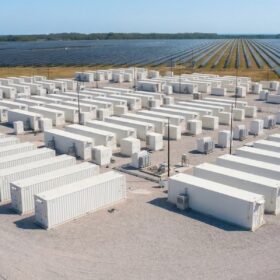
Gujarat-based Powertrac Group has announced an investment of INR 600 crore to establish a 1 GWh containerized battery energy storage system (BESS) manufacturing facility. The facility will focus on lithium iron phosphate (LFP)-based battery pack assembly, along with in-house battery management system (BMS) development and integration.

India’s FY2027 budget shifts focus from renewable deployment to manufacturing, but execution challenges persist, says Wood Mackenzie
Clean energy spending rises 40% to $5 billion as government prioritises CCUS, domestic supply chains and strategic manufacturing. However, execution delays and underutilisation of allocated funds could limit the near-term impact, according to an analysis by Wood Mackenzie.
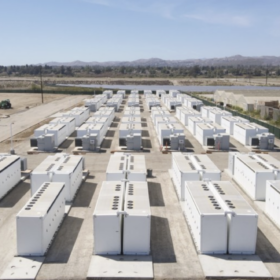
SJVN Ltd’s 250 MW/500 MWh BESS tender yields a tariff of INR 1.97 lakh/MW/month
SJVN Ltd’s tender for setting up 250 MW/500 MWh of standalone battery energy storage systems (BESS) in Haryana has discovered a tariff of INR 1.97 lakh/MW/month. Hardi Hydro Energy secured the full capacity at the quoted price.
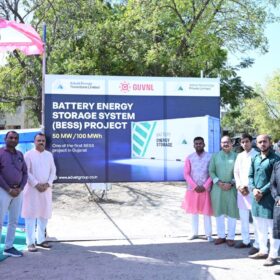
Advait Energy begins work on 50 MW/100 MWh BESS project for GUVNL
Advait Energy Transitions has commenced execution of a 50 MW/100 MWh battery energy storage system (BESS) project awarded by Gujarat Urja Vikas Nigam Ltd (GUVNL). It had secured the project under GUVNL’s Phase IV BESS tender on a build-own-operate (BOO) basis.
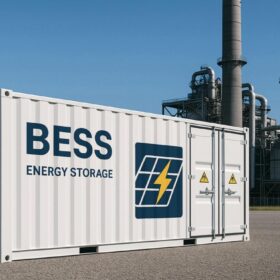
Advait Energy Transitions emerges L1 bidder for 150 MW/300 MWh standalone battery energy storage project from GUVNL
Advait Energy Transitions Ltd has emerged as the lowest bidder for a 150 MW/300 MWh capacity under Gujarat Urja Vikas Nigam Ltd’s (GUVNL) tender for setting up 335 MW/670 MWh of standalone battery energy systems in Gujarat.
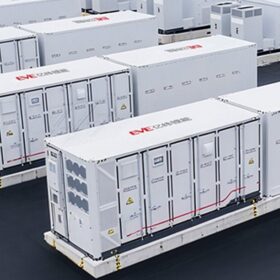
World’s first 628 Ah grid-scale battery enters operation
EVE Energy says a 200 MW/400 MWh battery energy storage project in China has entered operation, which it describes as the world’s first utility-scale deployment of 628 Ah lithium iron phosphate (LFP) cells.

Amara Raja Energy & Mobility to set up US arm with $5 million investment
Amara Raja Energy & Mobility’s Board of Directors has approved the incorporation of a wholly owned subsidiary in the US for strengthening the company’s customer servicing capabilities and facilitating global business expansion.
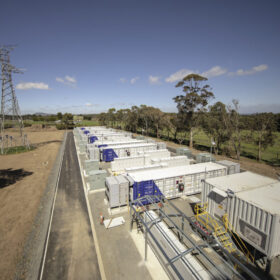
GUVNL’s 335 MW/670 MWh battery storage tender under VGF scheme yields INR 2.10 lakh/MW/month tariff
Gujarat Urja Vikas Nigam Ltd. (GUVNL) has concluded its tender for 335 MW/670 MWh of standalone battery energy storage system (BESS) capacity, discovering a tariff of INR 2.10 lakh per MW per month.