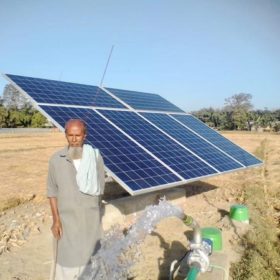
Daily news roundup: Mecwin and KVG Bank partner on solar pump finance, Adani’s new energy arm
Bengaluru-based Mecwin Technologies Ltd and Karnataka Vikas Grameena Bank (KVGB) have partnered to finance solar pump-sets for farmers. Adani has formed a new energy arm called Adani New Industries Limited (ANIL).
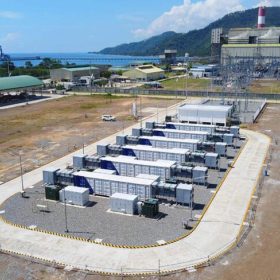
Philippines’ SMC to start operation of 690MW of batteries
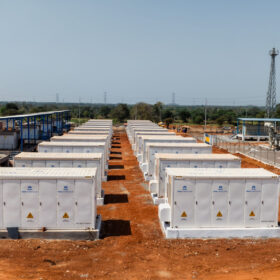
Filipino conglomerate San Miguel Corp aims to complete 1GW of battery storage projects this year to make way for the integration of some 3GW of intermittent renewable energy generation.
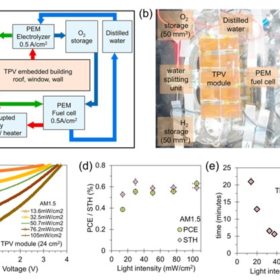
Solar-powered hydrogen for domestic applications via building-integrated transparent platform
An international research group has created a closed-loop, transparent energy platform based on PV power generation and hydrogen production from photo-electrochemical cells. The system is claimed to supply power without interruption and to be transparent enough to be integrated into buildings.

Electrolyzer tech to produce hydrogen from seawater
With a new start-up and a consortium in the Netherlands, German automotive supplier Schaeffler wants to significantly reduce the costs of green hydrogen.
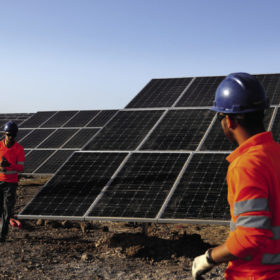
Rystad: Residential solar soars past C&I in 2021 globally
Renewable energy and battery storage has racked up another banner year in 2021, according to end-of-year analysis from Rystad Energy. While there was growth across segments, residential solar has seen the most impressive gains, surpassing the commercial and industrial (C&I) segment for the year.
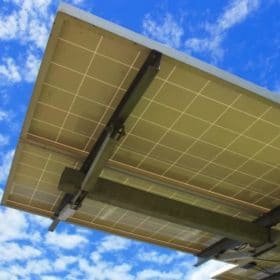
India’s energy transition: Opportunities in power transmission, monitoring and storage
As India ramps up renewable capacity, there will be a higher requirement for substations, transmission corridors as well as battery energy storage. There is tremendous potential in technology localization in areas such as remote power monitoring, predictive maintenance, EV charging, green hydrogen, and energy storage.

2021: A year of ascent for solar PV
The solar sector in India bounced back to make 2021 the best year in new PV capacity addition. The year also witnessed a massive response to PLI tender for solar manufacturing and launch of 50 GWh battery cell tender and green hydrogen mission.
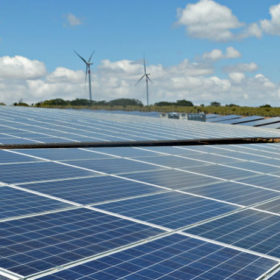
How round-the-clock renewables point to optimum use of energy generation and infrastructure
Amid the troubles of the coal-dominated grid, variable renewable energy has a place in ensuring reliable supply
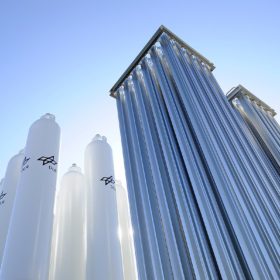
Electrolyzer ramping from 0 to 50,000 amperes in less than 10 seconds
Developed by Canada-based Hydrogen Optimized, the electrolyzer can be used to stabilize electrical grids and optimize energy recovery from intermittent renewable power sources such as solar and wind. Furthermore, this week four more big international partnerships for developing green hydrogen were announced across Germany, the Middle East, and Australia.
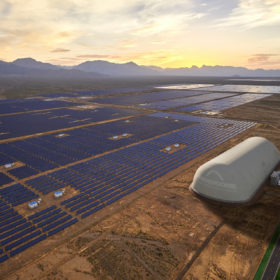
Storing solar power with compressed carbon dioxide
An Italian company has developed a system that can store energy from wind, solar and grid electricity by compressing and using CO2 without any emissions. The system draws CO2 from an inflatable atmospheric gas holder, stores it, and uses it to produce power again, when demand for stored energy arises.