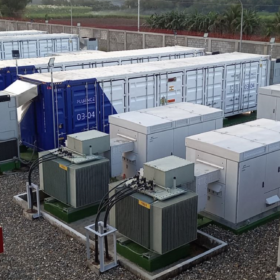
IHS Markit: Battery prices won’t fall until 2024
The London-based analyst has published a series of clean tech predictions for the year which also highlighted the rising proportion of sub-5MW solar projects in the global market, and cheaper clean energy financing costs even as panel prices continue to rise.
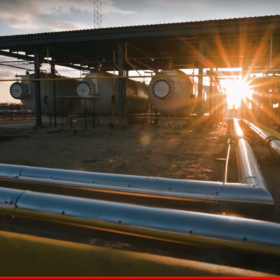
Scatec joins scaled up Omani green ammonia project
A previous announcement by Acme indicated the port site would be able to produce around 876,000 tons of the green fuel per year but the Indian developer today said that figure would be 1.2 million tons. The 100,000-ton-per-year first phase of the facility may be operational this year.
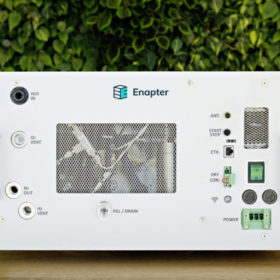
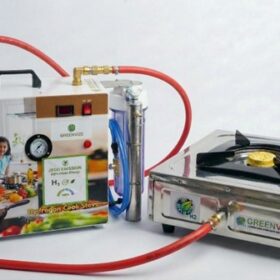
Plug & play electrolyzer for green hydrogen production from Germany
Developed by Germany-based hydrogen specialist Enapter, the EL 4.0 electrolyzer is based on a patented anion exchange membrane (AEM) technology. Commercial production is currently being prepared at the company’s Italian plant and the first shipments should be made in the summer.
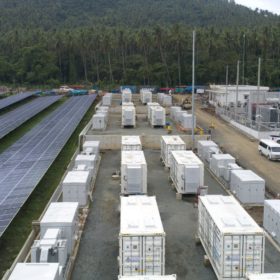
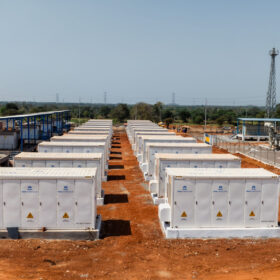
Philippines’ largest battery comes online at 120MW solar park
The 40MW/60MWh Alaminos Energy Storage system is now connected to the 120MW Alaminos solar park. Both facilities were built by renewable energy developer AC Energy.
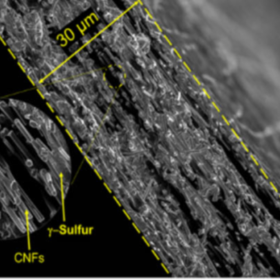
A 4,000 cycle lithium-sulfur battery
Scientists in the United States developed a lithium-sulfur battery using a commercially available carbonate electrolyte, that retained more than 80% of its initial capacity after 4000 cycles. The group used a vapor deposition process which unexpectedly produced a form of sulfur that did not react with the electrolyte, overcoming one of the key challenges for this battery chemistry.
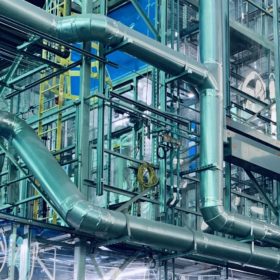
Water-based electrolyzer for green hydrogen production
Verdagy has secured a $25 million investment for its new electrolyzer technology, which provides hydrogen fuel for heavy industrial applications. The membrane-based technology uses large active area cells, high current densities, and broad operating ranges to deliver hydrogen at scale.
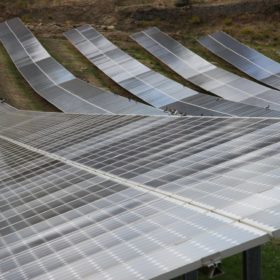
New poly fabs could head off first-half solar project slowdown
Norwegian analyst Rystad Energy has warned the solar industry could suffer the same effects of rising input prices as onshore wind developers grappling with ever more costly steel, with much hinging on how much solar panel raw material polysilicon can be manufactured.
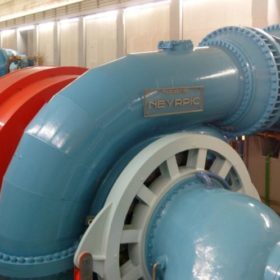
Ayana, Greenko partner on 6 GWh of pump-hydro storage
Greenko Group will provide Ayana with 6 GWh of pumped-hydro storage capacity from its project in Andhra Pradesh, allowing Ayana to provide firm power to offakers.
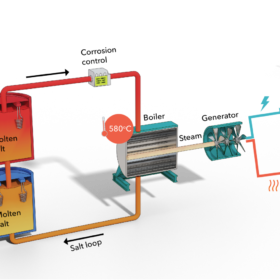
Storing solar power with grid-scale molten hydroxide
Seaborg Technologies, a Danish manufacturer of molten salt nuclear reactors, has turned a technology that was originally developed for nuclear power into a large-scale storage solution for wind and solar. It has developed a storage system that uses renewable energy to heat salt with electrical heaters, based on two-tank molten salt storage designs developed for concentrated solar power plants.

Forget batteries, what if surplus renewable energy could be stored as information?
A pair of researchers from UC San Diego has proposed to precompute certain data when the grid is flooded with solar or wind power, and then store it on servers for later use.