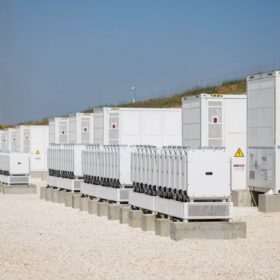
EU installs 27.1 GWh of battery storage in 2025 as utility scale leads
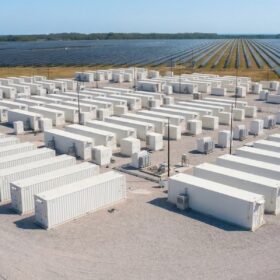
The European Union added 27.1 GWh of battery energy storage capacity in 2025, with utility-scale systems accounting for the majority of new installations as residential storage declined amid lower electricity prices and reduced support schemes, according to a new report from SolarPower Europe.
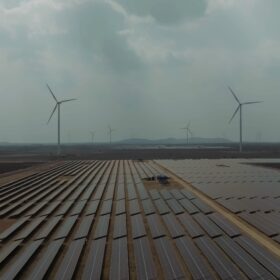
India requires $145 billion in annual energy investment to bridge growth and climate targets
India must mobilise around $145 billion in annual energy investment to sustain economic growth while pushing its net-zero ambitions. The bulk of this capital will be directed toward scaling up renewable power generation, grid infrastructure modernization, and energy storage, according to Wood Mackenzie.

World’s largest compressed-air storage plant switched on in China
New 2.4 GWh adiabatic compressed air energy storage (CAES) plant now operational in in Jiangsu province. The large-scale CAES uses molten salt and pressurized thermal water storage to achieve high efficiency, with power generated through two 300 MW units.

Renewable energy industry’s key expectations from Union Budget 2026
The upcoming budget must prioritize in-house technology and equipment development, provide clarity on delayed power purchase agreements (PPAs) and power sale agreements (PSAs), increase budgetary allocation and policy support for Green Energy Corridors, introduce production-linked incentives for battery energy storage system (BESS) manufacturing, establish an Approved List of BESS Integrators (ALBI), lower the cost of capital through priority sector lending, extend ALMM for solar cells, and continue the ISTS waiver, among other measures.
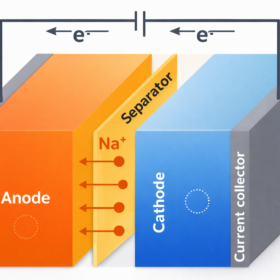
Scientists design low-cost sodium-ion battery with cheap electrode materials
Conceived for stationary energy storage, the proposed sodium-ion battery configuration relies on an P2-type cathode material and an hard carbon anode material that reportedly ensure full-cell performance. Electrochemical testing revealed initial capacities of 200 mAh/g for the cathode and 360 mAh/g for the anode with capacity retentions of 42% and 67.4% after 100 cycles.
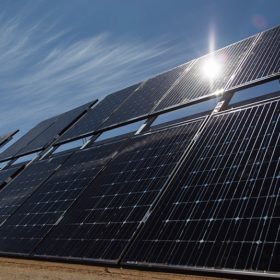
India curtailed 2.3 TWh of solar generation between May and Dec. 2025: Ember
The system operator regularly had to curtail solar generation as an emergency measure to maintain grid security, as other resources were already flexing to their maximum capabilities. Lost solar generation highlights the need for flexibility to grow at pace with solar capacity.

Pre-Budget 2026: Solar and storage industry calls for tax reforms, PLI expansion, and circular economy push
Ahead of the presentation of the Union Budget 2026–27, stakeholders across India’s solar and energy storage ecosystem have urged the government to focus on tax reforms, expansion of production-linked incentive (PLI) schemes with targeted allocations, faster viability gap funding (VGF) disbursements, additional funding for residential rooftop solar, improved access to long-term and affordable green finance, and a stronger push for circular economy initiatives and grid modernisation.
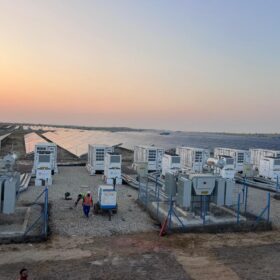
Juniper Green Energy fully commissions India’s first merchant battery energy storage system
Of the 100 MWh battery energy storage system (BESS), 60 MWh was commissioned in Dec. 2025 and the remaining 40 MWh on Jan. 23, 2026.
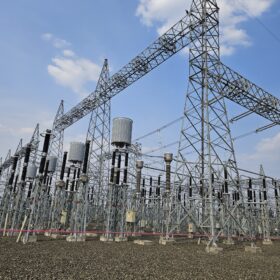
IndiGrid raises INR 1,500 crore through institutional placement
India’s first and largest publicly listed power sector Infrastructure Investment Trust (InvIT), IndiGrid, has successfully raised INR 1,500 crore through an institutional placement (IP). The placement was oversubscribed by around two times and saw strong participation from both domestic and global institutional investors.
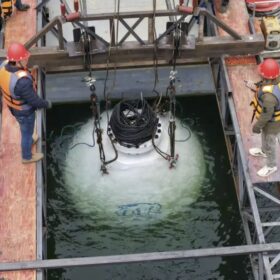
China completes first full-scale underwater pumped storage trial at 65 m depth
DEC’s “Dongchu No. 1” prototype completed more than 100 charge-discharge cycles at 65 meters depth in a freshwater lake.