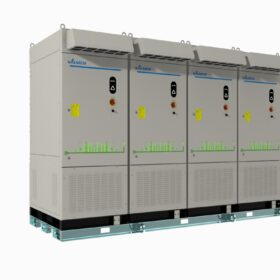
Delta Electronics India to supply 110 MW of power conditioning systems for Prostarm’s battery storage projects
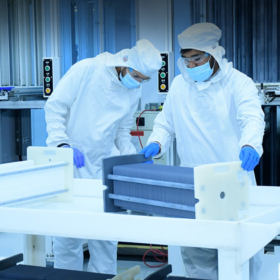
Delta Electronics India will supply 100 units of its made-in-India 1.1 MW bi-directional power conditioning systems to Prostarm’s battery energy storage projects for power utilities, including Bihar State Power Generation Company Ltd and Adani Electricity Mumbai Ltd.
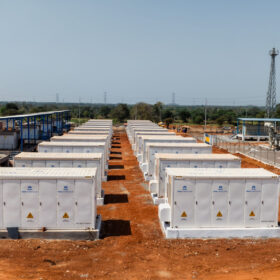
NTPC REL invites bids for 250 MW solar project with 200 MWh battery storage in Uttar Pradesh
NTPC Renewable Energy Ltd has tendered the engineering, procurement and construction (EPC) package for the development of a 250 MW ground-mounted solar power project integrated with a 50 MW/200 MWh battery energy storage system (BESS) at Sitapur, Uttar Pradesh.
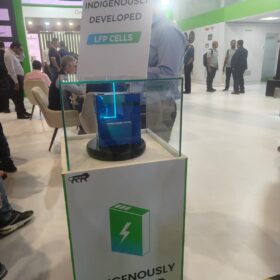
Waaree Energy Storage Solutions raises INR 1,003 crore for 20 GWh lithium-ion cell and battery pack manufacturing facility
Waaree Energy Storage Solutions has raised INR 1,003 crore to support the development of a 20 GWh lithium-ion cell and battery pack manufacturing facility.

India introduces ‘Battery Aadhaar’ system to track EV batteries across lifecycle
India’s Ministry of Road Transport and Highways (MoRTH) has released draft guidelines for the implementation of a Battery Pack Aadhaar system—an indigenous digital identification and data storage mechanism designed to ensure end-to-end lifecycle traceability of batteries, particularly those used in electric vehicles (EVs).
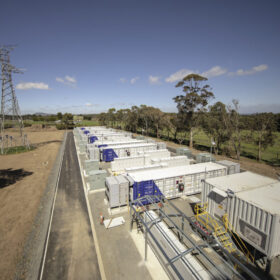
Bondada Engineering secures 225 MW/450 MWh standalone battery storage project from AP TRANSCO
Bondada Engineering Ltd has received a Letter of Award (LoA) from the Transmission Corp. of Andhra Pradesh Ltd (AP TRANSCO) for the development of a 225 MW/450 MWh standalone battery energy storage system (BESS) project.
Battery technology outlook for 2026 sharpens beyond lithium-ion
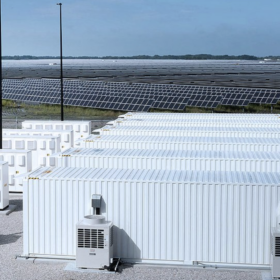
Longer-duration storage, safety-driven procurement and Foreign Entity of Concern (FEOC) compliance in the United States are accelerating interest in alternative battery chemistries, even as lithium-ion remains dominant amid rising data center demand and tighter supply chain rules.
Pace Digitek’s Lineage Power secures INR 943.5 million lithium battery contract from BSNL
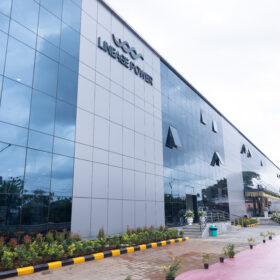
Lineage Power will supply and deploy 25,000 advanced lithium-ion battery modules with a capacity of 100 Ah/48V, along with 2,500 high-durability IP55-rated racks. Each rack will be designed to house eight battery modules. These systems are intended to deliver high-efficiency energy storage to support BSNL’s telecom network infrastructure.
India’s 2025 renewable energy sector review: Key highlights and way forward
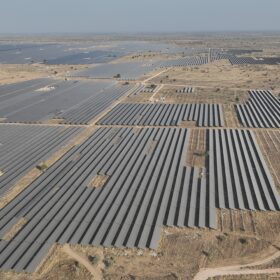
With record 40+ GW solar and wind installations (solar: 34.9+ GW, wind: 5.8+GW), 2025 has marked yet another high point in Indian annual renewable capacity additions. The capacity additions have been driven by strong project momentum across all solar segments.

Bridging the gap between India’s rare earth reserves and extraction challenges
While India has research capabilities across public laboratories and academic institutions in both rare earths and battery recycling, the transition from lab-scale innovation to industrial deployment has been slow. This gap between research and commercial execution continues to limit scale across the critical minerals ecosystem.
India mandates 20% domestic content in battery storage projects
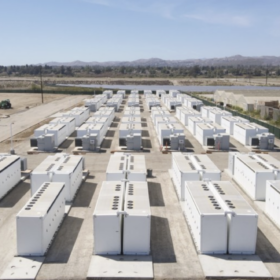
The Indian Ministry of Power has ordered all battery energy storage system (BESS) projects supported under the viability gap funding (VGF) scheme to meet a minimum 20% local content threshold, aiming to boost domestic manufacturing and innovation.