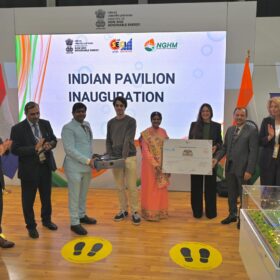
Vision Mechatronics, HyCooker sign agreement to launch zero-emission hydrogen cookstoves globally
Indian deep-tech company Vision Mechatronics and Netherlands-based HyCooker BV have signed a strategic cooperation agreement for the global rollout, localized manufacturing in India, and international commercial sales of advanced hydrogen-burning cookstoves.
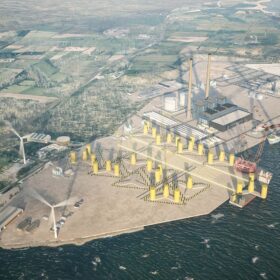
The Hydrogen Stream: Ireland’s LCOH on par with Morocco, Brazil
Fraunhofer ISE, in collaboration with Irishi energy company ESB, developed a methodology showing that Ireland is a competitive location for renewable power-to-X and green hydrogen production with costs comparable to Morocco, South Africa, and Brazil, supported by strong wind resources, policy backing, and infrastructure potential.
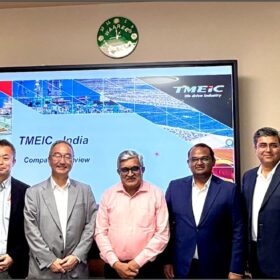
Waaree Clean Energy to develop multi-technology green hydrogen project for TMEIC Industrial Systems
Waaree Clean Energy Solutions, a wholly owned subsidiary of Waaree Energies Ltd, has secured an order to develop a multi-technology green hydrogen project at the facility of TMEIC Industrial Systems India in Tumkur, Karnataka.
Siemens Energy India Q2 FY2026 revenue up 27.4% YoY
Siemens Energy India Ltd has reported a revenue from operations of INR 2,394 crore for the quarter ended March 2026, marking a 27.4% year-on-year increase from INR 1,880 crore in the corresponding quarter of FY 2025. Profit after tax increased 52.4% YoY to INR 375 crore.

Can India’s steel pipe industry lead the global hydrogen infrastructure build-out?
One of the biggest constraints in the hydrogen economy today is the lack of transport infrastructure. Moving hydrogen remains expensive and logistically complex without pipelines.
From awareness to action: How communities are driving and benefiting from clean energy jobs
The communities that engage earliest with the clean energy transition benefit most deeply from it. But community engagement does not happen automatically. It requires deliberate investment in workforce development, accessible training, and policies that channel economic benefit back to the localities where energy is generated.

The rise of green hydrogen-as-a-service: How AI digital twins are powering the net-zero future
As green hydrogen scales from pilot projects to industrial supply chains, the organizations that pair AI-powered digital twins with green hydrogen-as-a-service (GHaaS) commercial structures will be best positioned to deliver clean hydrogen at competitive cost and speed.

From LPG uncertainty to energy resilience: Why Indian industry is turning to cleaner, more dependable fuel systems
India’s industrial sector is entering a pivotal phase in its energy transition. What was once a routine fuel procurement decision is now becoming a strategic imperative. Rising LPG costs, supply unpredictability, and increasing operational risks are prompting businesses to rethink how they power their operations — not just for efficiency, but for resilience.
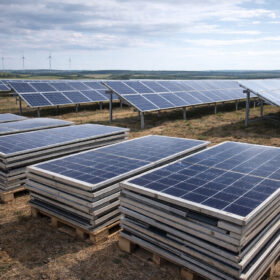
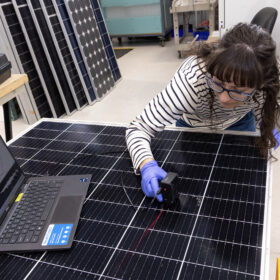
How to generate hydrogen at home with recycled solar panels
Scientists in Chile have developed a low-cost, easy-to-deploy hydrogen system powered by end-of-life solar panels. The residential solution reportedly achieves a levelized cost of hydrogen of approximately $5.8/kg.

Jakson Green consortium signs 85,000 tpa green ammonia purchase agreement with SECI
Jakson Green Ltd, through a consortium, has signed a green ammonia purchase agreement with Solar Energy Corp. of India Ltd to supply 85,000 metric tons per annum of green ammonia.