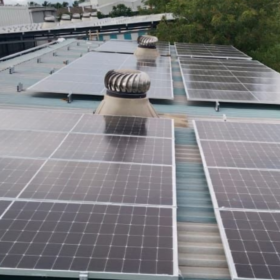
What India needs to accelerate sustainable lending post-budget
The next phase of green growth will depend on how quickly capital reaches businesses that are ready to modernize, become energy-efficient, and invest in cleaner production systems. The question is no longer whether sustainable lending will grow, it is how fast we can remove the barriers preventing it from scaling.
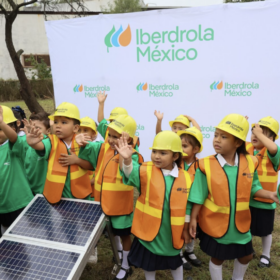
Mexico mandates social impact reviews for BESS projects
New rules from Mexico’s Secretaría de Energía require battery energy storage systems (BESS) to submit social impact assessments for the first time, with stricter obligations above 250 MWh.
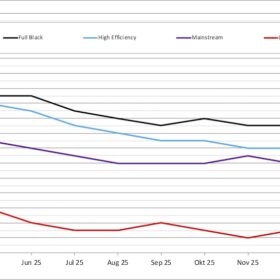
Solar module prices rise faster than expected in February
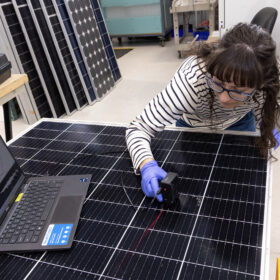
Solar module prices increased by €0.01 ($ 0.012)/W to €0.015/W in February, lifting levels 15% to 18% above the December 2024 low despite falling wafer costs, as manufacturers seek to restore margins after prolonged losses.

From panels to complete energy systems: The evolution of India’s rooftop solar market
Rooftop solar is moving from being a supplementary solution to becoming a central component of India’s energy architecture. The next phase of growth will not be defined by panel installations alone but by how effectively generation is integrated with storage, digital intelligence, and grid infrastructure.

Inside the PV recycling black box
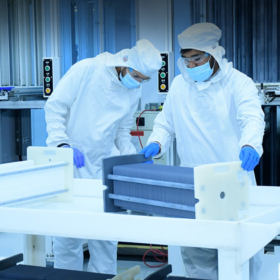
How PV modules are treated at the end of their life is an increasingly important issue, but some recycling practices leave a lot to be desired. Scott Azevedo from Intertek CEA explores how asking the right questions, paying closer attention to end-of-life treatment, and steering volume toward good recyclers can have positive long-term consequences for the solar industry.
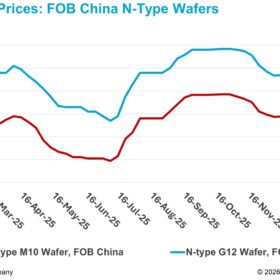
China wafer prices fall for fourth week as discounting deepens under inventory pressure
In a new weekly update for pv magazine, OPIS, a Dow Jones company, provides a quick look at the main price trends in the global PV industry.
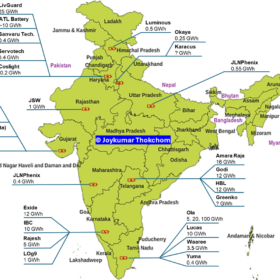
India’s 2030 battery gigafactory ambition: Strengths, bottlenecks and solutions
The number of operational battery gigafactories will increase significantly, with more than 30 manufacturing sites expected to be in operation by 2030, targeting a total production capacity exceeding 290 GWh. However, challenges such as raw material and skilled labor shortages, insufficient R&D investment, and a lack of long-term strategic planning remain.

Guatemala PEG-5 tender draws 51 bidders for 4.7 GW of capacity
Guatemala’s Generation Expansion Plan 5 (PEG-5) tender has drawn 51 bids totaling nearly 4.7 GW – more than triple the 1.4 GW sought – with around 2 GW of solar projects, including hybrids with storage, competing for long-term supply contracts starting between 2030 and 2033.
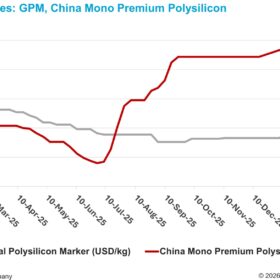
Polysilicon transactions remain subdued amid buyer hesitancy
In a new weekly update for pv magazine, OPIS, a Dow Jones company, provides a quick look at the main price trends in the global PV industry.

India’s blueprint for sustainable solar success
By embedding quality benchmarks into procurement and manufacturing incentives, policymakers are ensuring that India’s energy transition is durable, not disposable. The focus has moved from rapid installation to long-term reliability — a sign of sectoral maturity.