Marija Maisch

Hydrogen batteries vs. lithium-ion batteries
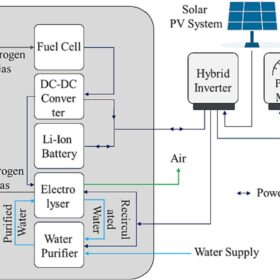
Researchers in Australia have compared the technical and financial performances of a hydrogen battery storage system and a lithium-ion battery when coupled with rooftop PV. They evaluated two commercially available systems – LAVO and Tesla Powerwall 2 – and found that the lithium-ion battery provides better financial profits, whereas the hydrogen battery offers more battery lifespan for long duration of energy storage.
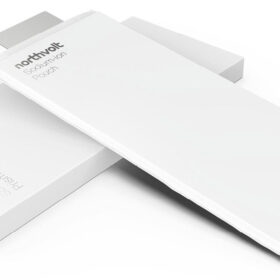
Sodium-ion batteries – a viable alternative to lithium?
While lithium ion battery prices are falling again, interest in sodium ion (Na-ion) energy storage has not waned. With a global ramp-up of cell manufacturing capacity under way, it remains unclear whether this promising technology can tip the scales on supply and demand. Marija Maisch reports.
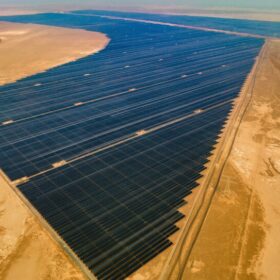
EDF, KOWEPO to build 1.5 GW solar project in UAE
Korea Western Power Co. (KOWEPO) and EDF Renewables have signed a joint development agreement for a 1.5 GW solar farm in Khazna, United Arab Emirates (UAE). The partners also recently won another project of the same size in the Al-Ajban region.
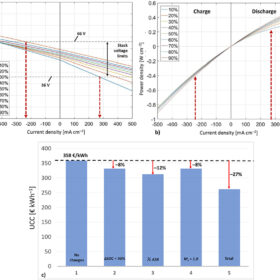
Evaluating the profitability of vanadium flow batteries
Researchers in Italy have estimated the profitability of future vanadium redox flow batteries based on real device and market parameters and found that market evolutions are heading to much more competitive systems, with capital costs down to €260/kWh at a storage duration of 10 hours.
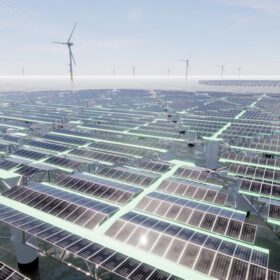
Partners to develop 540 MW floating wind-solar plant in Italy
SolarDuck, Green Arrow Capital, and New Developments have agreed to develop an offshore hybrid project featuring 120 MWp of PV and 420 MW of wind in Calabria, Italy.
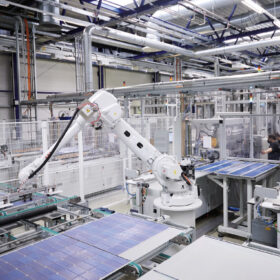
Meyer Burger prepares to shut down plant in Germany
Swiss solar panel maker Meyer Burger will seek shareholder approval for a rights issue of as much as CHF 250 million ($284 million) to finance the completion of its US manufacturing facilities in Colorado and Arizona.
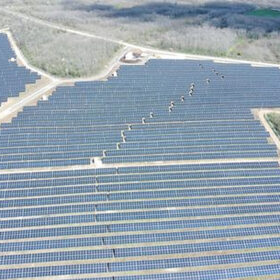
Serbia attracts $2 billion Chinese investment in solar, wind, hydrogen
The Serbian Ministry of Mining and Energy has signed a memorandum of understanding (MoU) with Chinese companies Shanghai Fengling Renewables and Serbia Zijin Copper. It envisages the construction of 1.5 GW wind and 500 MW of solar projects alongside a green hydrogen production facility with 30,000 tons of annual output.
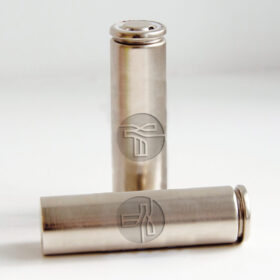
Tiamat secures funding for sodium-ion gigafactory in France
French sodium-ion battery maker Tiamat has raised €30 million ($32.6 million) in equity and debt financing. It will use the funds to launch the construction of a 5 GWh production plant in the Hauts-de-France region.
New solid state battery charges in minutes, lasts for thousands of cycles
Researchers from the Harvard John A. Paulson School of Engineering and Applied Sciences (SEAS) have developed a new lithium metal battery that can be charged and discharged at least 6,000 times — more than any other pouch battery cell — and can be recharged in a matter of minutes.
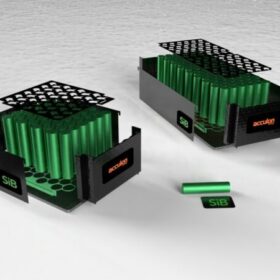
Acculon launches production of sodium-ion battery modules, packs
US-based Acculon Energy has announced series production of its sodium-ion battery modules and packs for mobility and stationary energy storage applications. Scaled production of 2 GWh is scheduled to start in mid-2024.