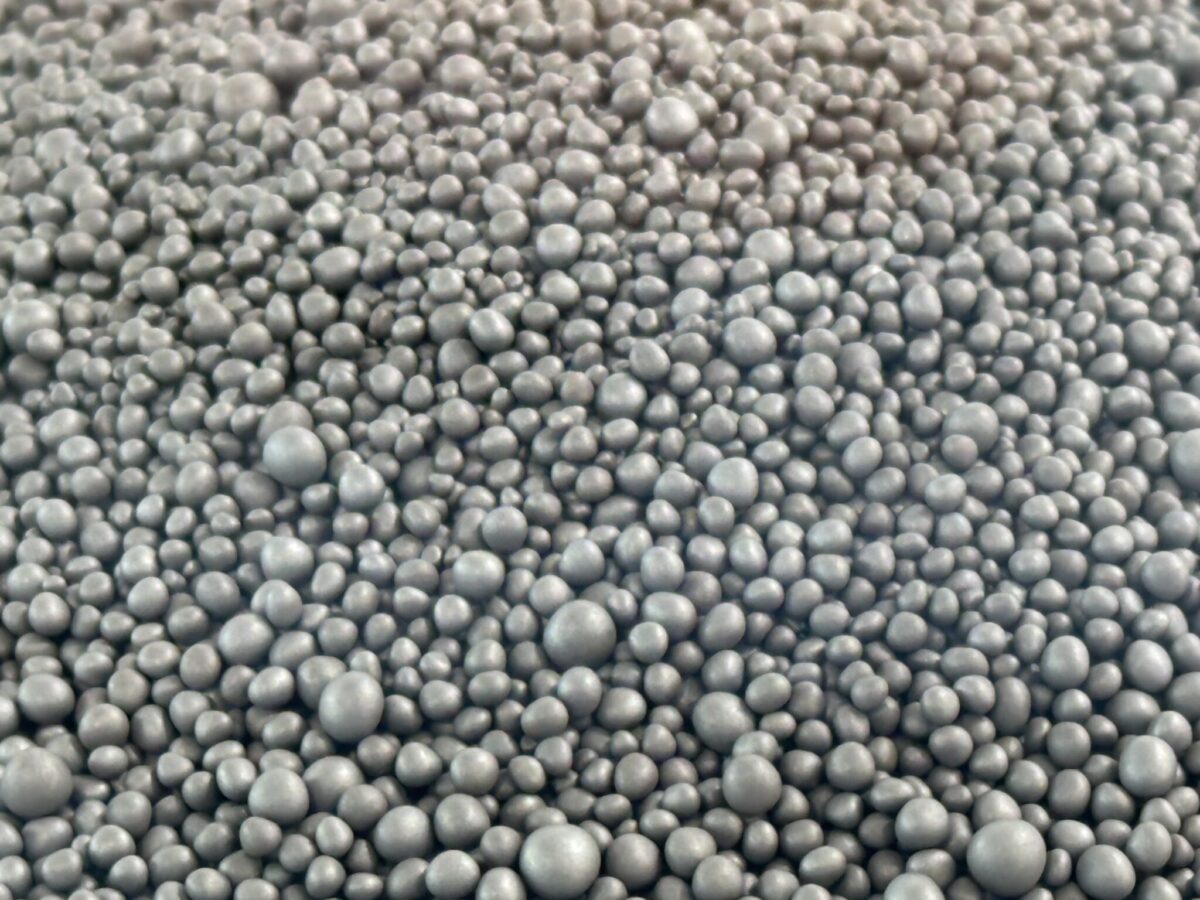





Polysilicon prices have fallen again in China as weak post-holiday demand met high stockpiles and returning supply. The China Nonferrous Metals Industry Association’s (CNMIA) silicon industry branch reported a sharp weekly drop on March 4, with average n-type prime polysilicon down 6.58% week on week to CNY 48,300 ($7,002) per metric ton (MT) and n-type granular silicon down 12.87% to CNY 44,000/MT.
The survey covered nine leading producers accounting for 89.3% of China’s total output in the fourth quarter of 2025.
The decline has largely erased the price recovery seen in January and early February. In early January, average n-type prime polysilicon had climbed to CNY 59,200/MT and granular silicon to CNY 55,800/MT, as lower operating rates and stronger downstream procurement temporarily tightened supply.
The selloff is being driven by weak demand and elevated inventories. Polysilicon stocks rose for seven consecutive months, reaching 480,000 MT by the end of February, while post-holiday recovery from downstream cell and module makers lagged expectations. February output fell 17.3% month on month to about 84,400 MT, though March production is forecast to rise slightly to 87,000 MT to 89,000 MT, limiting supply support for prices.
Weakness in polysilicon is already affecting wafers. The association’s wafer branch said this week that there have been declines across the board: n-type G10L wafers fell to CNY 1.07/piece, G12R to CNY 1.17/piece, and G12 to CNY 1.36/piece, down roughly 2.5% to 2.9% week on week. Downstream demand remained soft, February wafer output dropped to 45.5 GW, and wafer inventories rose by about 5.2 GW.
Policy factors are adding pressure. China’s Ministry of Finance and State Taxation Administration announced on Jan. 8 that VAT export rebates for PV products will be canceled from April 1, 2026, in a move seen as driving up pressure on exporters and accelerating the shakeout of weaker capacity.
The CNMIA’s silicon industry branch said that without unexpected policy support or stronger end-demand, polysilicon prices are likely to remain under pressure, keeping the Chinese PV supply chain in a destocking phase.
This content is protected by copyright and may not be reused. If you want to cooperate with us and would like to reuse some of our content, please contact: editors@pv-magazine.com.


By submitting this form you agree to pv magazine using your data for the purposes of publishing your comment.
Your personal data will only be disclosed or otherwise transmitted to third parties for the purposes of spam filtering or if this is necessary for technical maintenance of the website. Any other transfer to third parties will not take place unless this is justified on the basis of applicable data protection regulations or if pv magazine is legally obliged to do so.
You may revoke this consent at any time with effect for the future, in which case your personal data will be deleted immediately. Otherwise, your data will be deleted if pv magazine has processed your request or the purpose of data storage is fulfilled.
Further information on data privacy can be found in our Data Protection Policy.