





India’s rooftop solar story today stands at a defining inflection point. The country has already crossed 132 GW of installed solar capacity, with rooftop systems contributing more than 23 GW to the national total. In 2025 alone, India added nearly 7.9 GW of rooftop capacity, reflecting one of the fastest growth phases in the segment’s history.
At the policy level, the momentum is equally strong: the Union Budget 2026–27 has allocated over INR 30,500 crore to solar programmes—a roughly 32% increase from the previous year—with a significant share directed toward decentralised solar adoption.
Together, these developments indicate that rooftop solar is no longer peripheral to India’s energy strategy; it is becoming a central pillar of the country’s transition toward a resilient, distributed, and low-carbon energy system.
The Early Foundations to Technology Leap
To understand this transformation, it is important to trace the journey from its early days. The rooftop solar movement formally began with the National Solar Mission in 2010, when adoption was slow and largely experimental. High capital costs, limited financing, and low awareness meant that installations were restricted to demonstration projects, institutional campuses, and select off-grid applications. However, this phase laid the groundwork for what would become a fundamental shift in how India approaches energy generation.
Between 2015 and 2020, the sector entered a period of commercial expansion. Falling module prices, combined with the introduction of net-metering policies, transformed solar from an environmental aspiration into an economic decision. The commercial and industrial (C&I) segment drove this growth, as energy-intensive businesses turned to rooftop solar to reduce operating costs and meet sustainability commitments. Financing innovations, including RESCO models, helped reduce upfront investment barriers and accelerated adoption.
Over the last five years, however, the market has moved decisively beyond the idea of installing panels. Today, rooftop solar is evolving into a complete energy system—integrating generation, storage, digital intelligence, and consumption optimisation. This transformation reflects both technological progress and a maturing policy framework.
At the technology level, the shift has been remarkable. Early installations based on polycrystalline modules are being replaced by higher-efficiency alternatives such as Mono PERC, bifacial modules, TOPCon, and more recently, Heterojunction Technology (HJT). HJT modules represent a significant step forward, offering higher efficiency, better performance in high-temperature conditions, and longer operational life. For rooftop installations, where space constraints are critical, such advancements enable higher output per square metre and improved long-term returns.
Parallel to hardware innovation, the integration of digital tools has reshaped the way systems are managed. Smart inverters, IoT-enabled monitoring, and AI-driven analytics now allow real-time performance tracking and predictive maintenance. Rooftop solar is no longer a static asset—it is becoming an intelligent energy node.
Policy as the Primary Growth Engine
Policy support has played an equally critical role in driving adoption, especially in the residential segment. The PM Surya Ghar: Muft Bijli Yojana has emerged as a transformative initiative aimed at enabling rooftop installations across one crore households. The scheme combines direct subsidies, simplified digital application processes, and access to low-interest loans to make solar adoption more accessible. Early evidence suggests a strong consumer response, with states reporting a surge in applications and installations, and households seeing substantial reductions in monthly electricity bills.
The Union Budget 2026–27 has reinforced this momentum. The increase in funding for solar schemes and rooftop initiatives signals a clear policy focus on decentralised generation. In addition, duty rationalisation on key inputs and continued support for domestic manufacturing are helping reduce system costs. The expansion of incentives for lithium-ion battery manufacturing and energy storage is another strategic move, acknowledging that the next phase of solar growth must be supported by storage infrastructure.
Storage: Powering the Transition to Complete Energy Systems
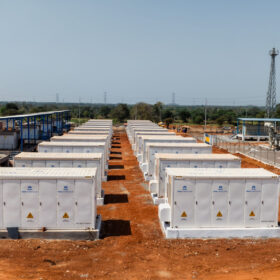
This is where the real shift from “panels” to “systems” becomes evident. Solar generation, by nature, is intermittent. Battery Energy Storage Systems (BESS) are now playing a central role in strengthening reliability, enabling surplus daytime generation to be stored and used during evening peak hours. For households and businesses, this reduces dependence on the grid and provides backup during outages. For utilities, distributed storage is helping manage peak loads, improve grid stability, and support the broader transition toward round-the-clock clean energy.
The integration of rooftop solar with storage, digital platforms, and EV charging infrastructure is gradually creating decentralised energy ecosystems. In urban settings, rooftops are evolving into micro-energy hubs that generate, store, and manage power locally. This not only enhances energy security but also supports India’s broader decarbonisation goals.
The scale of this transition is significant. India’s solar capacity has expanded rapidly over the past few years, with record annual additions and a strong pipeline of projects under development. The country’s long-term target of 500 GW of non-fossil fuel capacity by 2030 places rooftop solar at the centre of the decentralised energy strategy. The government’s emphasis on domestic manufacturing, supported by production-linked incentives and supply-chain localisation, is further strengthening the ecosystem.
At the same time, rooftop solar is creating economic value across the value chain. Manufacturing capacity is expanding, installation networks are growing, and service ecosystems are emerging. States such as Gujarat, Maharashtra, and Uttar Pradesh have seen particularly strong adoption, driven by proactive policy implementation and strong vendor ecosystems. Rooftop solar is also generating employment, from manufacturing to installation and maintenance.
However, the journey is not without challenges. High upfront costs continue to be a barrier for some consumers, even with subsidies. Delays in net-metering approvals, uneven state-level implementation, and supply-chain constraints can affect project timelines. In the long run, issues such as solar waste management and grid integration will require sustained attention.
The Road Ahead
Despite these challenges, the trajectory is unmistakable. Rooftop solar is moving from being a supplementary solution to becoming a central component of India’s energy architecture. The next phase of growth will not be defined by panel installations alone but by how effectively generation is integrated with storage, digital intelligence, and grid infrastructure.
A complete energy system is not just about generating power—it is about reliability, efficiency, and resilience. The integration of solar modules, battery storage, smart monitoring, and supportive policy frameworks represents the future of distributed energy in India. Government initiatives are aligning manufacturing, supply chains, financing, and consumer adoption under a unified vision.
Rooftop solar is no longer a product; it is becoming an ecosystem. And in that ecosystem, the convergence of technology, policy, and consumer participation will determine how effectively India powers its sustainable future.
The views and opinions expressed in this article are the author’s own, and do not necessarily reflect those held by pv magazine.
This content is protected by copyright and may not be reused. If you want to cooperate with us and would like to reuse some of our content, please contact: editors@pv-magazine.com.






By submitting this form you agree to pv magazine using your data for the purposes of publishing your comment.
Your personal data will only be disclosed or otherwise transmitted to third parties for the purposes of spam filtering or if this is necessary for technical maintenance of the website. Any other transfer to third parties will not take place unless this is justified on the basis of applicable data protection regulations or if pv magazine is legally obliged to do so.
You may revoke this consent at any time with effect for the future, in which case your personal data will be deleted immediately. Otherwise, your data will be deleted if pv magazine has processed your request or the purpose of data storage is fulfilled.
Further information on data privacy can be found in our Data Protection Policy.