





A group of researchers from Saudi Arabia’s King Abdullah Petroleum Studies and Research Center (KAPSARC) has outlined a potential pathway for the kingdom to achieve net-zero emissions by 2060, finding that the efforts required could lead to the occupation of around 3.6% of Saudi land, particularly in the northeastern region.
“Under the high-demand net-zero scenario we modelled for 2060, the total land footprint corresponds to around 77,278 km2 and about 515.3 GW of installed renewable capacity, mostly coming from onshore wind, solar PV, and concentrated solar power (CSP),” the research’s corresponding author, Sarah Abuouf, told pv magazine. “Most of this area is associated with onshore wind. In our assumptions, wind supplies a large share of capacity and requires more land per megawatt than other technologies, which is why it accounts for around 94% of the total land requirement.”
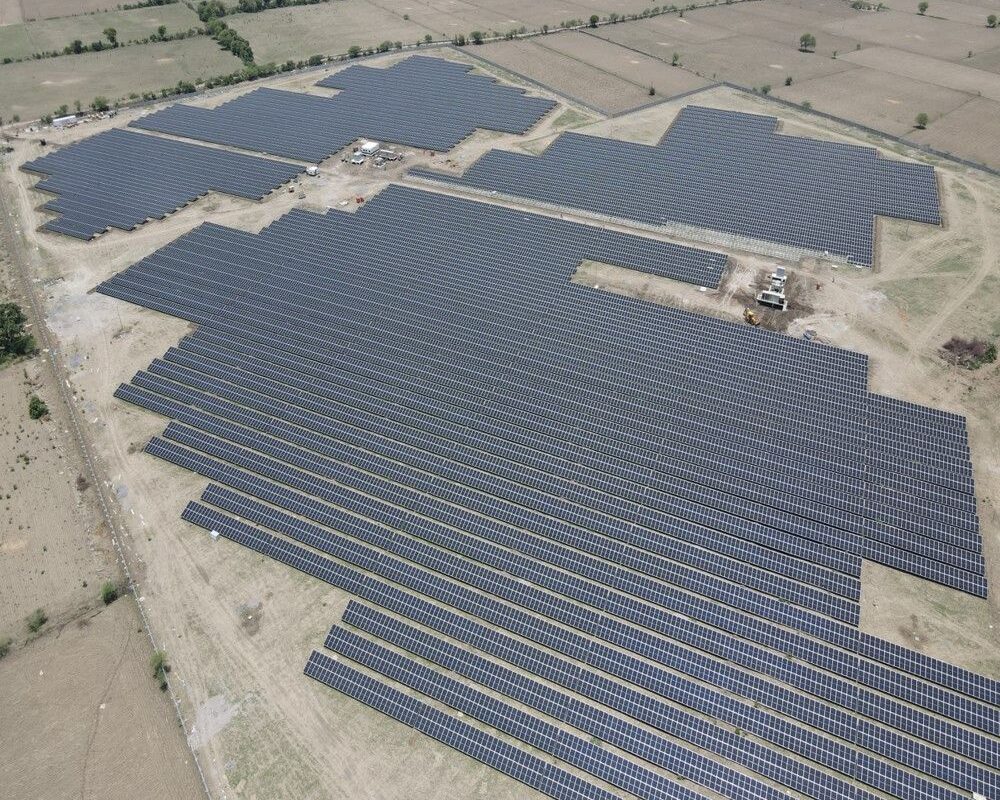
Solar PV, in contrast, was found to have a much smaller footprint. “Around 151.3 GW of PV would require about 3,519 km2, as solar can install substantially more capacity per unit of land compared with wind,” Abuouf added, noting that solar would only cover 0.16% of total Saudi land by 2060.
The researchers explained that, in terms of siting, their modeling places most wind development in the northeastern parts of the Kingdom, while solar PV is concentrated mainly in the western and eastern regions. “We would also like to emphasize that these are modelling-based estimates, developed for analytical purposes,” Abuouf stressed. “They are not government plans, pledges, or official commitments, but rather illustrative results to help understand possible long-term infrastructure needs under a net-zero pathway.”
In the study “Achieving net-zero in Saudi Arabia’s power sector by 2060 considering land and mineral availability,” published in Energy, the academics said their work consisted of assessing the technical, land, and material feasibility of achieving net-zero in Saudi Arabia’s power sector by 2060. They analyzed, in particular, electricity demand forecasting, generation and transmission capacity expansion planning, land requirement, and material and mineral needs.
Two main scenarios were analyzed: zero-emission power (ZEP), which assumes the sector produces no gross emissions by 2060, and net-zero emissions power (NZEP), which allows residual emissions that are offset through carbon dioxide removal (CDR). These scenarios were evaluated under two demand trajectories: a reference scenario (RefDem) and a high-electrification scenario (HiDem), which influence both peak load and overall generation requirements.
In all pathways, onshore wind dominates the installed capacity, while solar PV and concentrated solar power (CSP) contribute smaller shares. Battery storage and hydrogen technologies play critical roles in ensuring firm capacity and system reliability. Some gas generation remains online to provide backup, and fuel cells are primarily deployed in scenarios with strict zero-emission targets.
The scientists explained that the Saudy energy transition also raises challenges in critical minerals, with rare-earth elements required for wind turbines, as well as copper for solar PV and batteries, eventually facing supply constraints, particularly in the 2030s and 2050s. However, these challenges can be mitigated through careful selection of sub-technologies, material-efficient designs, and substitution strategies, they also stated.
From a cost perspective, their analysis showed that ZEP pathways involve substantial investment, with generation infrastructure driving most of the increase. The analysis also highlights that allowing some emissions and relying on CDR, as in the NZEP scenarios, significantly reduces system costs while still achieving net-zero targets.
“Overall, our findings underscore the importance of adopting a holistic approach to power sector decarbonization by integrating techno-economic optimization with considerations of materials and land constraints,” the academics concluded. “As Saudi Arabia advances toward its net-zero targets, proactive power sector planning, strategic selection of renewable technologies to reduce reliance on critical minerals, and effective land management will be essential for policymakers to better navigate trade-offs, reduce risks and enhance the resilience of the energy transition.”
This content is protected by copyright and may not be reused. If you want to cooperate with us and would like to reuse some of our content, please contact: editors@pv-magazine.com.




By submitting this form you agree to pv magazine using your data for the purposes of publishing your comment.
Your personal data will only be disclosed or otherwise transmitted to third parties for the purposes of spam filtering or if this is necessary for technical maintenance of the website. Any other transfer to third parties will not take place unless this is justified on the basis of applicable data protection regulations or if pv magazine is legally obliged to do so.
You may revoke this consent at any time with effect for the future, in which case your personal data will be deleted immediately. Otherwise, your data will be deleted if pv magazine has processed your request or the purpose of data storage is fulfilled.
Further information on data privacy can be found in our Data Protection Policy.