





Electric mobility in India is no longer a story limited to selling vehicles. As the country accelerates towards a greener future, the focus is rapidly shifting to financing the entire electric vehicle (EV) ecosystem, spanning charging infrastructure, batteries, fleet operations, and clean energy integration. This transition marks the emergence of EV Financing 2.0: a more holistic approach that goes beyond point-of-sale lending to enable sustainable, scalable, and economically viable green mobility.
At a macro level, the opportunity is compelling. According to the latest Indian Brand Equity Foundation (IBEF) data, the Indian EV market is forecast to expand from INR 26,750 crore in 2022 to INR 9.5 lakh crore by 2029, growing at a staggering 66.52% CAGR. While vehicle volumes are rising rapidly, this growth also signals a deeper shift—the EV sector is maturing into a full-fledged ecosystem that requires equally evolved financing frameworks.
Why EV Financing 1.0 Was Not Enough
In its early phase, EV financing in India largely mirrored traditional auto lending. The focus was on making vehicles affordable through retail loans, with underwriting anchored to the borrower rather than the asset’s usage. While this model worked reasonably well for privately owned passenger EVs, it left major gaps when applied to the broader mobility ecosystem.
Charging infrastructure, battery lifecycle costs, and commercial fleet economics were often outside the financing lens. For lenders, this created challenges around asset visibility, residual value estimation, and risk assessment, particularly for vehicles operating at high utilisation levels. As EV adoption moved beyond pilots into real-world deployment, these structural limitations became increasingly evident.
EV Financing 2.0: Recognising Different Use Cases
A defining feature of EV Financing 2.0 is its recognition that not all EVs are used or financed in the same way.
For a privately owned passenger EV, financing still resembles a conventional auto loan. Usage is predictable, charging is typically home-based, and battery risk is largely absorbed by the owner. In contrast, a commercial EV—such as an e-rickshaw, last-mile delivery van, or electric truck—is a revenue-generating asset. Its value is determined by kilometres run, trips completed, and uptime, not just ownership.
Accordingly, financing structures are evolving. Commercial EVs increasingly require cash-flow–linked underwriting, shorter repayment cycles aligned with daily earnings, and separate financing for high-value components such as batteries. Battery leasing and swapping models are gaining traction in India precisely because they lower upfront costs for operators while improving asset life visibility for financiers.
Infrastructure Financing Becomes Central
India’s EV ambitions are underpinned by an equally ambitious infrastructure build-out. Public charging stations have grown from just over 5,000 in CY22 to over 26,300 by July FY25—reflecting a rapid scale-up at a CAGR of over 72%. This expansion highlights a critical reality: EV adoption cannot outpace charging availability, especially for commercial and shared mobility segments.
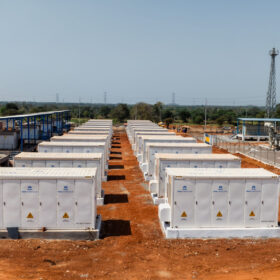
Here again, EV Financing 2.0 plays a pivotal role. While a private EV may rely on residential charging, commercial EVs depend on depot-based fast charging, energy management systems, and reliable grid connectivity. Financing is therefore extending beyond vehicles to cover charging stations, battery storage, and grid upgrades, transforming infrastructure from a bottleneck into an enabler.
Policy Support and Investor Confidence
India’s policy framework has been instrumental in accelerating this ecosystem approach. National targets aim for 30% of private cars, 70% of commercial vehicles, 40% of buses, and 80% of two- and three-wheelers to be electric by 2030—equating to nearly 80 million EVs. Schemes such as FAME II and related initiatives have channelled capital into both vehicles and charging infrastructure, while the ‘Make in India’ push is strengthening domestic manufacturing and supply chains.
This policy clarity has translated into rising investor confidence. Joint estimates by NITI Aayog and Rocky Mountain Institute (RMI) suggest that India’s EV financing opportunity could scale to ₹3.7 lakh crore (US$50 billion) by 2030. Importantly, this projection reflects confidence in the ecosystem—not just vehicle sales, but the annuity-like cash flows generated by infrastructure and fleet operations.
Making Green Mobility Bankable
Beyond scale, the nature of capital deployment is also changing. Innovative structures, such as asset-backed lending for charging infrastructure, battery leasing, and risk-sharing arrangements for fleet electrification—are helping align commercial returns with climate outcomes. For MSMEs and last-mile delivery operators, these models reduce upfront costs and smooth cash flows, accelerating adoption without over-reliance on subsidies.
The impact of this shift is already visible. Premium EV registrations have grown sharply in 2025, while commercial fleets are increasingly electrifying routes where utilisation and economics are clearly measurable. Financing is no longer uniform; it is tailored to how each EV segment operates in practice.
Financing the Future of Mobility
India’s experience underscores a crucial insight, electric mobility is not a product—it is an integrated service platform. Financing must therefore evolve in tandem, supporting vehicles, infrastructure, technology, and energy systems as a unified whole.
As India’s EV journey unfolds, EV Financing 2.0 will play a defining role in shaping a mobility future that is sustainable, inclusive, and economically resilient. The real measure of success will not be how many EVs are sold, but how intelligently capital is deployed across the ecosystem that keeps them running. In that sense, EV Financing 2.0 is fast becoming the financial backbone of India’s green mobility transition.
The views and opinions expressed in this article are the author’s own, and do not necessarily reflect those held by pv magazine.
This content is protected by copyright and may not be reused. If you want to cooperate with us and would like to reuse some of our content, please contact: editors@pv-magazine.com.




By submitting this form you agree to pv magazine using your data for the purposes of publishing your comment.
Your personal data will only be disclosed or otherwise transmitted to third parties for the purposes of spam filtering or if this is necessary for technical maintenance of the website. Any other transfer to third parties will not take place unless this is justified on the basis of applicable data protection regulations or if pv magazine is legally obliged to do so.
You may revoke this consent at any time with effect for the future, in which case your personal data will be deleted immediately. Otherwise, your data will be deleted if pv magazine has processed your request or the purpose of data storage is fulfilled.
Further information on data privacy can be found in our Data Protection Policy.