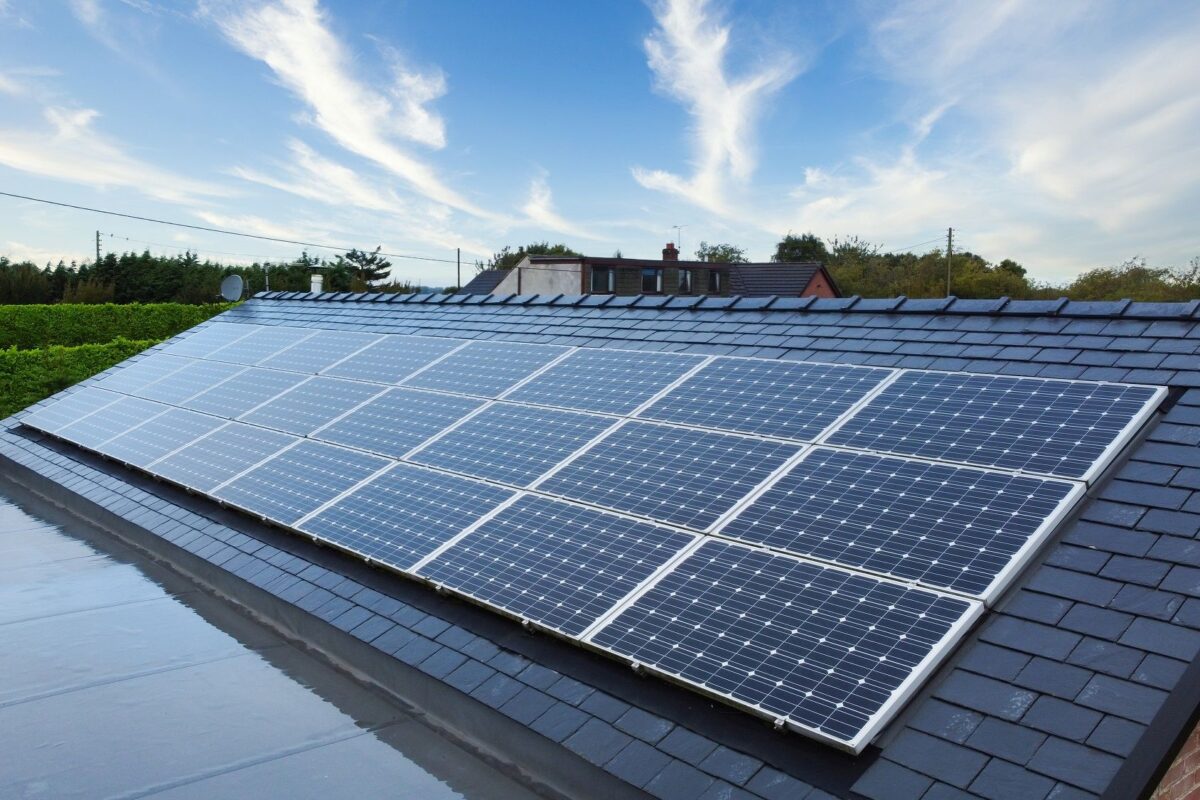





The UK government has launched a GBP 15 billion ($20 billion) home energy efficiency investment program, which includes grants and loans to support millions of new rooftop solar installations by 2030.
The Warm Homes Plan provides support for new solar, battery energy storage and heat pump installations, as well as other energy efficiency measures such as home insulation.
Funding is split between GBP 5 billion to support low-income households: GBP 2 billion in consumer loans; GBP 2.7 billion for the ongoing Boiler Upgrade Scheme, which provides heat pump subsidy grants; a GBP 1.1 billion investment in heat networks: and GBP 2.7 billion in finance for home upgrade investments; and GBP 1.5 billion to the devolved governments in Scotland, Wales and Northern Ireland.
The UK government claims the plan could put solar panels on the roofs of up to 3 million homes by 2030. The plan projects twice as many rooftop installations could be made over the next five years as in the past 15, tripling the number of UK homes with rooftop solar.
Solar will also become mandatory for the vast majority of newbuild homes in England. Full details will be published as part of the new Future Homes and Buildings Standard regulations, expected in the first quarter of 2026, but the UK government has already confirmed new homes will need to have “high levels of energy efficiency and new solar panels by default.”
More detail is expected later in 2026 on how consumers will be able to access low-interest loans, following government consultation with the finance sector and consumer groups. The grant element of the funding package will offer low-income households free-of-charge upgrades depending on what technologies are most suitable for their home. This could include a fully funded installation of solar panels with battery storage, at an average cost of GBP 9,000 to GBP 12,000.
Solar Energy UK has welcomed the Warm Homes Plan. The trade association expects the investment to unlock growth for the solar and battery sector in the United Kingdom while cutting bills for consumers.
Gary Felgate, CEO of certification body MCS also welcomed new funding for renewables, and said the introduction of government-backed low-interest loans “will provide further momentum by reducing the upfront costs for more households.”
UK Energy Secretary Ed Miliband said that the investment represents a “national project” to tackle fuel poverty in the United Kingdom.
The Warm Homes Plan is part of a wider UK government pursuit of significantly increased renewable generation capacity by the end of the decade. The government’s Clean Power Action Plan targets 45 GW to 47 GW deployed solar capacity by 2030, up from 21.5 GW recorded in government deployment data at the end of November 2025.
This content is protected by copyright and may not be reused. If you want to cooperate with us and would like to reuse some of our content, please contact: editors@pv-magazine.com.






By submitting this form you agree to pv magazine using your data for the purposes of publishing your comment.
Your personal data will only be disclosed or otherwise transmitted to third parties for the purposes of spam filtering or if this is necessary for technical maintenance of the website. Any other transfer to third parties will not take place unless this is justified on the basis of applicable data protection regulations or if pv magazine is legally obliged to do so.
You may revoke this consent at any time with effect for the future, in which case your personal data will be deleted immediately. Otherwise, your data will be deleted if pv magazine has processed your request or the purpose of data storage is fulfilled.
Further information on data privacy can be found in our Data Protection Policy.