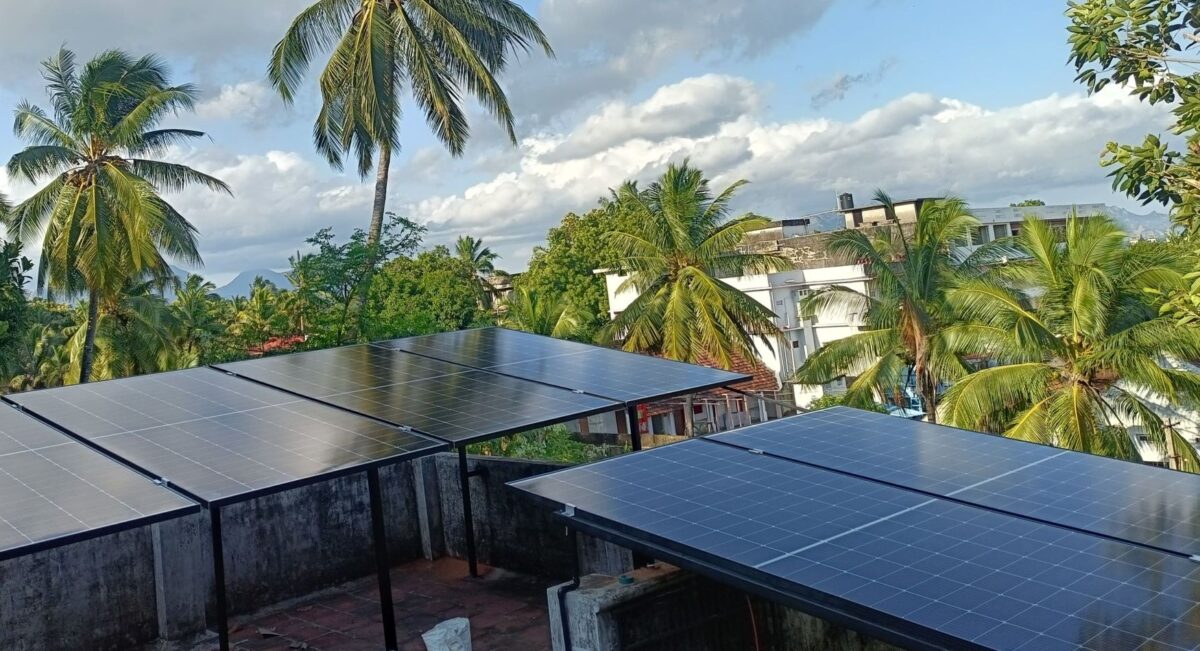





Every major shift in India’s energy story has started quietly—inside homes.
Before policy frameworks, before megawatt targets, before national missions, it is the household that first feels the strain: flickering lights during voltage dips, appliances restarting after outages, work disrupted by power interruptions, and the growing discomfort of energy uncertainty in an otherwise digital, always-on life.
Rooftop solar promised freedom from this uncertainty. And to a large extent, it delivered. But as solar adoption has scaled, a deeper truth has emerged: energy generation without energy control is only half the solution. The next phase of India’s solar growth will not be led by panels alone—it will be led by storage, intelligence, and integration.
This is where hybrid inverter systems step in.
The Grid Is Changing—and So Must Homes
India’s power grid today faces a different kind of pressure than it did a decade ago. Solar generation peaks during the day, often when household demand is low. This creates reverse power flows, voltage fluctuations, and localised grid stress—especially in high rooftop penetration zones.
The result is paradoxical: more solar on rooftops, yet less predictability inside homes.
Traditional on-grid systems shut down during outages. Diesel generators still require manual or delayed switchover—often 30 seconds to several minutes, which is enough to disrupt production, damage sensitive equipment, or break workflow continuity. In an economy where households and small institutions are deeply integrated into productivity, this gap is no longer tolerable.
India doesn’t just need more solar. It requires solar that behaves intelligently.
Policy Is Signalling the Shift
The direction is becoming clearer. Initiatives like the PM Surya Ghar Yojana are not just about expanding rooftop capacity; they signal a move toward distributed, household-level energy resilience. Storage is no longer an afterthought—it is the stabilising layer that allows solar to scale without destabilising the grid.
This matters because India’s economic structure is fundamentally household-driven. Nearly 60% of GDP comes from households, whether through consumption, home-based work, small enterprises, or services. If households are unstable from an energy perspective, the economy absorbs that instability.
As India moves toward its ambition of becoming a developed nation by 2047, energy independence will not be achieved only through large power plants or grid-scale storage. It will be built home by home.
Hybrid Inverters: The Missing Intelligence Layer
Hybrid inverter systems are often misunderstood as just “inverters with batteries.” In reality, they are something far more consequential.
They act as the operating system of the home energy ecosystem—orchestrating solar generation, battery storage, and grid interaction in real time. Instead of passively responding to power availability, hybrid systems actively decide how energy should flow, where it should be stored, and when it should be used.
In doing so, they transform solar from a generation asset into a living, adaptive energy system.
By 2026, hybrid inverters have emerged as the intelligent core of home energy—moving solar adoption beyond installation toward optimisation, resilience, and long-term value.
Why Hybrid Systems Define the Next Phase
Energy Independence That Actually Works – Hybrid systems ensure seamless continuity during grid outages by switching instantly to stored energy. There is no downtime, no manual intervention, and no reliance on fossil-based backup. For households, this changes the meaning of reliability.
Self-Consumption Becomes the Priority– Instead of exporting excess solar at low compensation and buying power back at higher tariffs later, homes can store energy and use it when it matters most. This shift—from grid dependency to self-optimisation—is central to the next solar phase.
Economic Resilience in a Changing Tariff Landscape– As electricity tariffs rise and demand-based pricing becomes more common, hybrid systems could protect households by using stored solar during peak periods. Energy becomes predictable—even when prices are not.
Built for the Future, Not Just Today– Hybrid architectures are modular by design. Homes can start small and scale—adding batteries, EV charging, or higher solar capacity over time. This adaptability is critical in an era where energy needs are evolving rapidly.
Technology Has Finally Caught Up
What makes this moment different is maturity.
Modern hybrid systems are powered by advanced software and AI-driven energy management, capable of learning usage patterns, forecasting weather, and optimising storage behaviour. High conversion efficiencies minimise losses, while grid-support features such as voltage and frequency stabilisation allow homes to act as micro-balancing units for the grid.
In effect, households move from being passive endpoints to active contributors in energy stability.
Why This Matters for India’s 2047 Vision
India’s long-term energy ambitions are bold: massive renewable capacity, reduced fossil dependence, and eventual net-zero alignment. But these goals cannot be met through generation alone.
Storage—especially decentralised storage—will define success.
Hybrid inverter systems enable exactly what India needs at scale:
- Rooftop solar growth without grid instability
- Reliable power in regions with fluctuating supply
- Reduced dependence on diesel and backup fuels
- Smarter energy behaviour aligned with economic growth
They support a future where millions of homes are not just consuming power, but managing it responsibly and intelligently.
The Outcome
Beyond the policy frameworks and technical advantages lies a simpler truth.
Hybrid systems mark the transition from “having solar” to living with energy confidence.
They offer that assurance—not through excess capacity, but through intelligence and balance.
And that is why energy storage for homes—anchored by hybrid inverter systems—will lead the next phase of solar growth in India. Not as an upgrade, but as a necessity for a nation building toward energy independence by 2047.
The views and opinions expressed in this article are the author’s own, and do not necessarily reflect those held by pv magazine.
This content is protected by copyright and may not be reused. If you want to cooperate with us and would like to reuse some of our content, please contact: editors@pv-magazine.com.



By submitting this form you agree to pv magazine using your data for the purposes of publishing your comment.
Your personal data will only be disclosed or otherwise transmitted to third parties for the purposes of spam filtering or if this is necessary for technical maintenance of the website. Any other transfer to third parties will not take place unless this is justified on the basis of applicable data protection regulations or if pv magazine is legally obliged to do so.
You may revoke this consent at any time with effect for the future, in which case your personal data will be deleted immediately. Otherwise, your data will be deleted if pv magazine has processed your request or the purpose of data storage is fulfilled.
Further information on data privacy can be found in our Data Protection Policy.