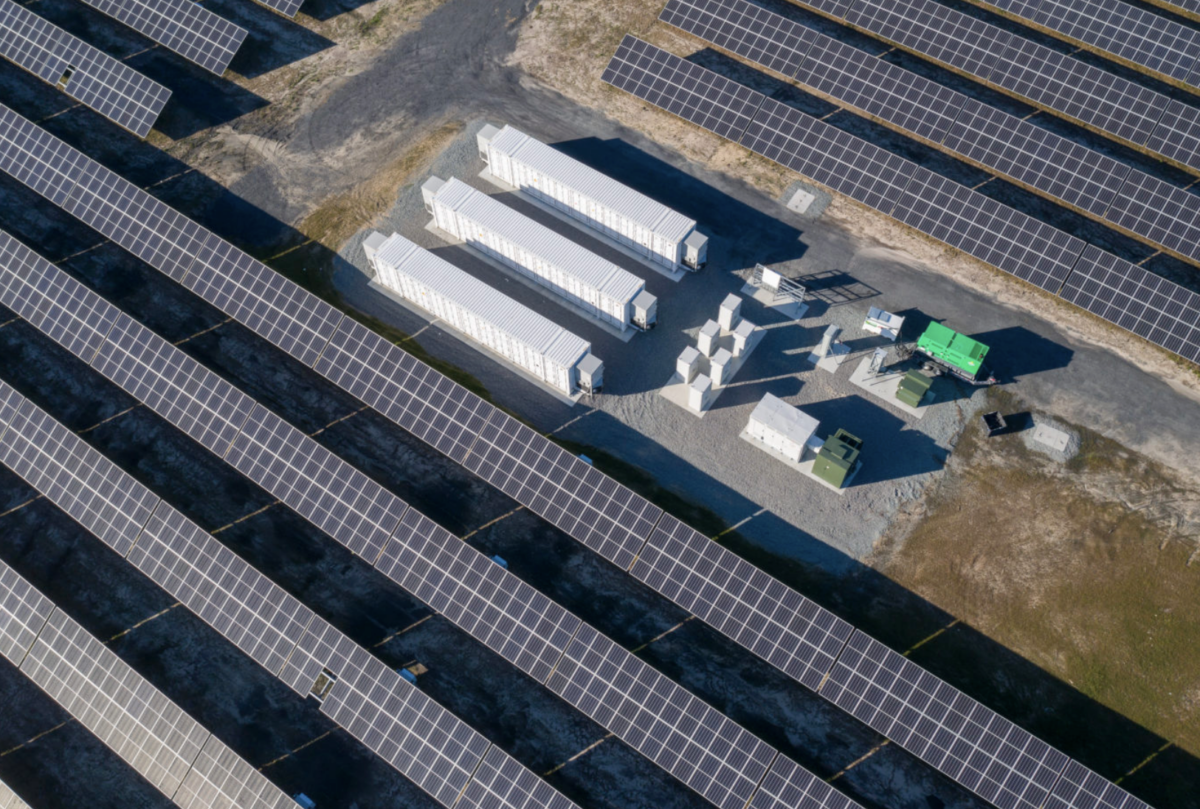





The Solar Energy Corp. of India’s (SECI) tender for 1.2 GW of interstate transmission system (ISTS)-connected solar projects, integrated with 600 MW/3,600 MWh of energy storage systems (ESS), has discovered a tariff of INR 3.12/kWh.
NLC India Renewables secured the largest solar capacity of 600 MW, while Engie Energy India won 200 MW—both at a tariff of INR 3.12/kWh. Of the remaining capacity, Rays Power Infra was awarded 300 MW and Oriana Power 100 MW at a tariff of INR 3.13/kWh.
As per the tender requirements, the winning developers must install storage capacity of at least 0.5 MW/3 MWh for every 1 MW of contracted solar capacity under the power purchase agreement (PPA). The storage component may be owned by the solar developer or tied up separately with a third-party provider.
The projects will be developed on a build-own-operate (BOO) basis. SECI will sign 25-year PPAs with the developers for the procurement of solar power from these projects. The power will subsequently be sold to various buying entities across India, with SECI acting as an intermediary nodal agency facilitating back-to-back transactions between developers and buyers.
“The projects shall be located at the locations chosen by the developer at its own discretion of and cost, risk and responsibility. A single project can be set up at multiple locations with different delivery points,” said SECI in the tender document. “The ESS component needs to be co-located with the project, however, in case of a project located at multiple locations, the ESS needs to be co-located with at least one of the components.”
This content is protected by copyright and may not be reused. If you want to cooperate with us and would like to reuse some of our content, please contact: editors@pv-magazine.com.



2 comments
By submitting this form you agree to pv magazine using your data for the purposes of publishing your comment.
Your personal data will only be disclosed or otherwise transmitted to third parties for the purposes of spam filtering or if this is necessary for technical maintenance of the website. Any other transfer to third parties will not take place unless this is justified on the basis of applicable data protection regulations or if pv magazine is legally obliged to do so.
You may revoke this consent at any time with effect for the future, in which case your personal data will be deleted immediately. Otherwise, your data will be deleted if pv magazine has processed your request or the purpose of data storage is fulfilled.
Further information on data privacy can be found in our Data Protection Policy.