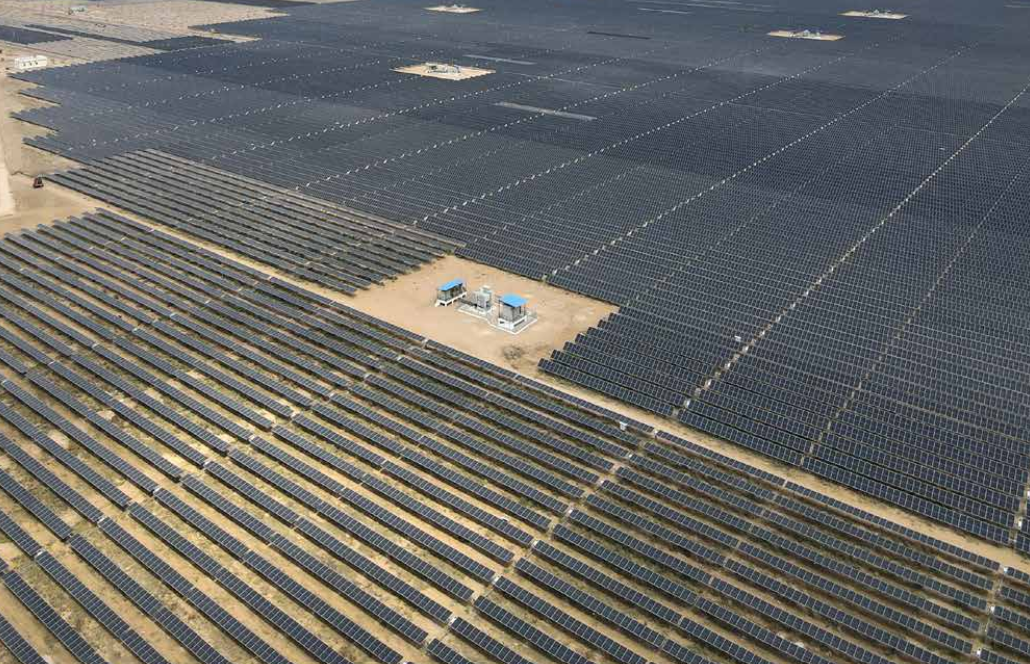





India has installed 132.85 GW of solar power capacity as on November 30, 2025, according to the latest figures from the Ministry of New & Renewable Energy (MNRE). This includes 100.80 GW of ground-mounted solar capacity, 23.16 GW of grid-connected rooftop solar, 3.34 GW from the hybrid solar component, and 5.55 GW from off-grid solar installations.
Solar PV capacity addition is led by Rajasthan, which accounts for 27% (36 GW) of the cumulative installed capacity. Gujarat ranks second with 24.8 GW, followed by Maharashtra with 17.2 GW. Together, these three states account for over 58% of India’s total installed solar capacity.
While solar capacity addition has largely been driven by utility-scale projects, the Government of India is implementing several schemes to promote decentralised solar installations across the country. These include PM Surya Ghar: Muft Bijli Yojana (PMSG:MBY), Pradhan Mantri Kisan Urja Suraksha evam Utthaan Mahabhiyan (PM-KUSUM), and the New Solar Power Scheme for Tribal and Particularly Vulnerable Tribal Group (PVTG) habitations and villages under Pradhan Mantri Janjati Adivasi Nyaya Maha Abhiyan (PM JANMAN) and Dharti Aabha Janjatiya Gram Utkarsh Abhiyan (DA JGUA).
PM Surya Ghar: Muft Bijli Yojana
The MNRE has been implementing this scheme nationwide since February 2024. The scheme aims to install rooftop solar systems in one crore households in the residential sector by FY 2026–27, with a total outlay of INR 75,021 crore.
PM-KUSUM
Launched in March 2019, the PM-KUSUM scheme provides financial support to farmers for the installation of standalone solar pumps and the solarisation of existing grid-connected agricultural pumps. It also provides the farmers an opportunity to become solar entrepreneurs by installing solar power plants on their barren, fallow or agriculture land. The scheme aims to add a solar capacity of 34.8 GW with total central financial support of INR 34,422 crore.
New Solar Power Scheme for Tribal and PVTG Habitations/Villages
Implemented under PM JANMAN and DA JGUA, this scheme aims to provide electricity to households, multi-purpose centres, and public institutions in tribal and PVTG areas through off-grid solar systems. These systems are deployed only in locations where grid-based electricity supply is not techno-economically feasible.
This content is protected by copyright and may not be reused. If you want to cooperate with us and would like to reuse some of our content, please contact: editors@pv-magazine.com.





1 comment
By submitting this form you agree to pv magazine using your data for the purposes of publishing your comment.
Your personal data will only be disclosed or otherwise transmitted to third parties for the purposes of spam filtering or if this is necessary for technical maintenance of the website. Any other transfer to third parties will not take place unless this is justified on the basis of applicable data protection regulations or if pv magazine is legally obliged to do so.
You may revoke this consent at any time with effect for the future, in which case your personal data will be deleted immediately. Otherwise, your data will be deleted if pv magazine has processed your request or the purpose of data storage is fulfilled.
Further information on data privacy can be found in our Data Protection Policy.