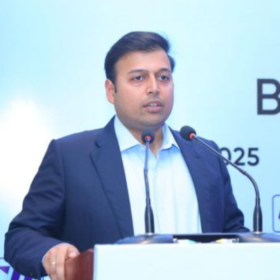
JBM Green hits 3 GWh in BESS orders
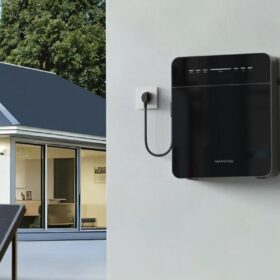
JBM Green Energy Systems, the lithium-ion battery vertical of JBM Auto, has achieved a robust orderbook of 3 GWh for battery energy storage systems.
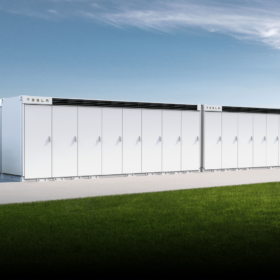
NTPC Green Energy tenders EPC package for 130 MW/520 MWh battery energy storage system
NTPC Green Energy Ltd (NGEL) has tendered the EPC package for development of battery energy storage system (BESS) at NTPC Ramagundam (100 MW/400 MWh) and Sipat (30 MW/120 MWh).
Bondada Engineering targets 10 GW renewable energy, storage portfolio by 2030
The solar EPC solutions provider also plans to expand its footprint to international markets in renewable energy sector.
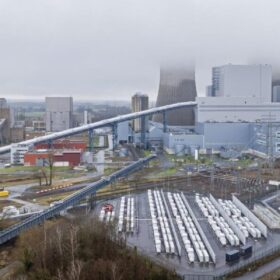
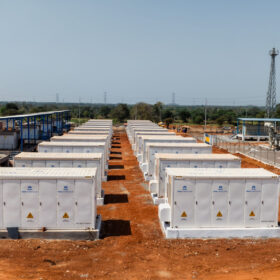
RWE plans 1.2 GWh battery on German former coal plant
The energy company says it is investing a mid-three-digit million euro amount into construction of the 600 MW battery energy storage system (BESS).
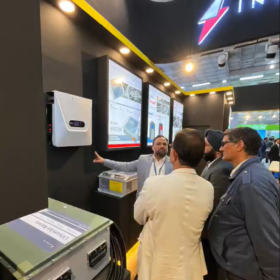
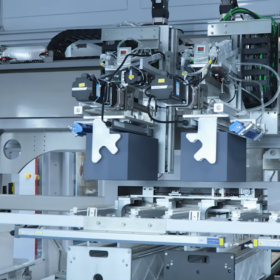
Inverted to build 5 GWh fully automated battery factory in Rajasthan
Inverted has unveiled plans to establish a fully automated battery plant in Ghilot, Rajasthan, with an annual production capacity of 5 GWh. The 4-acre facility will produce battery solutions for four-wheelers, light commercial vehicles and battery energy storage systems.
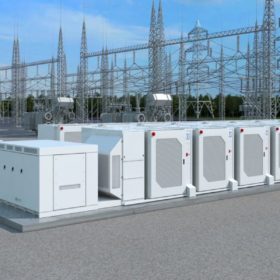
NTPC Vidyut Vyapar Nigam tenders 250 MW/1,000 MWh battery storage under VGF scheme
NTPC Vidyut Vyapar Nigam Ltd (NVVN) has invited proposals from developers for supply of energy from standalone battery energy storage systems (BESS) to be set up for an aggregate storage capacity of 1,000 MWh (250 MW x 4 hours). The selected developer will make the BESS available for one complete charge-discharge cycle per day.
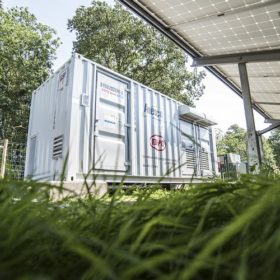
Power ministry mandates energy storage co-location with solar projects
India’s Ministry of Power has mandated that all renewable energy implementing agencies (REIAs) and State utilities must incorporate a minimum of two-hour co-located energy storage systems (ESS), equivalent to 10% of the installed solar project capacity, in future solar tenders.
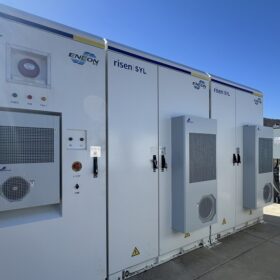
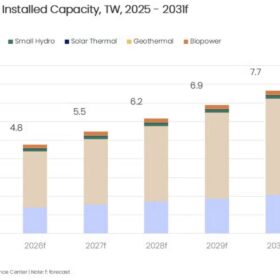
Batteries set to drive rapid solar growth
Chemical battery storage, led by lithium, has made such significant strides in terms of cost, capacity and technology that batteries are now positioned to accelerate our already exponential solar growth.
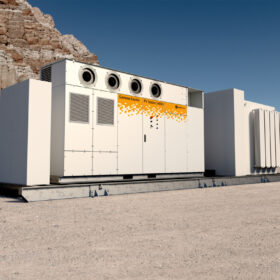
ABB to acquire Gamesa’s power electronics, storage business
ABB has agreed to purchase Gamesa’s power electronics and storage business, which produces doubly fed induction generator (DFIG) wind converters, industrial battery energy storage systems (BESS), and utility-scale solar inverters.
India’s decarbonization presents $12 trillion opportunity in clean technologies
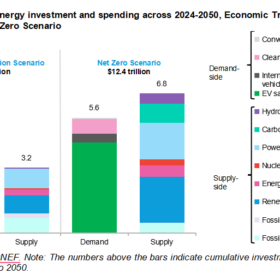
A BloombergNEF study estimates India’s energy sector investment and spending under its net-zero scenario at $12.4 trillion over 2024-50, 34% (or about $3 trillion) higher than in the economic transition scenario.