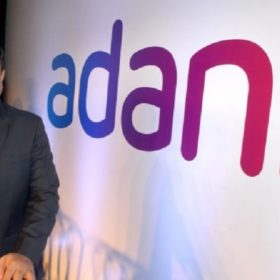
Adani Enterprises, Israel Innovation Authority sign agreement to develop cutting-edge tech solutions
Adani has partnered with Israel Innovation Authority to leverage the broad Israeli technology ecosystem for its diverse businesses in renewable energy, logistics, and more. The partnership provides Israeli companies a unique opportunity to codevelop, pilot, and scale up innovative technologies by utilizing Adani’s extensive industrial asset base.
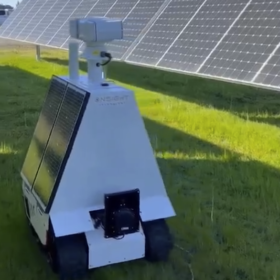
Fully autonomous robot for solar O&M
OnSight Technology has developed a tele-operated vehicle to clean solar arrays. It is equipped with a radiometric thermal imaging camera and an optical zoom camera backed by artificial intelligence. It has a range of 12 hours and a speed of 1.6 km per hour.
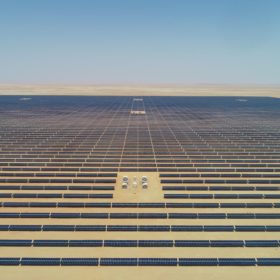
Automation in solar O&M delivering plant ROI
Data analytics and digital process support in solar plant operation and maintenance delivers unmatched improvement in efficiency, while modern technology drives down development costs. It also helps service providers in ensuring sustained energy generation, long-term performance, and plant’s return on investment.
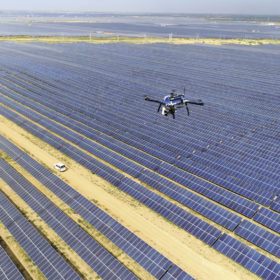
The long read: Getting smart about solar
As solar PV increases its share in the world’s energy mix, it is becoming increasingly clear how valuable the data gathered from renewable energy generators is in informing important decisions about operation, maintenance and grid integration. Yazeed Al Mousa examines the latest applications for artificial intelligence in PV project development and operation.
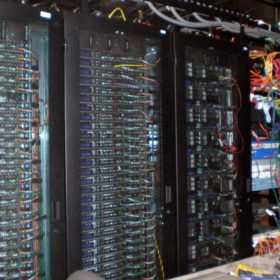
Driving carbon neutrality in the telecom industry
The information and communication technology (ICT) and telecom industry is now equipped with a sophisticated range of solutions to meet the enhanced demand for high-speed data and digital services in a green and energy-efficient manner.

Emerging trends in the Indian solar power sector
The Indian solar power sector is undergoing a technology-backed transformation at every stage from manufacturing to installation to improve cost and performance efficiency.
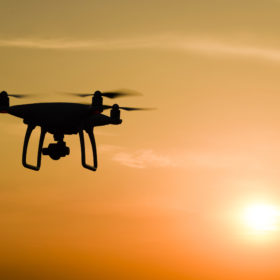
Drones playing a critical role in India’s solar boom
Drones, in combination with artificial intelligence, are helping to drive powerful insights, allowing teams to make better-informed decisions throughout the solar project development lifecycle.
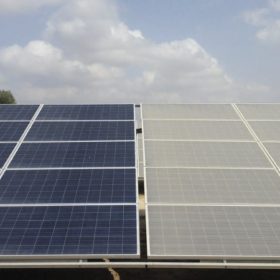
AI identifies a $14bn solar problem
How do you know when an inverter or module is under-performing? Monitoring services should shed light on problems but AI-driven digital asset manager Raycatch says much information is hidden behind a wall of “noise.” Breaking that wall with advanced data analysis could unlock billions of cost savings.
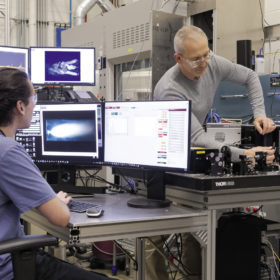
The long read: A new era for battery materials
Every year, chemical and energy companies produce $15 billion worth of commodities such as carbon black, silicon oxide, and aluminum oxide, for manufacturing purposes. Engineers do this by pumping chemicals into a flame and collecting material formed in the fire, in an approach known as flame spray pyrolysis. This approach, according to scientists at Argonne National Laboratory, has the potential to create more advanced materials for use in next-generation storage batteries.
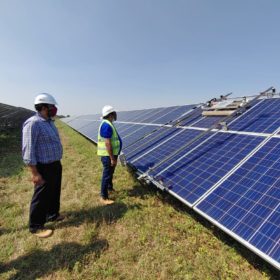
Indian startup Solavio Labs raises Canadian fund
The solar panel-cleaning robot startup, which saw its sales jump 125 times last year, has thus far raised three levels of funding amounting to INR 2 crore from government bodies in India, Dubai, and Canada.