World’s largest 1 MW/100 MWh sand battery commissioned in Finland
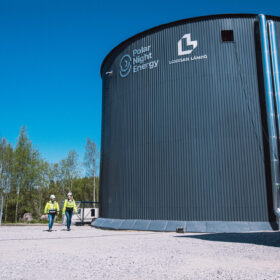
Finnish startup Polar Night Energy has commissioned the world’s largest sand battery in Pornainen, southern Finland. The industrial-scale system delivers 1 MW of thermal power with 100 MWh storage capacity, covering up to a month’s summer heat demand and nearly a week’s winter demand for the local district heating network.
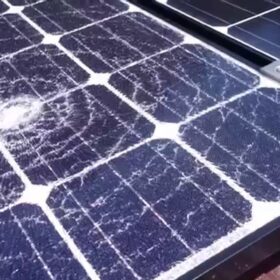
Solar risks: Hail, AI error, wildfire, and more
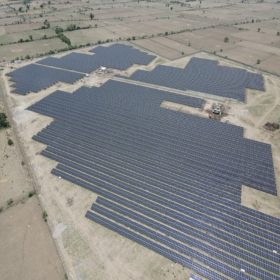
Hail damage remains a top risk to large-scale solar assets in USA, according to an annual report from kWh Analytics.
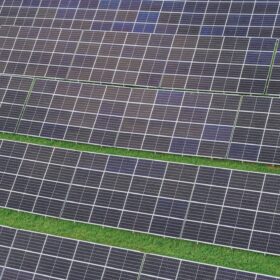
2025: A landmark year for solar energy
The IEA-PVPS 2025 Snapshot of Global PV Markets reveals a pivotal moment for solar power: global PV capacity surpassed 2.2 TW, with more than 600 GW installed in 2024 alone. As module prices fell due to oversupply, installation volumes continued to grow, highlighting both the strength and volatility of the global PV industry.
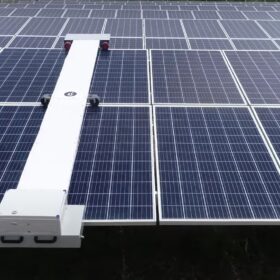
Financing India’s clean energy transition
To effectively meet its clean energy and net zero targets, India must address the current limitations in its green financing models. Additionally, the lenders must take into account sector specific risks.
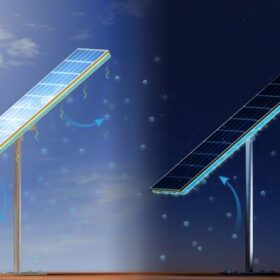
New cooling gel could raise PV module efficiency by 12%
Researchers in Saudi Arabia have developed a hydrogel composite that absorbs moisture in solar modules overnight and facilitates evaporative cooling throughout daylight hours. The system has undergone lab tests and outdoor experiments on two continents.

Adani Solar ranks on WoodMac’s list of Top 10 PV module manufacturers globally in 2024
Adani Solar ranked on WoodMac’s list of Top 10 PV module manufacturers in 2024 with a score of 72.8.
RenewSys named ‘Top Performer’ in Kiwa PVEL’s 2025 PV Module Reliability Scorecard
RenewSys India has been named a “Top Performer” in the 2025 PV Module Reliability Scorecard by Kiwa PV Evolution Labs (PVEL).
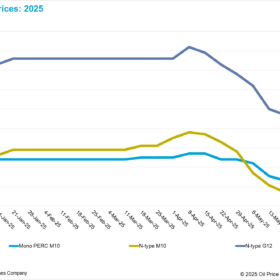
Solar wafer prices decline 22.78% since April peak
In a new weekly update for pv magazine, OPIS, a Dow Jones company, provides a quick look at the main price trends in the global PV industry.
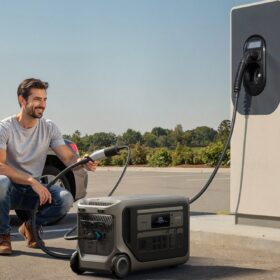
Anker Solix launches F3000 portable power station for home backup use
Anker Solix has unveiled the F3000, a 3-kWh portable power station designed for home backup and off-grid use in the United States and Canada, featuring fast charging, EV and generator compatibility, and scalable capacity up to 12.3 kWh.
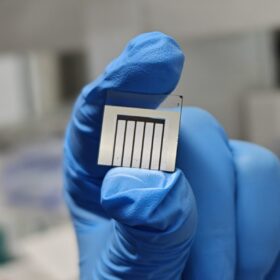
Perovksite-TOPCon tandem solar cell based on self-assembled monolayer achieves 31.1% efficiency
Researchers in China have fabricated a perovskite-TOPCon solar cell with a top perovskite device utilising a self-assembled monolayer aimed to improved cell stability. The tandem cell achieved a high fill factor and a certified efficiency of 30.9%.