Total and Google Cloud develop tool to predict rooftop PV potential
The Solar Mapper uses artificial intelligence algorithms that compile data extracted from satellite images. It can estimate site solar potential and indicate the most suitable technology.

Swedish truck maker develops solar cell-clad trailer
The 18-meter long solar cell-clad trailer is said to enable fuel savings of 5-10% in Sweden. Swedish thin-film manufacturer Midsummer is a partner on the project.

Agrivoltaics for pear orchards
Belgian researchers are testing agrivoltaic power generation in a pear orchard. The first pilot project features specially designed 185 W solar panels with transparent backsheets, conventional silicon cells, and a 21% efficiency rate.

India aims to become a hub for cutting-edge solar manufacturing
With a huge market and relevant manufacturing advantages, the country aspires to become a giga-scale manufacturing destination for the breakthrough PV technologies across the value chain.
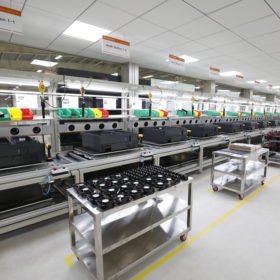
IRENA presents $2tn plan to drive 5.5m renewables jobs by 2023
Doubling down on renewable energy investment and energy transition spending is required to ensure a truly green global recovery from the Covid-19 crisis and its economic aftershock, claims the International Renewable Energy Agency.

The long read: How can yield be increased, and by how much?
In preparation for the Asset Management Session of pv magazine’s Virtual Roundtables Europe in June, we took a close look at how much yield is lost due to quality issues, and discussed with a group of experts when it makes financial sense to take appropriate measures to address these issues.
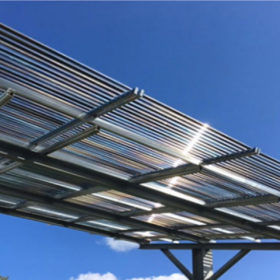
Thin-film agrivoltaic solar tubes
German tech company Tube Solar AG has secured €10.8 million to develop its cylindrical agrivoltaic modules. The lightweight devices could also be used on roofs until now considered unsuitable for PV.
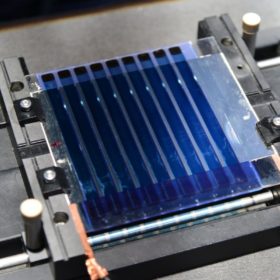
More efficient large-area organic solar cells with spin coating
Researchers in South Korea have used the process to increase performance and the replicability of large-area organic cells. The method was used during film formation to speed up solvent evaporation.

How long will the lithium supply last?
Researchers have sounded the alarm. If no serious efforts are made on second-life battery use, recycling and vehicle-to-grid applications, decarbonization efforts may hit the buffers a lot sooner than expected.

NREL scientists estimate global potential of hydro-linked floating PV at up to 7.5 TW
The U.S. based researchers said linking solar with hydro in a full hybrid system configuration may result – at best – in the deployment of 7,593 GW for an estimated annual power generation of 10,616 TWh and a 20% reservoir coverage. And combining solar with hydro in this way brings further benefits, including improved system operation at different time scales, more opportunities for storage thanks to pumped hydro, increased utilization rates of transmission lines, reduced PV curtailment, and lower interconnection costs and water evaporation.