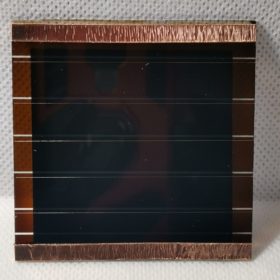
GreatCell achieves 32% efficiency for inorganic perovskite solar cell
Australian manufacturer GreatCell has built a cell with roll-to-roll coating technology. It designed it without a hole transport layer (HTL) and used carbon composite back contacts, which offer excellent electrical conductivity.
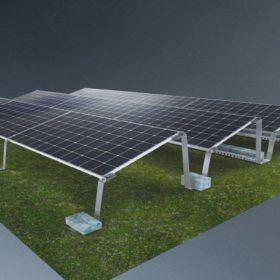
Aerocompact launches high-elevation mounting system for rooftop PV
Portuguese startup Solarud has unveiled the next generation of its water-draining device for PV panels with low, sloping inclines. The new design avoids clogs caused by sand and dust, in nano and customized versions that fit installations and modules of different sizes.
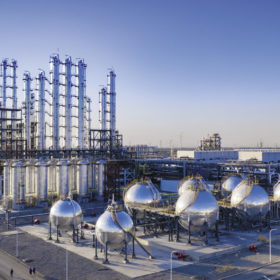
Global polysilicon capacity could hit 536 GW by end of 2023
Clean Energy Associates said in a new report that it expects polysilicon production capacity to exceed PV installations next year.
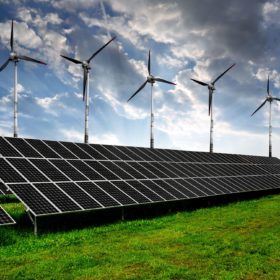
Wind, solar payback times under a year in some parts of world, says Rystad
Record energy prices, particularly in Europe, are driving demand for renewables and energy storage. That is changing the equation for utility solar and wind investment and shortening project payback times to under a year in some regions. Storage deployment, driven by recent policy developments around the world, is also expected to get a big boost through to 2030.
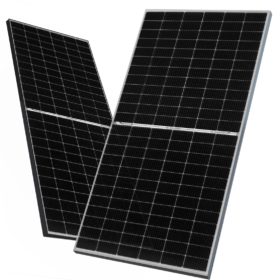
JinkoSolar achieves 26.1% efficiency for n-type TOPCon solar cell
JinkoSolar has set another world record for n-type solar cell efficiencies with its TOPCon technology, this time reaching 26.1%. The new record was confirmed by China’s National Institute of Metrology.

Sodium-ion battery anode made from toxic hogweed
Russian researchers have transmuted poisonous Sosnowsky’s hogweed into high-grade anode material for sodium-ion batteries. The obtained material has a Coulombic efficiency of 87%, which is on par with the best reported results for hard carbons synthesized from other raw materials.
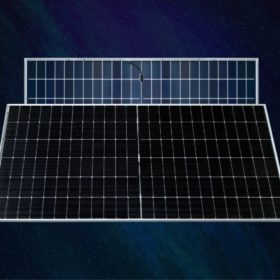
AE Solar unveils n-type TOPCon solar modules with 22.2% efficiency
Germany-based AE Solar said its new panels have a temperature coefficient of -0.35% per degree Celsius and come with a 30-year power output guarantee for 87.4% of the initial yield.
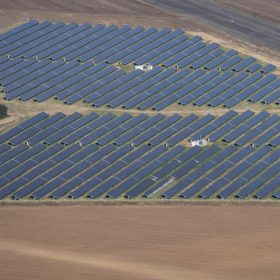
Why do solar power plants work inefficiently?
When choosing a solar power plant, individuals and businesses pay the most attention to its power – after all, this will determine how much electricity will be produced. Other equipment, systems and sensors that allow monitoring and analysis of the operation of the power plant are often underestimated. But they shouldn’t be: the solar power plant will be used for several decades, so various failures and poor-quality monitoring can have a significant impact on the efficiency of electricity production.
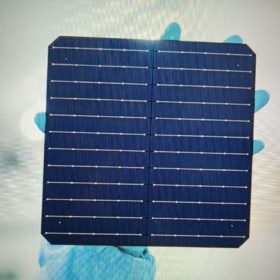
Copper is the new silver lining
As the PV industry scales to annual terawatt-level production to rapidly curtail the world’s emissions, it will become more challenging to continue the cost reduction trajectory. Increasing module production from current levels of 200 GW to 300 GW to several terawatts each year will consume significantly more material resources than the industry currently uses. This will require consideration of the additional materials to be sourced, writes Alison Lennon, chief scientist at Sundrive Solar and professor at the UNSW’s School of Photovoltaic and Renewable Energy Engineering.
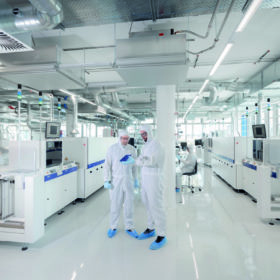
Fraunhofer ISE develops direct metallization tech for heterojunction solar cells
Germany’s Fraunhofer ISE is applying its FlexTrail-printing technology to the direct metallization of silicon heterojunction solar cells. It said the technique reduces the use of silver, while maintaining high efficiency levels.