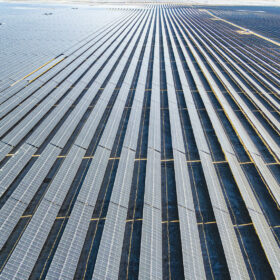
Green bonds totaling $870 million issued for 2 GW solar project in UAE
Joint owners of the 2 GW Al Dhafra solar power plant Abu Dhabi National Energy Company, Abu Dhabi Future Energy Company, EDF Power Solutions and Jinko Power, alongside offtaker Emirates Water and Electricity Company, have issued the green bonds to refinance the plant’s existing debt obligations and support its continued operation.
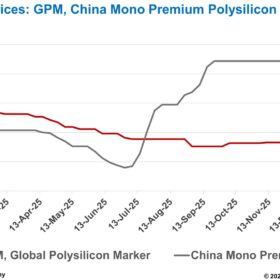
Compliance premiums lift global polysilicon prices
In a new weekly update for pv magazine, OPIS, a Dow Jones company, provides a quick look at the main price trends in the global PV industry.
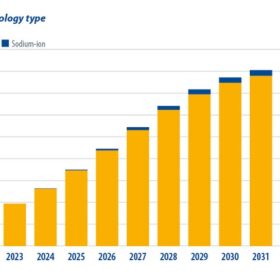
Why sodium-ion can’t yet challenge lithium-ion’s reign
A new generation of sodium-ion (Na-ion) battery cells has been launched as an alternative to the virtual monopoly of lithium-ion (Li-ion). Although the technology is unlikely to displace significant Li-ion market share, recent improvements make Na-ion a viable solution for certain niche applications, with potential for wider usage if cost becomes competitive.

Canadian Solar wins U.S. patent litigation against Maxeon
The patent infringement case was related to an unspecified TOPCon solar cell technology.
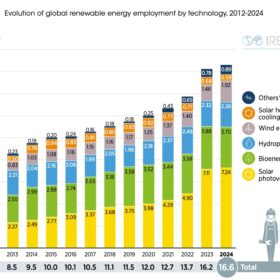
Solar accounted for 7.24 million jobs in 2024
The International Renewable Energy Agency’s annual review into employment finds solar held over 43% of global jobs in the renewable energy sector in 2024.
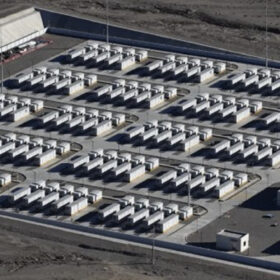
China switches on world’s first GWh-scale supercapacitor-energy storage project
The 500 MW/1 GWh Jiayuguan NingSheng project combines lithium batteries and supercapacitors to support grid stability and renewables integration.
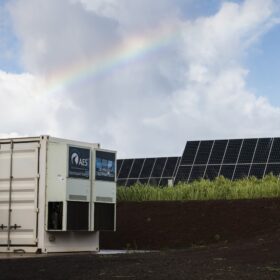
Grid-forming inverters significantly enhance grid stability, national lab finds
The Kauaʻi Island Utility Cooperative in Hawaii, which deployed storage before grid-forming inverters became available, became a test case for diagnosing grid issues that can arise with older grid-following inverters, and how grid-forming inverters can stabilize a grid.
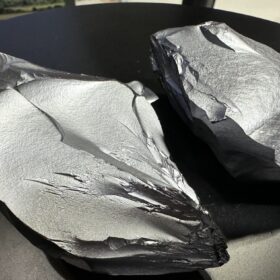
China extends anti-dumping duties on solar-grade silicon from US, South Korea
The duties range from 53.3% to 57% for U.S. producers and from 2.4% to 48.7% for South Korean companies and will remain in force for a further five years.
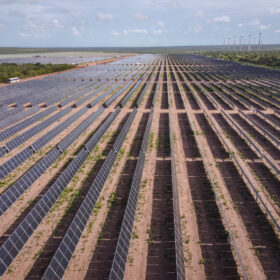
Capex-driven strategies can reduce solar LCOE by 20%
An international research group has conducted a literature review of capital expenditure-driven levelized cost of electricity optimization strategies for utility-scale PV systems. Tracking optimization, system voltage escalation, and advanced system design are identified as the most promising cost reduction areas. “The next wave of PV research must be LCOE-native, system-level, and deployment-validated,” a member of the research group said.
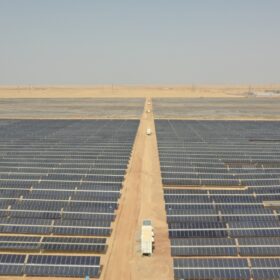
Scatec secures PPA for Africa’s largest solar-plus-storage project
Scatec has inked a 25-year power purchase agreement in Egypt for a 1.95 GW solar, 3.9 GWh battery energy storage project, representing the developer’s largest investment to date.