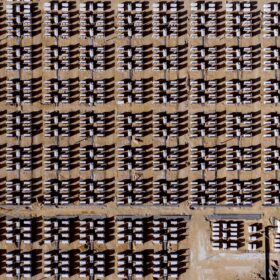
World’s largest AI-powered battery storage cluster comes online in China
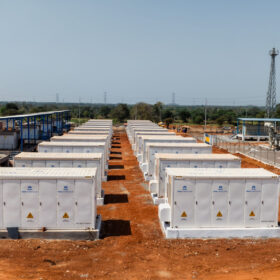
The multi-project cluster includes the world’s largest single-site electrochemical energy storage facility: the 4 GWh Envision Jingyi Chagan Hada Energy Storage Power Station.

Why corporate relations will define the green energy future
Green energy development today is being undertaken in a complex environment that is influenced by long-term capital commitments, changing regulation, and greater public and investor scrutiny. In this context, corporate relations is no longer restricted to disclosures, or media relations. It has become a strategic function that affects the way organisations are understood, evaluated and trusted over the course of time.
GREW Solar secures 550 MW repeat module order from leading IPP
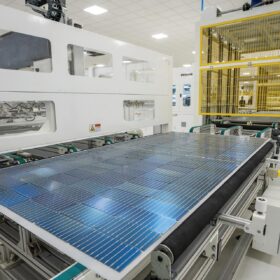
GREW Solar today announced that it has secured a 550 MW repeat order to supply solar PV modules to a leading independent power producer (IPP).
Growatt launches 5 kWh AC-coupled balcony storage system
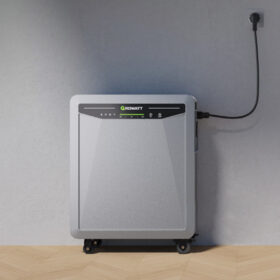
The IP66-rated Aura 5000 system features bidirectional inverter functionality and an AC output of up to 2.5 kW.
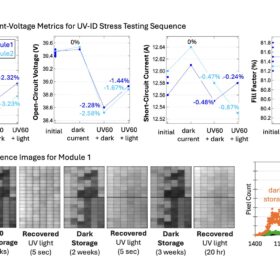
NREL researchers quantify UV-induced degradation levels in TOPCon solar cells
Researchers at NREL found that UV exposure can cause significant, partly non-recoverable degradation in TOPCon solar cells, with strong cell-to-cell and intra-cell variability linked to passivation and processing inconsistencies. While some UV-related losses recover quickly under light and are unlikely to affect field performance, the findings highlight gaps in current qualification tests and the need for improved UV aging standards.
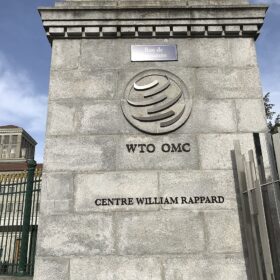
WTO finds US clean energy tax credits violate trade rules
The WTO ruled that U.S. clean energy tax credits under the Inflation Reduction Act violate international trade rules by giving domestic products preferential treatment over Chinese goods. The decision specifically targets the ITC and PTC Domestic Content Bonus Credits.
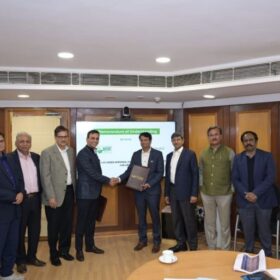
The Hydrogen Stream: NTPC Green signs MoU with Assago Industries for green ammonia supply
NTPC Green Energy Ltd (NGEL) has signed a Memorandum of Understanding (MoU) with Assago Industries for the supply of green ammonia, CO₂, renewable power, and other utilities to support the production of 1,000 tonnes per day (tpd) of green urea.
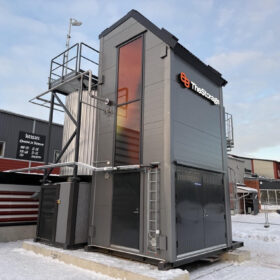
Finnish startup launches its first industrial-scale sand-based heat storage system
The Finnish start-up says its sand battery technology is scalable from 20 to 500 MWh with charging power from 1 to 20 MW, depending on industrial needs.
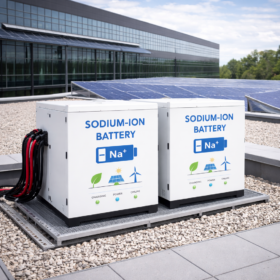
Sodium-ion batteries now competitive in niche markets
Sodium‑ion batteries are emerging as a safer, lower-cost alternative to lithium‑ion, with a recent international study highlighting their competitiveness in stationary energy storage. The research shows that ongoing investment and supply-chain development could enable broader adoption within the next decade.
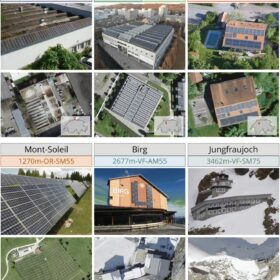
Study finds much lower-than-expected degradation in 1980s and 1990s solar modules
Researchers at SUPSI found that six Swiss PV systems installed in the late 1980s and early 1990s show exceptionally low degradation rates of just 0.16% to 0.24% per year after more than 30 years of operation. The study shows that thermal stress, ventilation, and material design play a greater role in long-term module reliability than altitude or irradiance alone.