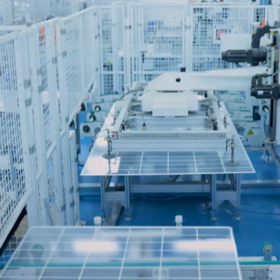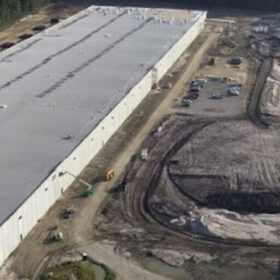
Boviet Solar sells U.S. PV module factory to Indian manufacturer Inox Solar
The divestment, already partially secured via escrow, reflects regulatory pressure from U.S. FEOC policy changes. Boviet Solar also continues negotiations to sell a separate U.S. cell project.
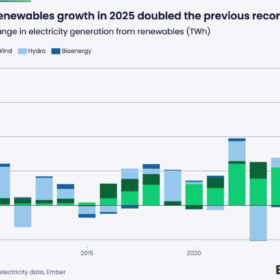
Record solar, wind surge drives 3.3% drop in India’s fossil generation in 2025
India’s renewable power generation from solar, wind, hydro and bioenergy rose by a record 98 TWh (+24%) in 2025, driven by strong growth in solar and wind, according to a report by Ember. The increase was twice the nation’s electricity demand growth of 49 TWh, which was abnormally low owing to milder temperatures and slower industrial activity. As a result, India’s fossil power generation fell by 3.3%.

US solar module prices face upward pressure
Median solar module pricing in the United States reached $0.28 per watt as the market adjusted to intensified trade enforcement and new Foreign Entity of Concern compliance requirements, according to the Q1 2026 Quarterly Pricing & Domestic Content Report from Anza.
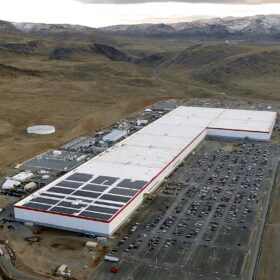
Tesla advances plan to build 100 GW of U.S. PV manufacturing capacity by 2028
Job advertisements on Tesla’s website outline the 100 GW ambition and follow reports the company is in talks with Chinese firms for the purchase of $2.9 billion worth of equipment for solar manufacturing.
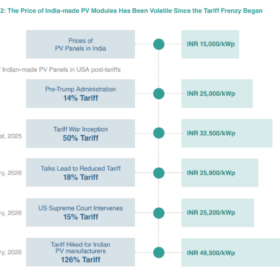
Trump’s tariffs are a strategic opportunity to accelerate India’s domestic solar deployment, suggests new report
Increased solar deployment and stricter enforcement of renewable purchase obligations across states and industries can help Indian manufacturers get over a volatile period and position themselves to compete better in a global market, according to Bengaluru-based think tank Climate Risk Horizons.

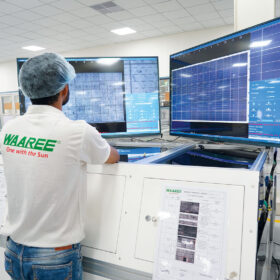
Waaree Solar Americas signs share subscription agreement with polysilicon supplier United Solar Holdings
Waaree Solar Americas Inc. has entered into a share subscription agreement with United Solar Holdings Inc., a Cayman Islands-based polysilicon producer, to subscribe to around 5.37 million Series B preferred shares for about $30 million.
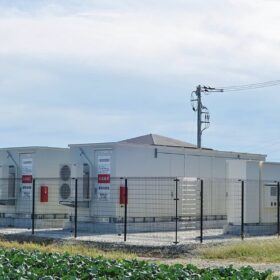
US energy storage shatters records with 58 GWh installed in 2025
The Solar Energy Industries Association (SEIA) and Benchmark Mineral Intelligence say US battery installations reached a record 57.6 GWh in 2025, up 30% year on year, as the industry enters what they describe as a new phase of sustained, high-volume deployment.
Solar manufacturers downplay impact of US countervailing duties
Leading solar manufacturers say proposed US countervailing duties on Indian solar cells and modules are unlikely to materially impact their businesses.

U.S government sets preliminary countervailing duties on solar imports from India, Indonesia and Laos
The U.S. Department of Commerce has issued preliminary findings that solar manufacturers in India, Indonesia and Laos benefited from government subsidies, paving the way for countervailing duties of up to 143.30%.
US government withdraws defense of solar tariff pause
The US Department of Justice (DoJ) has withdrawn from defending the executive order that paused certain tariffs on imported solar components, leaving private industry groups and companies to continue the appeal. The withdrawal increases legal uncertainty over potential retroactive duties tied to imports from Cambodia, Malaysia, Thailand, and Vietnam.