Indian researchers build transparent perovskite-silicon tandem solar cell with 30.2% efficiency
The transparent four-terminal perovskite solar cell employs an ion-modulated spiro-MeOTAD hole transport layer, which passivates interfacial defects, enhances carrier dynamics, and allows for a tunable work function in wide-bandgap perovskites. When integrated into mechanically stacked 4T tandems with an n-TOPCon cell, the device achieved an overall efficiency of 28.4–30.2%, along with improved open-circuit voltage and fill factor.
Bondada Engineering Ltd commissions 61.7 MWp of solar in March
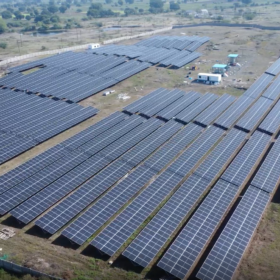
Bondada Engineering Ltd has commissioned 61.7 MWp of solar projects for clients including Paradigm IT and Maharashtra State Power Generation Company Ltd (MAHAGENCO) in March.
Pace Digitek’s arm Lineage Power delivers 100th BESS container
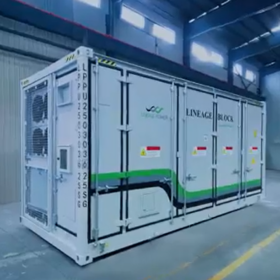
Lineage Power, the energy storage arm of Pace Digitek Ltd, has delivered its 100th containerized battery energy storage system (BESS).

MNRE’s GIB‑related SCOD relief to benefit 8.6 GW RE projects: India Ratings
India Ratings and Research (Ind-Ra) said the Ministry of New and Renewable Energy’s decision to treat commissioning delays arising from the Supreme Court’s ongoing proceedings in the Great Indian Bustard (GIB) matter as a force majeure‑like event provides material relief to developers of approximately 8.6 GW of renewable capacity.

RENA Technologies secures 1.2 GW TOPCon wet processing equipment order from Gujarat-based Celloraa Energy
RENA Technologies has secured an order to supply advanced wet chemical processing systems for Celloraa Energy’s new 1.2 GW TOPCon solar cell manufacturing line at Surat, Gujarat.
Websol Energy System secures orders for 85.5 MW of solar modules
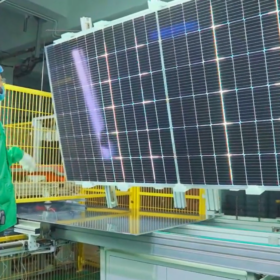
Websol Energy System announced this week that it has secured three purchase orders totalling 85.5 MW for solar modules. These orders, valued at INR 172 crore, are currently in production and are scheduled for delivery by May 2026.
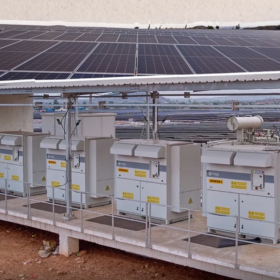
India expected to install about 42.5 GW of new solar capacity in 2026: JMK Research
India installed around 37.8 GW of solar capacity in CY2025. This comprised about 28.6 GW of new utility-scale solar, a 54.6% increase from 2024, and 7.9 GW of rooftop solar, up 72% year on year. Off-grid additions stood at 1.35 GW, compared to 1.48 GW in 2024.

Malaysia’s TTVision Holdings Berhad enters India’s solar manufacturing market
TTVision Holdings Berhad, a Malaysia-based machine vision and automation solutions provider, plans to establish a joint venture manufacturing facility in India, scheduled for commissioning in the second half of 2026. It is planning to manufacture not only automated optical inspection (AOI) systems but also additional solutions at its upcoming India facility.
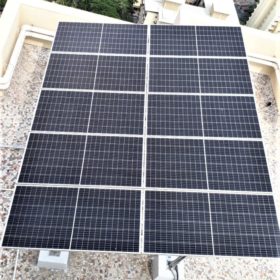
India installs 7.1 GW of rooftop solar in 2025, up 122% YoY
Residential consumers accounted for 76% of rooftop solar capacity additions in 2025, driven by the PM Surya Ghar: Muft Bijli Yojana program.

RenewSys signs agreement with ENGIE for supply of 125 MWp TOPCon solar modules
RenewSys India has entered an agreement with ENGIE for the supply of 125 MWp of TOPCon solar PV modules. The module deliveries are scheduled between February 2026 and April 2026.