Solar surge in Northern India as Cyclone Ditwah cuts irradiance in the south and Sri Lanka
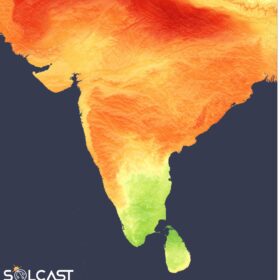
In a new weekly update for pv magazine, Solcast, a DNV company, reports that November brought above-average solar conditions in northern India and Pakistan, while southeastern India and Sri Lanka faced reduced solar output due to Cyclone Ditwah’s storms and heavy cloud cover. Despite southern disruptions, India’s renewable energy share rose, driven by strong solar generation in the north and overall growth in renewable capacity.
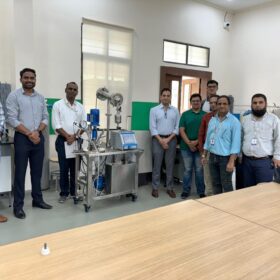
MIT-WPU researchers develop safer liquid hydrogen transport system
Researchers at India’s MIT World Peace University (MIT-WPU) have developed a Liquid Organic Hydrogen Carrier (LOHC) system capable of transporting hydrogen in a stable liquid form that is non-flammable, non-explosive, and manageable at normal temperatures and pressures. This breakthrough removes one of the biggest barriers slowing the widespread adoption of hydrogen in India.
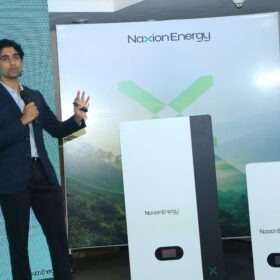
Naxion Energy launches India’s first sodium-ion energy storage systems
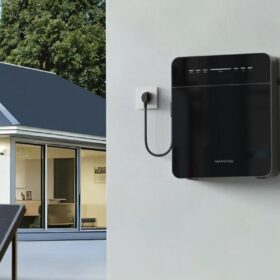
Naxion Energy (formerly Sodion Energy) has introduced its sodium-ion–based energy storage systems for the residential and commercial & industrial sectors. The storage systems are available in 3.5 kW, 5 kW, and 10 kW models, and the batteries can be expanded to double the system’s storage capacity.
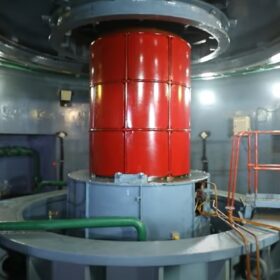
THDC commissions Unit-3 of 1 GW pumped storage project in Tehri
THDC India Ltd., a subsidiary of NTPC Ltd., has commissioned Unit-3 (250 MW) of its 1 GW (4×250 MW) variable-speed pumped storage hydropower project in Uttarakhand.
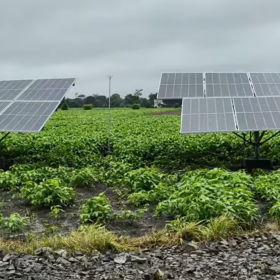
Oswal Pumps wins INR 380 crore order for 13,738 off-grid solar water pumps in Maharashtra
Oswal Pumps has received a Letter of Award from the Maharashtra State Electricity Distribution Co. Ltd (MSEDCL) for the supply and installation of 13,738 off-grid DC solar PV water pumping systems under the PM-KUSUM Scheme
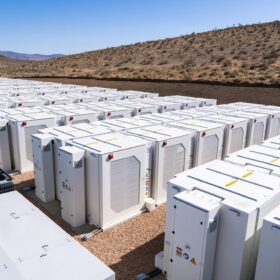
Batteries now cheap enough to make dispatchable solar economically feasible
A new analysis from energy think tank Ember shows that the cost of storing electricity with utility-scale batteries has fallen to just $65/MWh as of October 2025 outside China and the US, making it economically feasible to deliver solar power when it is needed.

Smart Joules raises $10 million in Series B funding from Neev II Fund, Waaree Renewable Technologies, and Spectrum Impact
Smart Joules will use the proceeds to expand its energy-efficiency and cooling operations into newer sectors and larger-scale projects, including manufacturing, building automation, and district cooling, while further strengthening the company’s technology, analytics, and on-ground execution capabilities.
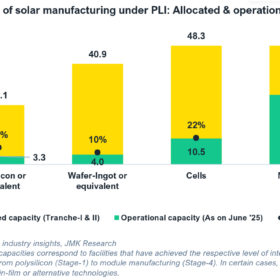
Solar PLI scheme drives strong industry interest but faces implementation challenges
As of June 2025, the overall achievement (operational capacity) rate of the solar PLI scheme stood at approximately 29% of the total awarded capacity. Capacity additions remain below targets, with only 59% of module capacity and 14% of polysilicon capacity achieved as of June 2025.
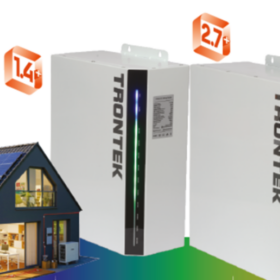
Trontek enters residential energy storage market with 1.4 kWh and 2.7 kWh lithium battery systems
Trontek has entered the residential energy storage market with the launch of Powercube 1.4 kWh and Powercube 2.7 kWh lithium-ion battery storage systems that support both solar and grid charging.
The skills gap, not capital, is India’s real green energy bottleneck
The renewable energy sector creates significant employment density—approximately 10 times more workers per MW in solar and 3–4 times more in wind than in conventional power plants. This employment multiplication should be our competitive advantage. However, the skills gap is creating economic inefficiencies that compound across the sector.