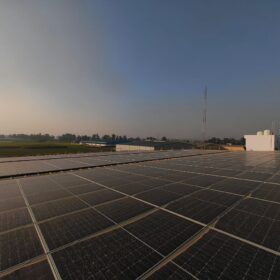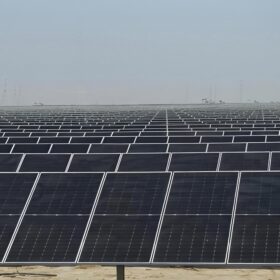




Rapid rooftop expansion of solar and rising customer expectations are reshaping demand across all the residential, commercial as well as industrial segments
New Delhi, 18th February 2026: India’s solar sector continues to expand, with both utility-scale and rooftop installations growing steadily across the country. According to Shweta Solar Pvt. Ltd., a fast-growing name in the renewable energy space, this phase is not just about adding capacity. It suggests a broader shift in how the country is looking at clean energy.
India’s installed solar photovoltaic capacity has now crossed 140 GW. While the number draws attention, the journey to achieve this milestone in solar energy has been gradual. It has taken sustained policy support, better execution on the ground and rising investor confidence. Altogether these factors have helped India strengthen its position among the world’s leading solar markets.
Mr. Sanjay Garg, Director, Shweta Solar Pvt. Ltd. said, “With installed capacity crossing 140 GW and rooftop adoption accelerating, the market is maturing. Customers are thinking long term. They want systems that perform consistently year after year, irrespective of geography. That is the conversation the industry needs to prioritise.”
Growth picked up noticeably in 2025. The renewable energy sector added nearly 44.5 GW of new capacity during the year, and solar accounted for most of that addition. Large ground-mounted projects continued to lead the way, but rooftop installations also made a strong contribution, adding close to 7 GW.
Rooftop solar, in particular, has gained momentum. Industry reports show that around 4.9 GW was installed in the first nine months of last year alone, roughly 161 percent higher than the same period a year earlier. Residential adoption has clearly picked up. More homeowners are exploring rooftop systems, and businesses are turning to solar as electricity bills remain unpredictable. By the end of 2025 and into early 2026, total rooftop capacity stood at around 18.6 GW. Installers say enquiries are now coming in steadily from smaller cities and semi-urban areas as well.
Government support has helped, but it is only part of the story. The PM Surya Ghar Muft Bijli Yojana has made rooftop systems more accessible for households. Equipment prices have stabilised compared to earlier highs, and grid power tariffs continue to rise in several states. For many consumers, the move toward solar now feels like a practical financial decision rather than an experiment.
Shweta Solar says it has noticed a shift in buyer conversations. Discussions are less about finding the lowest upfront price and more about how systems will perform over the next five or ten years. Buyers are paying closer attention to degradation rates and durability under Indian conditions, whether that means extreme heat inland or humidity and salinity along the coast.
Solar output also moved higher last year. Electricity generated from solar rose by about 22 percent in 2025 compared to the previous year. Much of this came from projects commissioned over the past few years that are now operating at full capacity and feeding steadily into the grid.
Policy backing continues alongside this growth. In the Union Budget 2026-27, more than ₹30,500 crore was allocated to solar programmes. The amount is higher than last year which shows how support has increased for both large solar projects and decentralised installations.
According to Shweta Solar, as installations spread across residential rooftops, industrial facilities and large-scale projects, consistent manufacturing practices and real-world performance data will play a larger role in building trust over time.
Mr. Garg added, “The next stage of growth will reward consistency. Performance, process discipline and field-tested reliability will define how effectively companies contribute to India’s clean energy ambitions. Our focus remains on delivering modules built for Indian conditions and dependable output over time.”
As India moves toward its 500 GW non-fossil energy target by 2030, the focus is gradually shifting beyond speed to long-term performance. How well systems perform over time may define the next chapter of solar growth in the country.