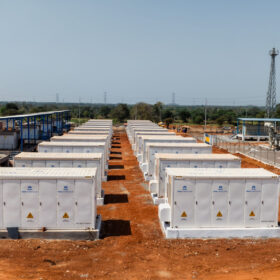
Azure Power issues US$414 million green bond at 3.575% coupon rate
The New Delhi-based independent power producer has issued its third green bond as it looks to raise US$414 million. The coupon rate is the lowest ever for any renewable energy company in India.
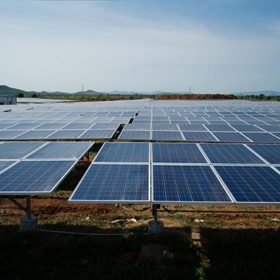
Tata Power commissions 100 MW solar project in Gujarat
The latest addition takes Tata Power Renewable Energy’s total installed capacity to 2,797 MW, including 1,865 MW of solar and 932 MW wind.

Lithium-sulfur battery with shorter charging time, longer lifespan
Japanese scientists have developed a new lithium-sulfur battery by using titanium oxide and titanium nitride to prevent the formation of polysulfides during the fabrication process. This allows the battery to retain 85% of its capacity after 500 cycles at 2 C.
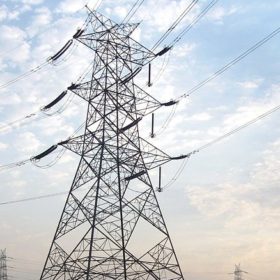
The substantial sustainability benefits of smart meters
Power generated by renewable sources and corresponding action taken by business layers is not predictable. So it’s imperative that the latest controls are leveraged in the service of smart grids.

India hits 100 GW renewables milestone
Solar’s share in the installed 100 GW renewable energy capacity stands at around 44%, and wind’s 40% as per the data available with the Central Electricity Authority.
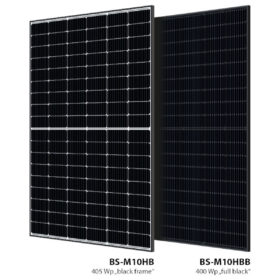
German manufacturer unveils 10-busbar, half-cell PV modules
Bauer Solartechnik GmbH has released its new 400 W and 405 W BS-M10 PV panel series for rooftop projects.

Tata Power lands 50 MW/50 MWh solar-plus-storage project in Ladakh
The company’s arm Tata Power Solar has received the notice of award to build a 50 MW (DC) solar plant integrated with a 50 MWh battery energy storage system at Phyang village in the Leh district. The project’s order value is approximately ÌNR 386 crore (US$ 52 million).
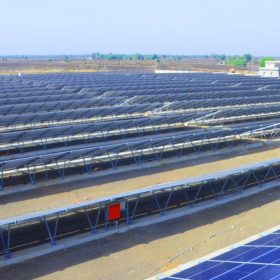
GoodWe inverters’ performance through the roof in India’s solar hotspot
GoodWe supplied 136 units of its MT80KW inverters for Microtech Rollers’s 15 MW of solar projects in the Saurashtra region of Gujarat. The inverters are currently generating 27 GW of electricity per annum.
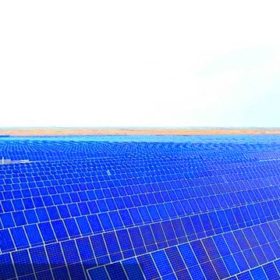
GameChange Solar completes 394 MW PV tracker project in India
The New York-headquartered solar racking solutions provider supplied its single-axis Genius Tracker equipment to a 394 MW PV project set up by Tata Power in Gujarat. This is the largest solar project utilizing single-axis trackers in India.
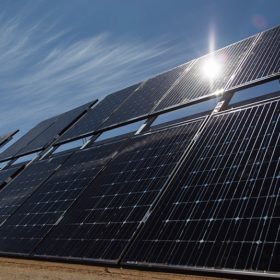
UPC-AC Energy Solar commissions 210 MW DC capacity in India
UPC-AC Energy Solar, a joint venture of UPC Solar and AC Energy, has commissioned two solar farms aggregating to 210 MW (150 MW AC) capacity, including 140 MW (100 MW AC) in Rajasthan and 70 MW (50 MW AC) in Gujarat. It has a further 420 MW (300 MW AC) solar assets scheduled for construction in Madhya Pradesh as it aims for about 1 GW of operating PV capacity in India by 2023.