Reliance New Energy Solar to invest in US-based liquid metal battery firm
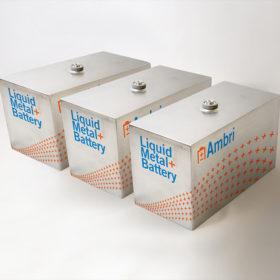
The clean energy arm of Reliance Industries Limited will invest US$ 50 million in MIT-incubated Ambri. As part of the transaction the two companies will also partner to develop and manufacture liquid metal batteries in India.
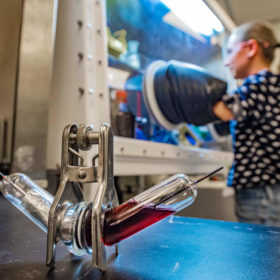
Sandia researchers develop new grid-scale energy storage battery
The battery operates at 230 degrees Fahrenheit, opening what researchers said could be “a whole cascading cost savings” including everything from less expensive materials to less insulation.

The long read: The effects of perovskite solar cell defects
Mónica LiraCantú leads a research group investigating nanostructured materials for photovoltaic energy at the Catalan Institute of Nanoscience and Nanotechnology (ICN2). Recently, her group led a project that looked deep into the crystalline structure of a perovskite solar cell, revealing new information about the formation of defects in the material and how they could be engineered to improve both efficiency and stability. pv magazine caught up with the Barcelona-based scientist to discuss the state of the art in perovskite solar cells and remaining challenges on the road to commercialization.
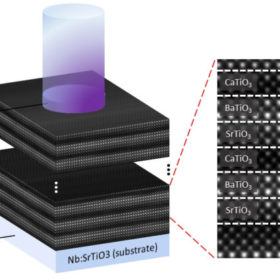
Crystal arrangement results in 1,000x more power from ferroelectric solar cells
German researchers developed a lattice arrangement of three different layers of ferroelectric crystals that created a powerful photovoltaic effect.

Indian scientists develop zinc-iron redox flow battery with zero dendrite growth
Scientists in India fabricated a redox flow battery based on zinc and iron that showed strong storage characteristics and no signs of degradation over 30 charge-discharge cycles. The battery also showed no signs of dendrite formation, overcoming one of the key hurdles for redox-flow batteries based on these low-cost, abundant materials.
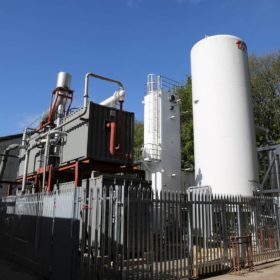
A closer look at liquid air energy storage
A British-Australian research team has assessed the potential of liquid air energy storage (LAES) for large scale application. The scientists estimate that these systems may currently be built at a cost between €300 and €600 per kilowatt-hour and that a positive business case could be favored by certain conditions, including a determined price structure in the energy market and the presence of a grid unable to support high levels of renewable energy penetration.

Four-terminal heterojunction perovskite tandem solar cell with 30.09% efficiency
Developed by a Vietnamese-Korean research group, the complex PV device was built with a bottom bifacial crystalline silicon perovskite-filtered heterojunction sub-cell that is able to absorb all solar spectra in the short-wavelength range.
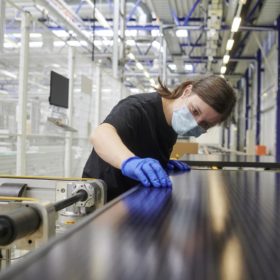
Meyer Burger plans to launch solar PV roof tiles in 2022
The Swiss group has acquired an integrated solar roof system solution from an unidentified German engineering service provider for this purpose. The aim is grow this sector from a niche market.
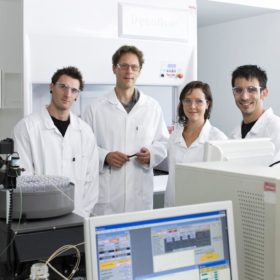
Aussie startup invents breakthrough non-toxic battery electrolyte that’s cheaper ‘by factor of 100’
Professor Thomas Nann told pv magazine Australia that a breakthrough idea was almost too simple: “Actually when we submitted the patent in the first place, the patent officers came back to us and said ‘well, that’s too trivial’ and we made exactly that argument – why did no one else do that then?” said Nann.

The long read: What research is needed for the effective recycling of batteries?
With manufacturing ramping up year by year and policies already looking to get ahead of the large volumes of end-of-life products, the landscape for lithium-ion battery recycling is rapidly changing. pv magazine recently spoke with Mari Lundström, associate professor of chemical and metallurgical engineering at Aalto University, to find out what is needed on the research side for the effective recycling of batteries.