Panasonic launches solar heat pump solution for water heating
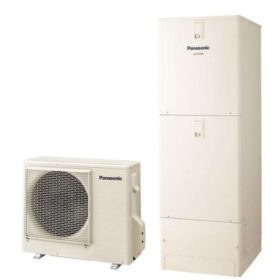
Panasonic has unveiled a new product in Japan with a PV-based charging function that uses a heat pump and hot water storage unit to save energy by maintaining bathwater temperatures at constant levels.

Reliance to acquire cobalt-free battery specialist Lithium Werks
The Indian multinational business conglomerate has signed the agreement to buy Netherlands-headquartered lithium iron phosphate (LFP) battery specialist Lithium Werks for US$ 61 million, including funding for future growth.

Paving the way for green hydrogen certification
The International Renewable Energy Agency has outlined a series of technical considerations for green hydrogen tracking systems. According to the document, a degree of flexibility should be taken into account in the short term to ensure that the nascent green hydrogen market can develop.
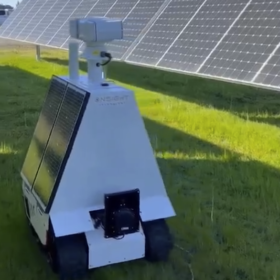
Fully autonomous robot for solar O&M
OnSight Technology has developed a tele-operated vehicle to clean solar arrays. It is equipped with a radiometric thermal imaging camera and an optical zoom camera backed by artificial intelligence. It has a range of 12 hours and a speed of 1.6 km per hour.
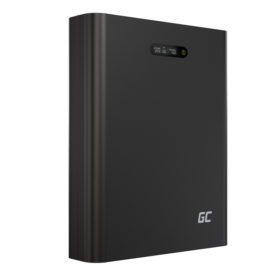
Green Cell unveils 5kWh residential battery
Called GC PowerNest, the battery has a storage capacity of 5kWh and a voltage of 51.2V. It is scalable in an eight-stack configuration, thus reaching a capacity of up to 40kWh.
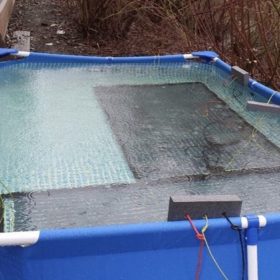
Submersing modular raft for floating photovoltaics
Developed by a Dutch consortium, the Hide and Shine Floating Solar (HAS FPV) technology is claimed to be extremely resistant to storms and harsh weather conditions. The modules can be submerged totally or partially and, in case of a severe storm, they can be submerged up to two meters below the surface.
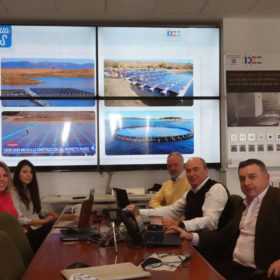
Solar desalination via floating PV in Spain
The Agua+S project under development in the Spanish region of Andalucia is aimed at combining a desalination plant, a pumping station network, and an onshore, floating photovoltaic plant in a single project design. According to its developers this is the first time that these three facilities have been combined together in a fully reproducible design that could be replicated in any river basin that has a reservoir and is close to the coast, to produce fresh water for both irrigation and human consumption.

Exide Industries and China’s SVOLT Energy partner for lithium-ion cell manufacturing in India
The lead-acid battery major will use SVOLT’s technology to manufacture lithium-ion cells in India. It will produce cells across two popular chemistries and three formats out of its proposed multi-gigawatt fab.
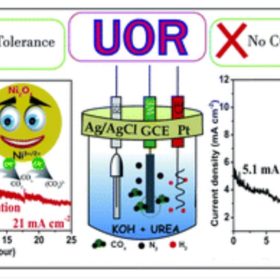
Energy-efficient hydrogen production by urea electrolysis using Ni2O3 electrocatalyst
Scientists from the Department of Science & Technology, Government of India, have shown Ni2O3 as a promising catalyst for sustained electrochemical urea oxidation reaction (UOR) to produce green hydrogen. With Ni2O3 catalyst, they found the UOR activity to be almost six times higher than with the conventional NiO.

Solar parks could help to increase rainfall in arid regions
New modeling suggests that the reduction in albedo caused by large-scale solar plants could double rainfall in the Red Sea coastal plain of Saudi Arabia.