The long read: The time is right
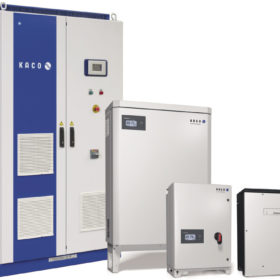
Kaco is launching a mass-produced string inverter with silicon carbide switches onto the market following 10 years of discussion about the technology within the industry. In the 100 kilowatt plus segment, the technology produces small, lightweight devices with few components.
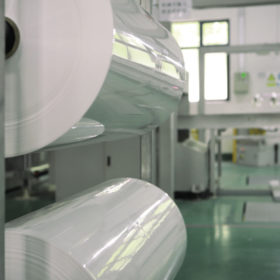
The long read: Fit for the 21st century
Co-extruded backsheets are opening up novel circular possibilities for the solar industry, as well as driving durability and lowering costs, writes Netherlands-based materials specialist DSM.
The long read: Materials matter
As problems with component failure have already laid bare, there is a clear need for contract clarity at every stage of a PV project, from material and component sourcing to power purchase and operations agreements. Here, pv magazine investigates a little covered issue for module buyers, which could threaten insurance coverage and the overall success of a project further down the line.
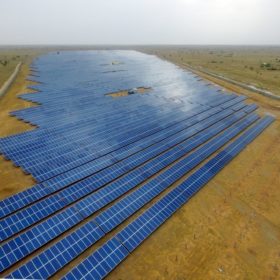
India will auction 80 GW of solar, wind capacity by March 2020
The Indian Government plans to tender 60 GW of solar and 20 GW of wind capacity by March 2020. This would complete the planned auctions for its targets of 100 GW solar and 60 GW wind installations by 2022, leaving two years for project execution, according to an year-end review by the Ministry of New and Renewable Energy (MNRE).
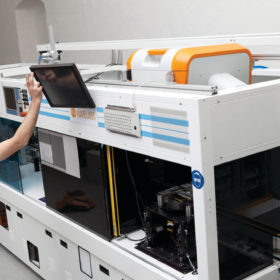
The long read: Flashing key for bifacial value
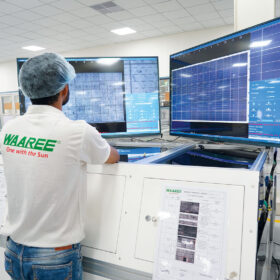
As new cell and module concepts move into large-scale production, and efficiencies are pushed ever higher, manufacturers of flash testing equipment must innovate to ensure their tools can provide reliable measurements, and cope with ever expanding production throughput. The expansion of bifacial technology beyond niche applications in particular raises new issues for flash testing standards. pv magazine spoke with several flasher manufacturers to shed light on the latest developments in this segment.
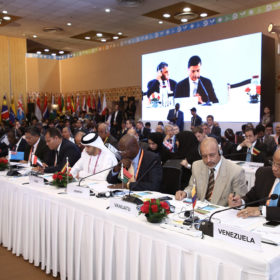
De-risking, financing and capacity building high on ISA agenda – Interview
The iSTAR-C program of India’s International Solar Alliance (ISA) was adjudged an outstanding project during the Paris Peace Forum this month. The program is one of many ISA initiatives to develop solar resources in member countries. After the first assembly of the ISA, interim Director-General Upendra Tripathy tells pv magazine about the organization’s achievements and plans.
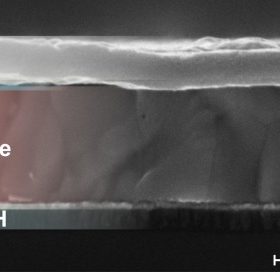
German researchers achieve 25.5% efficiency for perovskite tandem solar cells
The research team was able to improve the cell efficiency by 2.1%. The cell silicon layer was etched on the back-side, while a a polymer light management (LM) foil was applied to the front-side of the device.
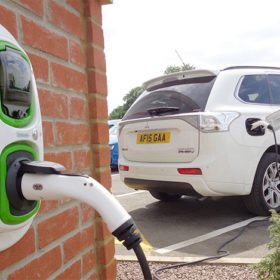
The long read: Cutting down on copper
Controllable, distributed battery storage systems can help avoid bottlenecks in power distribution networks. That reduces the cost of grid expansion, but to turn this use of storage systems into a business model, a number of conditions still have to be met.
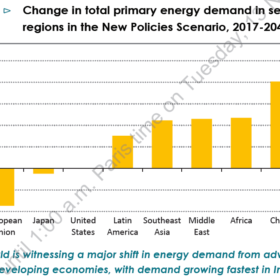
India’s energy demand will more than double by 2040 – IEA
The world is witnessing a major shift in energy demand from advanced to developing economies, with demand growing fastest in India – according to the International Energy Agency’s (IEA’s) latest World Energy Overview.
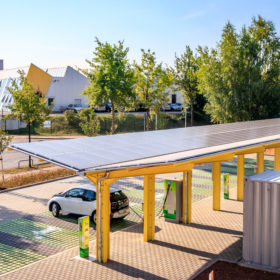
The weekend read: Getting rolling
The first companies are demonstrating that today it can be worthwhile commercially to back electric vehicles in combination with solar generation and storage. Particularly in the case of public charging stations, solar power used for electric vehicle charging could become the basis for a profitable operator model in the future.