Tata Chemicals signs MoU for ISRO’s lithium-ion cell technology
Under this MoU, Indian Space Research Organisation (ISRO) would transfer the technology to Tata Chemicals so that it may manufacture lithium-ion cells of varying capacity, size, energy density and power density—catering to a wide spectrum of power storage requirements.

Solar Park Scheme changes set to drive up India solar power prices
The Ministry of New and Renewable Energy has addressed complaints by solar developers about a lack of power evacuation infrastructure by changing its solar park guidelines. Under the new rules, though, developers are likely to incur higher costs.
The big read: Equipment suppliers’ solar storage synergy
As lithium-ion battery sales boom, suppliers of equipment for manufacturing photovoltaics are branching out into the storage industry. Are these ventures leading them to bankruptcy or to a breakthrough in storing solar energy?

Smart grid management in Rajasthan will be India’s first
GE Renewable Energy will implement, in the state of Rajasthan, an advanced grid management project that will provide real-time data monitoring to better understand current and future energy usage and enable transmission of renewable energy based on demand.
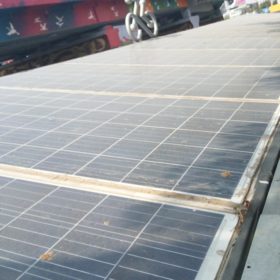
No construction permits without solar in one town in Telangana
The municipal council of Karimnagar has mandated rooftop solar on new buildings of a certain size as part of the Ministry of New & Renewable Energy’s Smart City Mission, which requires 10% of municipal energy to be generated from solar.

The big read: Inertia, frequency regulation and the grid
The old system of regulating frequency on electricity grids with the help of the inertia provided by large spinning masses is under threat from wind, solar and batteries. But what will replace inertia-based control, and how will the transition work?
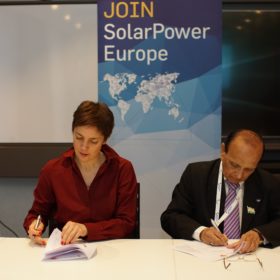
SolarPower Europe and NSEFI sign MoU on solar cooperation
Brussels-based SolarPower Europe and the National Solar Energy Federation of India (NSEFI) have signed a Memorandum of Understanding (MoU) for cooperation on operation & maintenance (O&M), installation quality, digitalisation and storage.
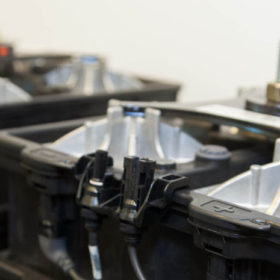
Cabinet approves five-year plan for EV battery manufacturing
Aiming to localize production across the electric vehicle value chain, the government will support battery manufacturing at a gigawatt-scale. The initial focus will be on large-scale module and pack assembly plants by the next fiscal year, followed by integrated cell manufacturing by 2021-22.

Change in form of Indian power purchase agreements may occur, says UK developer
The chief executive of Britain’s Proinso suggested slashing the length of power supply contracts from 25 to just five years could be a significant setback for Indian solar, and said the solution could be a hybrid agreement incorporating fixed and spot prices.
Andhra Pradesh regulator considers five-year PPAs
Hard-up distribution companies say they are not reaping the benefits of falling renewable energy generation costs because 25-year deals tie them to paying power prices which now appear unjustifiably high.