AM Green, Port of Rotterdam collaborate to build green fuels supply-chain corridor
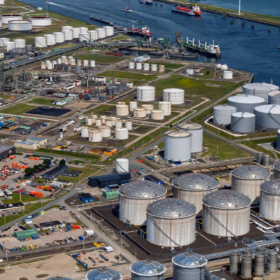
India’s AM Green and the Port of Rotterdam have signed an agreement to develop a supply-chain corridor for exporting green hydrogen, green ammonia and sustainable aviation fuels from India to Europe.
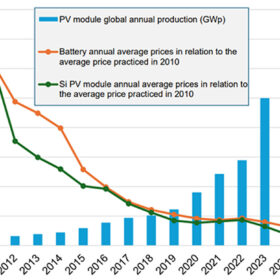
Falling Li-ion battery prices mirror solar photovoltaics trends: Is there a role for second-life batteries before recycling?
Lithium-ion batteries are everywhere, powering everything from consumer electronics to electric vehicles, residential PV storage systems, and, more recently, mitigating curtailment in large-scale wind and solar power plants. EVs are driving large-scale demand for Li-ion batteries which will result in substantial volumes of spent batteries in the near future. This scenario highlights the potential for repurposing EV batteries for second-life stationary applications, which could maximise their value before recycling. However, to fully realise this opportunity, several economic, technical, and regulatory challenges must be addressed and resolved.
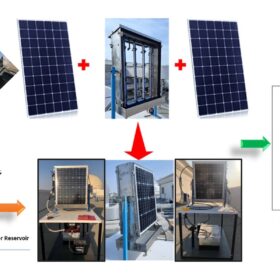
Cooling bifacial PV modules with mist
Scientists have placed mist nozzles inside a bifacial PV module and measured it under an extremely hot climate. The module was found to generate up to 37% more electricity on sunny days and up to 46% more on cloudy days compared to standard monofacial panels.

The missing link in India’s energy transition
While generation capacity from renewables has grown steadily, and commendable strides have been made to reduce the cost of solar PV cells for example, our ability to store, intelligently manage and distribute that energy still remains a massive challenge. This gap isn’t just a technical bottleneck, but also a strategic vulnerability that requires much attention across the entire renewable energy value chain.
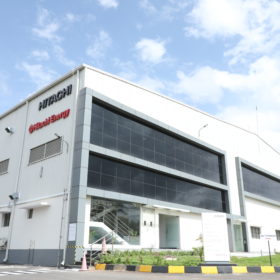
Hitachi Energy India Q4 revenue up 13.1% YoY
Hitachi Energy India has reported a revenue of INR 1,921.9 crore in January–March 2025, a YoY growth of 13.1%. Profit after tax is 61.8% up YoY at INR 183.9 crore.

Building the hydrogen economy: Overcoming infrastructure challenges
Building India’s hydrogen economy requires strategic infrastructure planning, targeted investments, and supportive policies. As industrial leaders continue demonstrating the viability of renewable energy transitions, the groundwork for hydrogen infrastructure follows naturally.
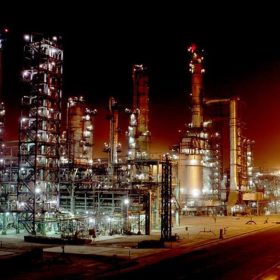
L&T wins IndianOil’s tender for 10ktpa green hydrogen plant at Panipat refinery
Larsen & Toubro has won Indian Oil Corp.’s tender for a green hydrogen production plant with a capacity of 10,000 tonnes per annum at a competitive bid of INR 397/kg.

Siemens Ltd new orders up 44% yoy in Jan-Feb-March quarter
Siemens Ltd has secured new orders worth INR 5,305 crore in the quarter ended March 31, 2025, 44% up year-on-year. Revenue for the quarter increased 2.6% to INR 4,259 crore.
How AI is optimizing solar plant efficiency
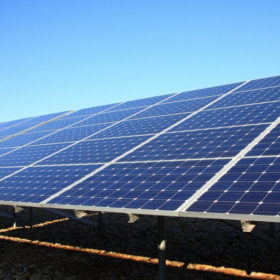
Artificial intelligence (AI) is changing the world of solar energy as it allows plants to monitor, learn and adapt in real time. Given enormous data collected from several sensors, smart meters, drones, and even weather stations, AI systems utilize machine machine learning algorithms to optimize performance, predict problems and even detect patterns.
Beyond the hype: Why PERC still powers a stronger solar future
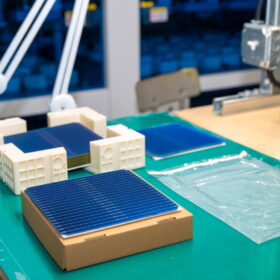
New doesn’t always mean better: Passivated emitter and rear contact solar cells have earned their place through real-world reliability and cost-effective manufacturability.