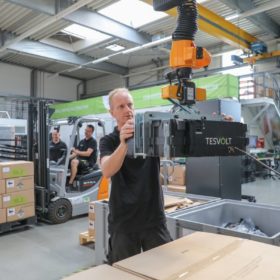
Battery manufacturing capacity set to increase fourfold to 1.3 TWh by 2030
Analysts at Wood Mackenzie have looked at plans for the incoming decade and concluded that about 119 manufacturing sites will be up and running by 2030. China currently sits firmly in the driving seat, with Asia Pacific comprising 80% of global manufacturing capacity, but Europe is catching up.
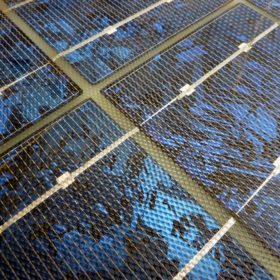
REIL seeks 600,000 multi-crystalline silicon solar cells
August 21 is the deadline to submit bids for supply of 4.50W (4-/5-busbar), 4.60W (5-busbar) and 4.67W (5-busbar) multi-crystalline solar cells. Only Indian manufacturers are eligible to participate.

Indian researchers develop low-cost, durable catalyst for hydrogen production
Researchers from India’s Centre for Nano and Soft Matter Sciences (CeNS) have developed a coordination polymer based catalyst for hydrogen production that exhibited exceptionally high durability for 70 hours at a high current density of −300 mA/ cm2.
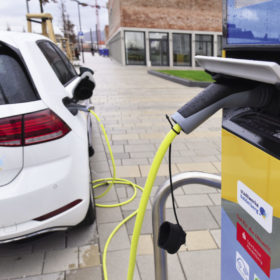
Government priority is to make Li-ion batteries in India: Transport minister
The government is acquiring lithium mines abroad to ensure raw material availability for electric vehicle battery production. Among other technology alternatives for EVs, it is looking at developing indigenous hydrogen fuel cells with hydrogen derived from biomass.
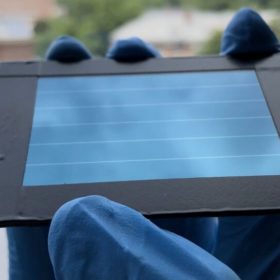
‘Spontaneous de-doping’ for 17.8%-efficient perovskite mini-module
U.S. scientists have found a new ‘de-doping’ process in perovskite solar cells that could cut production costs and produce better devices. They have used this to fabricate a mini-module with 17.8% efficiency.
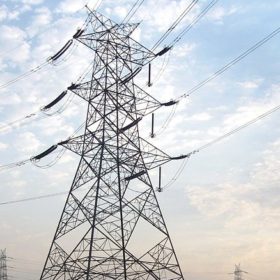
IoT startup Probus raises seed funding for smart grid platform
The startup—which has developed an Internet of Things (IoT) based service for power grid monitoring and automation—will use the amount to strengthen the software platform and expand the scale to different geographies.

IIT researchers consider fate of end-of-life solar modules
Scientists at the Indian Institute of Technology in New Delhi have taken a close look at the potential impact of growing volumes of PV waste and conducted surveys which suggest a lot more work is needed from manufacturers and policymakers to develop management systems for end-of-life PV products.
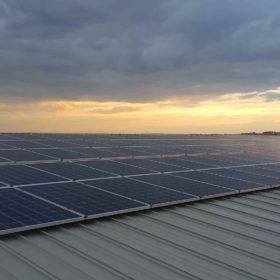
Strategies to prevent overvoltage-induced inverter disconnections
Australian scientists have identified seven methods to prevent PV losses when overvoltage-induced inverter disconnections occur. The methods include battery storage, reactive power inverters, export limits, distribution static synchronous compensators, the replacement of old conductors in power grids, load reconfiguration, and dynamic voltage restoration.
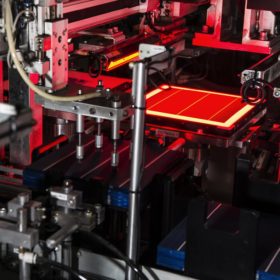
REIL opens tender for 6500 quantities of 325Wp solar modules
Bids are invited from Indian manufacturers to supply 72-cell, 325Wp polycrystalline solar modules made using domestically manufactured cells. August 20 is the last date to lodge the interest.
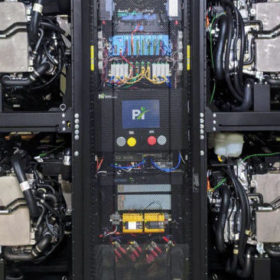
Microsoft trials hydrogen-powered data centers
The software giant has begun testing hydrogen fuel cells as a back-up power source at one of its U.S. data centers. A 250 kW pilot system successfully powered part of the facility for 48 hours and the company is now eyeing 3 MW systems to replace back-up diesel generators.