NISE launches support program for renewable energy start-ups
Start-ups developing technologies in fields such as solar energy, green hydrogen, energy storage, distributed renewable energy, small hydro, wind, smart grids, and clean mobility will be supported in the development and commercialization of their innovations.

The future of decarbonization is digital: Leveraging SaaS and automation for real-time emissions tracking
As global investors, consumers, and regulators demand deeper climate accountability, India’s position as a manufacturing and export hub will increasingly hinge on how credibly its businesses can measure and manage emissions. That credibility will come not from declarations, but from data.

Smart grids and solar integration: Powering the cities of tomorrow
The true breakthrough is when smart grids connect with solar power together. That connection opens up a lot of possibilities. Smart grids will tell us what a solar energy system can produce by predicting the weather and adjusting the transfer of electricity in real time.
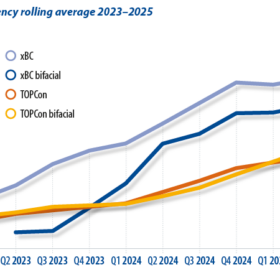
Non-stop solar innovation despite module oversupply
It’s no secret that prices throughout the solar supply chain have been at rock bottom over the past 18 months. Alex Barrows and Molly Morgan of CRU Group explore how the market reached the imbalance that caused PV prices to crash, what this has meant for innovation, and how it might affect future technology transitions.

SECI’s latest auction yields green ammonia price of INR 51.8 per kg
Solar Energy Corp of India (SECI) has discovered a new record-low green ammonia price of INR 51.8 per kg (around $591.25 per metric tonne) in its latest auction. The winning bid was placed by NTPC Renewable Energy Ltd.
How IPPs are revolutionizing India’s energy market
Independent power producers have captured a significant share of India’s clean energy capital, with projects often backed by substantial financing from institutions like the Indian Renewable Energy Development Agency (IREDA). Additionally, these have the ability to raise money in a cautious global market because of their capacity to lock up bankable power purchase agreements (PPAs), which provides financial predictability.
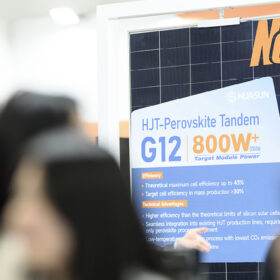
Perovskite rollout gathers pace
Perovskite’s growing visibility at industry events in 2025 is a sign that perovskites have progressed beyond the small lab-made devices seen earlier this decade. The focus is now on developing materials, processes, and a supply chain ready for large-scale manufacturing and deployment.

Navigating the ripple effects of renewable energy variability on grid stability
integrating variable renewable energy sources into conventional power systems requires a delicate balance of technology, operational excellence, and regulatory compliance. While AI and ML have become indispensable tools in the modern energy toolkit, they are most effective when paired with on-ground human insight and proactive asset management.
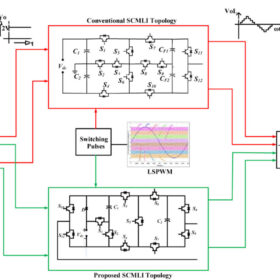
Novel switched capacitor boosting inverter for PV usage
Researchers have designed a new switched-capacitor-based multilevel inverter topology with nine switches. They have tested it in simulations and in hardware-in-the-loop tests. Efficiency reached up to 96.5%.
Dual PV module cooling tech based on water, air
Scientists in Hungary have built an experimental rig that uses a 60 W polycrystalline solar panel with 152 holes drilled into its frame for air cooling, as well as high-conductivity copper alloy pipes and fins placed on its back for water cooling.