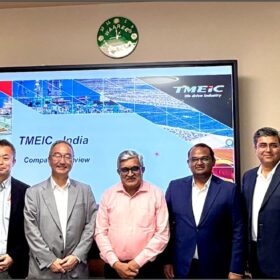
Waaree Clean Energy to develop multi-technology green hydrogen project for TMEIC Industrial Systems
Waaree Clean Energy Solutions, a wholly owned subsidiary of Waaree Energies Ltd, has secured an order to develop a multi-technology green hydrogen project at the facility of TMEIC Industrial Systems India in Tumkur, Karnataka.
The rise of green hydrogen-as-a-service: How AI digital twins are powering the net-zero future
As green hydrogen scales from pilot projects to industrial supply chains, the organizations that pair AI-powered digital twins with green hydrogen-as-a-service (GHaaS) commercial structures will be best positioned to deliver clean hydrogen at competitive cost and speed.
From LPG uncertainty to energy resilience: Why Indian industry is turning to cleaner, more dependable fuel systems
India’s industrial sector is entering a pivotal phase in its energy transition. What was once a routine fuel procurement decision is now becoming a strategic imperative. Rising LPG costs, supply unpredictability, and increasing operational risks are prompting businesses to rethink how they power their operations — not just for efficiency, but for resilience.
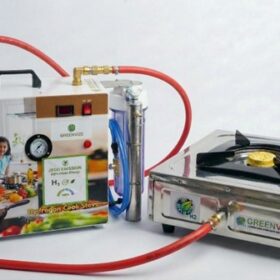
Indian startup launches plug-and-play hydrogen cooking unit
Indian clean-tech startup Greenvize has launched a compact hydrogen-based cooking system designed for residential and commercial kitchens. The system integrates a proton exchange membrane (PEM) electrolyser directly into a cooking unit, enabling on-site hydrogen generation from water without the need for storage or distribution infrastructure.
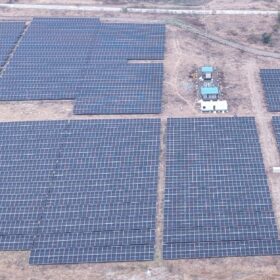
How relaxed FDI norms could transform India’s renewable energy sector
The amended FDI policy for investments from countries sharing land borders with India aims to attract capital and technology for critical solar components—such as cells, wafers, and polysilicon—while retaining strategic control of assets with domestic entities. Industry experts say it could accelerate renewable energy infrastructure and manufacturing, but it also carries risks, including pricing pressure, making careful regulatory oversight essential.
India’s pipeline push: Building the backbone of energy security
In addition to traditional oil and gas transportation, pipeline technology is evolving to support the future energy mix. As India moves toward greater adoption of cleaner fuels, including natural gas and low-carbon energy systems, pipelines capable of handling new energy vectors will become increasingly important. This shift is encouraging the adoption of specialised pipe solutions designed for higher efficiency, safety, and long-term operational resilience.
Green ammonia plants in 2026: EPC challenges and execution models
The next generation of green ammonia facilities must not only operate safely and efficiently, but must demonstrate to the world that large-scale green molecules can be produced, stored, transported, and traded with the same confidence as their fossil counterparts. The organisations that rise to this challenge will not simply contribute to the energy transition — they will define the architecture of a decarbonised industrial future.
The Hydrogen Stream: BPCL-Sembcorp JV secures 10ktpa green hydrogen contract from Numaligarh Refinery
NeuEN Green Energy Pvt. Ltd. (NeuEN), a 50:50 joint venture between Bharat Petroleum Corp. Ltd (BPCL) and Sembcorp Green Hydrogen India, has secured a contract to supply 10,000 tonnes per annum (10 ktpa) of green hydrogen to Numaligarh Refinery Ltd (NRL).
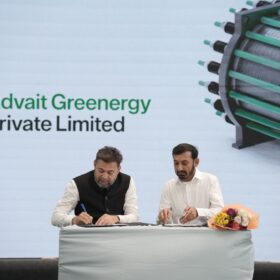
Advait Greenergy signs MoUs spanning green hydrogen, solar, and battery storage
Advait Greenergy, an arm of Advait Energy Transitions Ltd, has signed multiple Memorandums of Understanding (MoUs) with industry and academic partners across the hydrogen and renewable energy ecosystem in India.
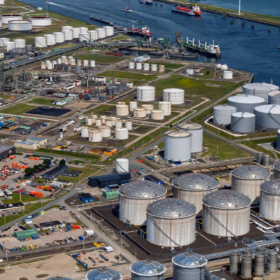
Reliance Industries signs long-term green ammonia offtake agreement with Samsung C&T
The green ammonia offtake agreement sets a new benchmark in the global energy landscape, with India emerging as an exporter of green fuels produced through an end-to-end indigenous value chain anchored in the country.