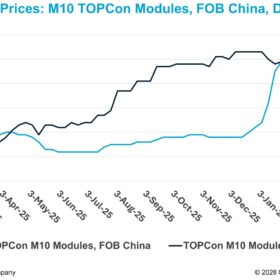
China TOPCon module prices edge higher as March cargoes clear
In a new weekly update for pv magazine, OPIS, a Dow Jones company, provides a quick look at the main price trends in the global PV industry.

Why tech-enabled, solar-compatible BESS will power the next energy boom
The next clean-energy boom will be driven not only by renewable generation but by intelligent storage. Tech-enabled, solar-compatible battery energy storage systems (BESS) will make clean energy predictable, resilient, and commercially viable at scale.

Silent bottleneck in India’s EV transition: Roadmap for localization, talent and better user experience
Several EV and charging components such as rectifiers, power modules, semiconductors, battery cells and PCBs are still largely imported. These create ecosystem-wide challenges including supply volatility, cost exposure, limited local integration, and scaling constraints. However, these gaps also represent one of India’s biggest opportunities.

Beyond the panels: How India’s solar growth and PM-KUSUM are redefining the grid
While policy discussions focus on solar tariffs and farmer incentives, we see a different challenge emerging on the factory floor: Infrastructure Redefinition. The humble transformer is being asked to do things it was never originally designed to do.
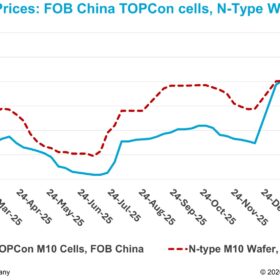
FOB China TOPCon solar cell prices hold steady as market awaits post-holiday reassessment
In a new weekly update for pv magazine, OPIS, a Dow Jones company, provides a quick look at the main price trends in the global PV industry.
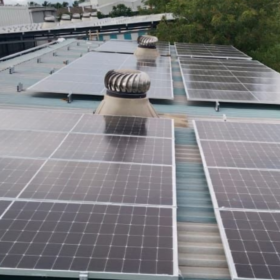
What India needs to accelerate sustainable lending post-budget
The next phase of green growth will depend on how quickly capital reaches businesses that are ready to modernize, become energy-efficient, and invest in cleaner production systems. The question is no longer whether sustainable lending will grow, it is how fast we can remove the barriers preventing it from scaling.
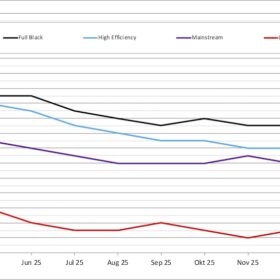
Solar module prices rise faster than expected in February
Solar module prices increased by €0.01 ($ 0.012)/W to €0.015/W in February, lifting levels 15% to 18% above the December 2024 low despite falling wafer costs, as manufacturers seek to restore margins after prolonged losses.

From panels to complete energy systems: The evolution of India’s rooftop solar market
Rooftop solar is moving from being a supplementary solution to becoming a central component of India’s energy architecture. The next phase of growth will not be defined by panel installations alone but by how effectively generation is integrated with storage, digital intelligence, and grid infrastructure.
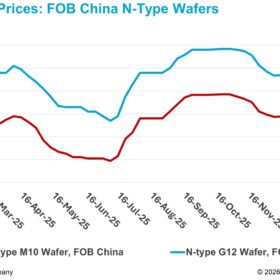
China wafer prices fall for fourth week as discounting deepens under inventory pressure
In a new weekly update for pv magazine, OPIS, a Dow Jones company, provides a quick look at the main price trends in the global PV industry.
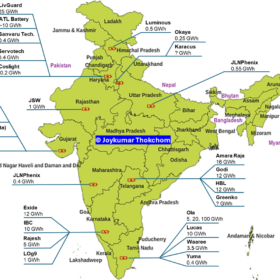
India’s 2030 battery gigafactory ambition: Strengths, bottlenecks and solutions
The number of operational battery gigafactories will increase significantly, with more than 30 manufacturing sites expected to be in operation by 2030, targeting a total production capacity exceeding 290 GWh. However, challenges such as raw material and skilled labor shortages, insufficient R&D investment, and a lack of long-term strategic planning remain.