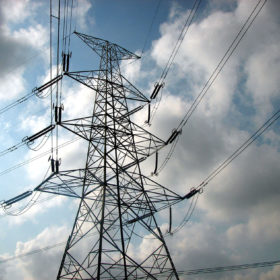
Power outlook gloomy amid coal and solar woes
India Ratings and Research has maintained a stable-to-negative outlook on India’s power sector for FY2019-20 owing to issues such as slower resolution of the stressed [coal based thermal] capacity, domestic coal unavailability, and reluctance of DISCOMs to sign long-term power purchase agreements. The outlook is not sunny for solar either.

China ready to set 3 GW quota for residential solar in 2019
Sources have told pv magazine the authorities are ready to restart the nation’s residential rooftop segment and have also agreed upon subsidy payments for other distributed generation and utility-scale projects.

Electric car sales in India declined by 40 per cent in 2018
Electric car sales in India declined by 40 per cent to a mere 1,200 units in the financial year 2018 over the financial year 2017, while electric two-wheeler sales rose 138 per cent to 54,800 units during the same period—according to research and consultancy group Wood Mackenzie.
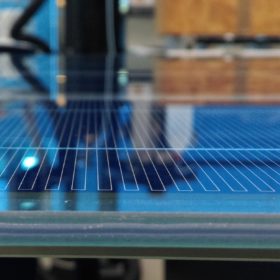
India mulls anti-dumping duty on Malaysian solar glass
The Indian government may impose anti-dumping duty of US$ 114.58 per tonne on tempered solar glass imports from Malaysia in order to provide a level playing field to domestic manufacturers.
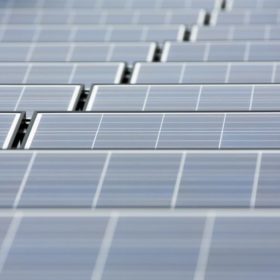
This year could see a reckoning for ultra-mega PV projects
The fate of the clutch of 500 MW-plus projects due to break ground this year could determine whether such ambitious schemes have a viable future, says Wood Mackenzie in its solar 2019 forecast. And the Indian market should brace for consolidation, add the analysts, because of aggressive reverse-auction tariff pricing.

175 GW renewable unlikely if policy remains inconsistent, says CSE
India may not meet its 175 GW of renewables by 2022 target if the sector continues to be plagued by policy inconsistency, DISCOM problems and other issues, say Centre for Science and Environment (CSE) analysts.
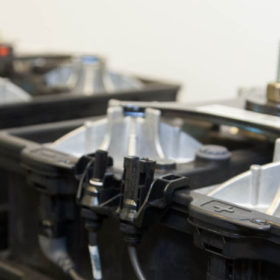
BHEL and Libcoin to build India’s first lithium-ion battery gigafactory
Government-owned Bharat Heavy Electricals Limited and Australian business Libcoin are in talks to form a joint venture to build a 1 GWh production capacity lithium-ion battery plant in India that would eventually be scaled up to 30 GWh.

Tata, Chromeni to make EV batteries in [Vibrant] Gujarat
At the ongoing Vibrant Gujarat Global Summit, Tata Group and Adani have announced plans to invest in lithium ion battery manufacturing in Gujarat. Chromeni Steels, a joint venture company of China’s Tsingshan Industries, will invest US$ 3 billion to manufacture stainless steel and electric vehicle (EV) batteries.
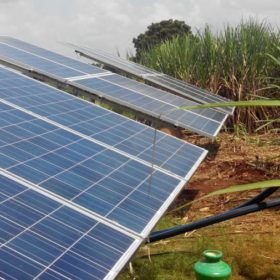
Solar pump testing and research lab coming up at TERI
The test facility, to be set up by the Maxop Research and Testing Institute, will be capable of testing solar water pumping systems and other solar products in compliance with Bureau of Indian Standards guidelines and international standards.

Make in India: HyET Solar plans to set up 300 MW fab in Gujarat
At the Vibrant Gujarat Global Summit, HyET Solar will sign a memorandum of understanding with the state to set up a solar module manufacturing facility.