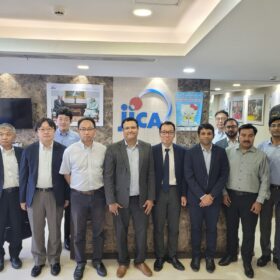
The Hydrogen Stream: Hygenco signs MoU with Mitsubishi Power for green hydrogen-fired GTCC power plants
Hygenco Green Energies and Mitsubishi Power have joined hands for delivering green hydrogen-/ammonia-fired gas turbine combined cycle (GTCC) power plants. Hygeno will develop and deploy green hydrogen and green ammonia production assets to supply green fuel for Mitsubishi Power’s GTCC technology to the potential customers.
Optimizing renewable energy project in the face of climate change
Stable government policies, adaptable technological solutions, diversified investments, robust financial planning, and active community engagement are crucial for achieving long-term success in the renewable energy sector.
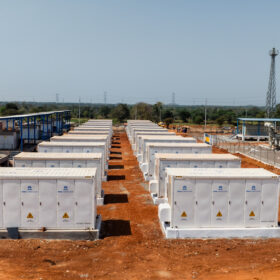
Tata Power posts INR 1,189 crore profit in Q1 FY 2025
Tata Power has reported its highest ever quarterly consolidated revenue of INR 16,810 crore and net profit (profit after tax) of INR 1,189 crore in the first quarter of FY 2024-25
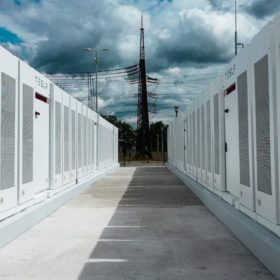
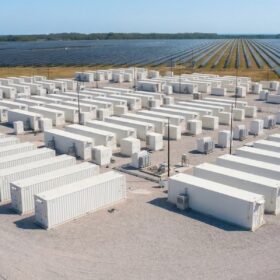
Global battery market crisis: Will SECI benefit as oversupply sparks industry chaos?
The global battery glut is likely to influence the price discovery of Solar Energy Corp. of India’s tender for 2 GW solar with 1 GW/4 GWh energy storage system, writes Ali Imran Naqvi, executive director (ED), Gensol Engineering Ltd.
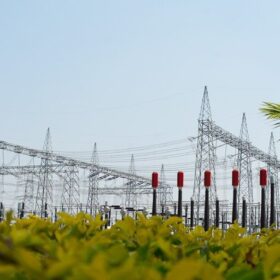
Adani Energy Solutions raises $1 billion via QIP route
Adani Energy Solutions Ltd will utilize the proceeds for building the bulk evacuation corridors for renewable power, smart metering business, debt repayment, and general corporate purposes.
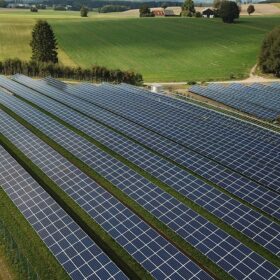
Advancing renewable energy through technological innovation and digitalization
To accelerate the adoption of technological innovation and digitalization in the renewable energy sector, concerted efforts are needed from policymakers, industry leaders, and technologists alike. Governments can create supportive policy environments, invest in research and development by providing incentives, at the same time supporting early-stage companies by creating favorable regulatory environments to fostering public-private partnerships.
Websol Energy System posts profit in Q1
The Kolkata-based solar cell and module manufacturer has reported a total income of INR 111.83 crore and a net profit of INR 22.88 crore for the April-May-June quarter of FY 2024-25

Amara Raja Energy & Mobility Q1 profit rises 23% yoy
Amara Raja Energy & Mobility Ltd has reported a standalone total income of INR 3,156.74 crore and a net profit of INR 244.55 crore for the first quarter (April-May-June) of FY 2024-25.
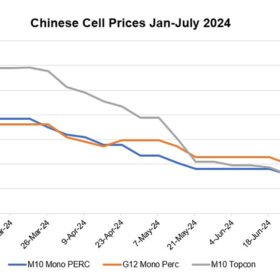
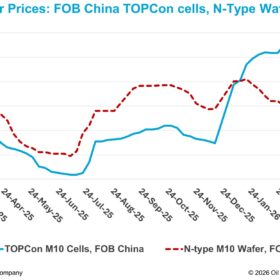
Chinese solar cell prices fall amid oversupply
In a new weekly update for pv magazine, OPIS, a Dow Jones company, provides a quick look at the main price trends in the global PV industry.
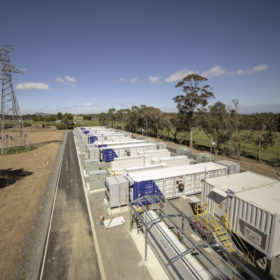
Powering India’s renewable future: The pivotal role of battery energy storage systems
Samrath Singh Kochar, founder and CEO, Trontek, talks about enabling renewable integration and grid stability through advanced energy storage solutions.