India ranks third on renewable energy investment
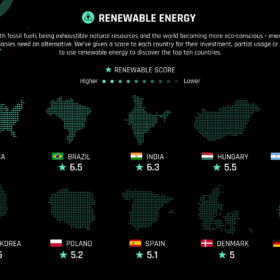
The country earned a score of 6.3 on a 10-point scale on the basis of its investment, partially usage or plans to use renewable energy in the near future—in a study by UK based analytics firm British Business Energy. The USA ranks first with a score of 7, followed by Brazil at 6.5.

Drones can drive down operational solar costs—Frost & Sullivan Interview
The market for drones in the power and utility industry will grow 23.6% annually, reaching $515 million by 2030—according to a Frost & Sullivan report.
The report, Drones in the Global Power and Utilities Industry, Forecast to 2030, cites ongoing digital transformation, remote monitoring, and the need to optimize operational costs as the factors driving increasing adoption of drones in the power and utility industry.
“Drones minimize the need to send human employees onsite and can be deployed for monitoring, operations, and maintenance services. As the global power and utility industry continues to tackle the impact of the ongoing Covid-19 pandemic, drones can be potential game-changers in combating the challenges it poses,” as per the report.
pv magazine spoke to Supreeth Srinivasa Rao, Associate Director, Industrial Practice, Frost & Sullivan, to find out the role of drones in the solar sector, especially for India.

India reduces energy intensity of economy by 20% compared to 2005
That’s a significant feat for the country which has pledged to bring down the energy intensity of the economy by 33 to 35% compared to 2005 levels by 2030.

Australian miner launches feasibility study on India’s first lithium refinery
Australia based Neometals and India’s Manikaran Power—which announced their collaboration on India’s first lithium refinery last year—have also doubled the proposed refinery capacity to 20,000 tonnes per annum of lithium hydroxide.
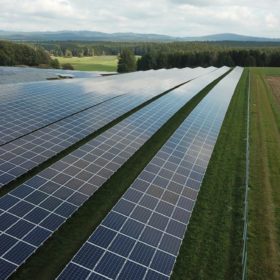
Renewable power poised for a big leap with storage technologies
While the solar and storage pairing is still relatively new, the growth over the next five years will be significant globally. As against just 5% in 2019, by 2025 more than 25% of all behind-the-meter solar systems will be paired with storage.

Solar, wind and hydro resilient during Covid-19 crisis
A study by the International Energy Agency into the chilling effect of the Covid-19 pandemic on energy demand states renewables will be ‘the only energy source likely to experience demand growth for the rest of 2020’. The slower the economic recovery, the more the fossil fuel industry will suffer.
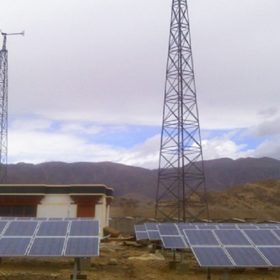
CEL seeks to empanel BOS suppliers for small solar power packs
The Central Electronics Limited (CEL) seeks to empanel balance-of-system (BOS) suppliers for compact solar power packs ranging from 1 kWp to 5 kWp. The empaneled vendors shall also be responsible for installation and commissioning of the packs at four locations—in and around Pune, Chennai, Delhi National Capital Region and Sahibabad.

Solar industry gets more time to submit responses for safeguard duty review
The Directorate General of Trade Remedies (DGTR) has granted an extension till May 11 for the solar manufacturers and importers to file their responses as it probes the need for continuing with the imposition of safeguard duty on solar cells, whether or not assembled into modules.
LCOE from large scale PV fell 4% to $50 per megawatt-hour in six months
Analysts at Bloomberg New Energy Finance say the lowest-cost projects financed in Australia, China, Chile and the UAE in the last six months hit a levelized cost of energy of just $23-29/MWh and the best solar and wind projects will produce electricity for less than $20/MWh by 2030.
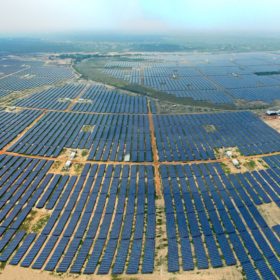
Indian solar generators largely unaffected amid Covid crisis, says Fitch Ratings
Liquidity of solar generators remains largely unaffected as they have been receiving payments from Discoms regularly. Azure and Adani Green Energy restricted groups, in particular, have comfortable liquidity position and will be able to meet their mandatory expenditure in the next six to 12 months.