Round-the-clock tenders can help India meet demand for firm renewable power
A report has stated the renewable-plus-fossil fuel model is the best short term option to meet the assured supply conditions in the Solar Energy Corporation of India’s round-the-clock power tenders. Further out, as the cost of batteries decline, that technology is likely to become the most viable option for providing critical, non-intermittent power.

TVS Motor commits US$161.2 million of electric vehicle investment in Tamil Nadu
The company has signed a memorandum of understanding with the state government to invest INR 1,200 crore for the design, development and manufacturing of new products and capacity expansion in the electric vehicles space.

Adani Solar partners KSL Cleantech for retail expansion to East and Northeast
The Indian solar manufacturer and EPC contractor has chosen KSL Cleantech as the channel partner for the retail distribution of its solar panels in the eastern and northeastern markets of India.

Renew Power wants to set up 50 kiloton green hydrogen plant in Madhya Pradesh
The renewable energy developer is ready to invest INR 18,000 crore (US$ 2414.29 million) in setting up a 50 kilotonne per annum green hydrogen production plant in the State.
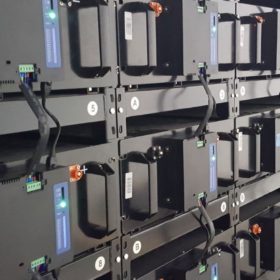
The energy storage decade has arrived, BNEF says
Falling battery costs and “surging” renewables penetration make energy storage a “compelling flexible resource in many power systems.”
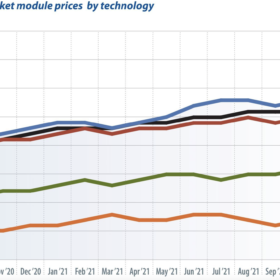
PV module price index: Prices set to rocket back to 2019 levels
First, the bad news: PV modules will be caught up in the global wave of inflation. After a very brief respite, prices are picking up again for almost all module technologies. But the changes recorded for early October are paltry compared to the price increases still to come, writes Martin Schachinger of pvXchange. As of the cutoff date for this market survey, some manufacturers had already announced even more significant upward corrections for future deliveries. The price adjustments shown in the October index are thus only a tentative start to rises of no less than 15-20% over the price levels that prevailed just a few weeks ago. However, this will probably be the last price correction we can expect at the manufacturer level until the end of the year.
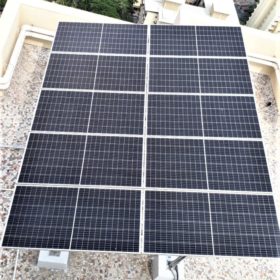
Up to code for decarbonization
The International Energy Agency predicts that India will record the world’s fastest growth in energy consumption from buildings through 2040. The energy demand could create a big market for solar installers and equipment providers, particularly in the commercial and industrial sector. While building codes now include provisions for renewable energy integration, effective implementation will be key to ensuring compliance.

India will require over US$ 10 trillion to achieve net-zero by 2070
Out of this, investments totaling US$ 8.4 trillion would be needed by the power sector alone to significantly scale up generation from renewable energy and associated integration, distribution and transmission infrastructure. Another US$ 1.5 trillion would have to be invested in the industrial sector for setting up green hydrogen production capacity to advance the sector’s decarbonization. Investment needed for the mobility infrastructure would be US$ 198 billion.
Power ministry allows bundling of renewable to replace thermal power under existing PPAs
The gains from the bundling of cheaper renewable energy with high-cost thermal will be shared between the generator and distribution companies on a 50:50 basis.
Around 20 companies show interest in 50 GWh battery cell tender under PLI Scheme
The pre-bid conference for the 50 GWh battery storage tender under the production-linked incentive (PLI) scheme saw the participation of around 20 prospective bidders. The conference was organized by India’s ministry of heavy industries to discuss and address the bidders’ queries.