Bhutan issues tender for 17.3 MW solar park
Bhutan aims to facilitate the construction of its first PV project through a new tender.
Saatvik selects retail distributor for solar panels
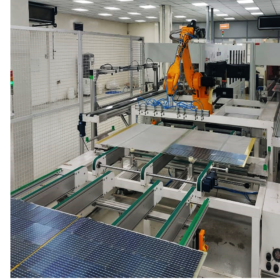
Haryana-headquartered Saatvik Solar has appointed Photovoltaic Solar to handle retail distribution of its PV panels in the Indian market.
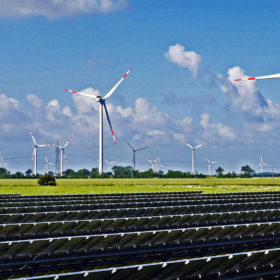
India installed 1.9 GW of ‘open-access’ renewables in FY 2021-22
India has surpassed 10 GW of overall renewables capacity installed for offtake through open access.

ReNew secures $1 billion loan for 1.3 GW renewables project
ReNew Power, a Nasdaq-listed Indian developer, has secured $1 billion in external commercial borrowings for a 1.3 GW wind-solar energy project, backed by up to 100 MWh of battery storage. The project is co-owned by Japanese investor Mitsui and will supply round-the-clock power under a 25-year power purchase agreement.

EV sales to grow at slower-than-expected pace
Sales growth in India’s electric vehicle market will moderate to 75% per year over the next three years, as supply constraints drive up prices of key raw materials for batteries.
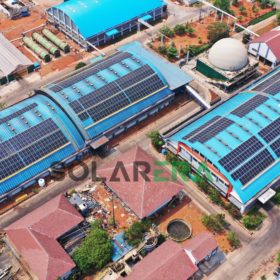
Amended Energy Conservation Bill to drive renewables adoption
The amended Energy Conservation Bill sets a minimum usage clause for non-fossil fuel by high carbon-emitting sectors such as power, transport, industry, and buildings. It also includes provisions to incentivize decarbonization efforts by allowing carbon trading.
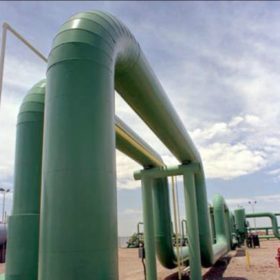
Hygenco, Jindal Stainless sign India’s first long-term green hydrogen offtake agreement
Hygenco will build, own and operate a multi-megawatt green hydrogen facility for the long-term supply to Jindal Stainless Ltd, one of the largest stainless-steel conglomerates globally.

Deepak Thakur joins Mahindra Susten as CEO
Deepak Thakur, the former chief of Sterling and Wilson’s hybrid and energy storage business, has joined Mahindra Group’s cleantech arm Mahindra Susten.
JSW Energy to acquire 1.7 GW of operational renewables from Mytrah Energy
JSW Energy, a private-sector power producer, has revealed that its green energy arm has signed an agreement to acquire 1.33 GW of wind and 422 MW of solar assets from Mytrah Energy. The assets are spread across nine states in India.
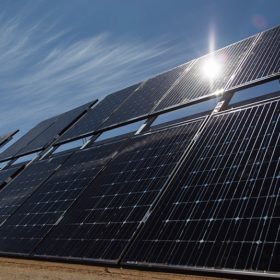
Shell completes acquisition of Sprng Energy
Shell has completed the $1.55 billion acquisition of Solenergi Power, an Actis company holding 100% of Indian renewables developer Sprng Energy.