People on the move: Longi Hydrogen and Hygenco
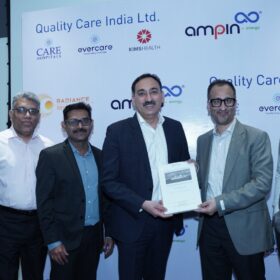
Gaurav Gaba has joined Longi Hydrogen as sales director. Shashank Adlakha is starting a new position as a chief operating officer at Hygenco -The Hydrogen Company.

Serentica Renewables secures additional $250 million from KKR
US investor KKR’s latest investment builds on its $400 million commitment to Serentica Renewables last year.
BHEL to make electrolyzers
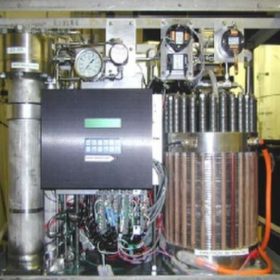
Bharat Heavy Electricals Ltd is seeking a business consultant to realize potential opportunities in electrolyzer manufacturing and the green hydrogen value chain.
Strong policy focus needed to drive pumped storage development
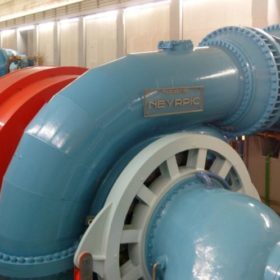
Despite being a mature and largely indigenous technology, pumped storage hydropower’s operational capacity in India remains very low at 3.3 GW because of the high development costs and inherent challenges in constructing these schemes.
Avaada Group raises $1.07 billion for green hydrogen, ammonia ventures
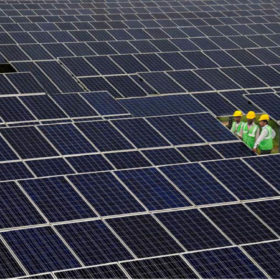
Avaada Group has secured $1.07 billion to fund its green hydrogen and green ammonia ventures in India. The funding includes $1 billion from Brookfield Renewable and $68 million from Global Power Synergy Public Co. (GPSC).
IREDA reports record profit in FY 2022-23
Indian Renewable Energy Development Agency Ltd. (IREDA) recorded an all-time high annual net profit of INR 865 crore in FY 2022-23. The profit was up 36% over FY 2021-22. Loans sanctioned and disbursed also hit record levels.

Biden to maintain US solar tariff pause with veto
US legislators are moving to restore tariffs for the shipment of solar components from four major Southeast Asian nations, but US President Joe Biden will veto the move and maintain the pause on tariffs.
SECI recorded over 59% jump in RE power trading volume during FY 2022-23
Solar Energy Corp. of India Ltd (SECI) traded over 35 billion units of renewable power during FY 2022-23. Revenue from power trading surpassed INR 10,000 crore.
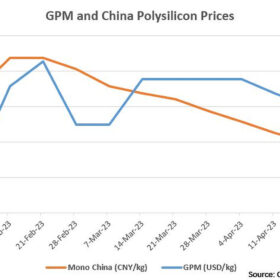
Polysilicon prices fall 1.33% to six-week low of $37.218/kg
In a new weekly update for pv magazine, OPIS, a Dow Jones company, provides a quick look at the main price trends in the global PV industry.
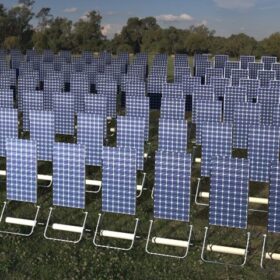
German startup unveils mobile, tiltable PV modules
Sinn Power is offering new tiltable solar panels for vertical PV systems in nature reserves and water-protection areas. They are not anchored to the ground and use a pendulum weight to return to their proper positions when hit by strong winds.