Gujarat tenders 500 MW of solar
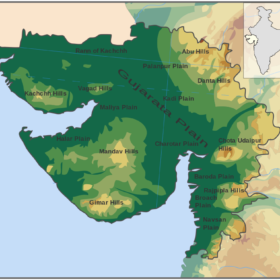
Projects can be established anywhere in the state which has spare grid capacity, with the relevant substations listed on the Gujarat Energy Transmission Corporation website.
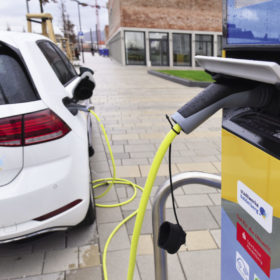
Installers sought for 1,000 EV charging stations nationwide
Contractors will be required to identify sites and develop, operate and maintain interoperable electric chargers in more than 75 cities.
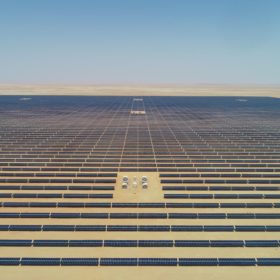
Auctions show Indian renewables still primed for growth
A report by the Institute for Energy Economics and Financial Analysis says there is plenty of investment capital available for Indian renewables despite pandemic disruption.

Hero Future Energies plans first Indian investment in Bangladesh grid scale solar
The New Delhi-based developer is planning a 50 MW plant after the 100 MW facility originally proposed was stymied by the power evacuation equipment available at the Khulna site.
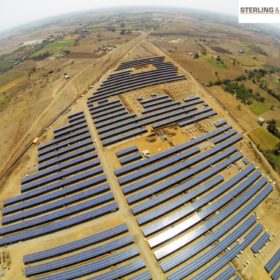
Sterling and Wilson bags 107 MW solar project in Chile
The solar plant is the Indian multinational’s fifth win in Latin America. The EPC has a a 93.3 MW project in Argentina and is constructing three other Chilean PV plants with a total generation capacity of 588 MW.

Solar leaders call for overhaul to navigate Covid-19
Faced with raw material and labor shortages, solar manufacturers have stressed the need to find alternative supply chains and to push automation and internet of things applications on the factory floor to keep production running.
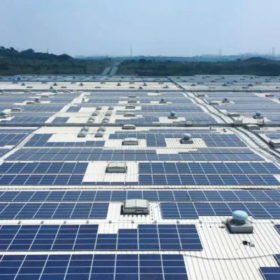
Commercial solar rooftops dominate as India nears 6 GW
Bridge to India figures show dominance of Chinese inverters, which supplied almost 80% of installs from July last year to the end of June.
Gujarat extends bidding for 110 MW grid-connected solar and floats new 210 MW tender
Developers now have until September 23 to lodge bids for the 110 MW procurement round and can toss their hat into the ring for a new tender in the district of Jamnagar which closes on October 5.

Chinese manufacturer Risen signs 140 MW module supply deal with UPC-AC Energy Solar
The contract, for mono PERC solar modules, follows 165 MW of orders supplied by Risen to Indian renewable energy developer Sprng Energy last month.
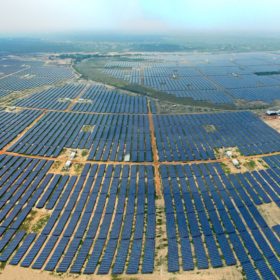
Adani now the world’s largest solar power developer
India’s largest private-sector thermal power producer—which ranked as the sixth-largest solar player globally in 2019—has climbed to the top spot following a Solar Energy Corporation of India (Seci) award to develop 8 GW of Indian solar project capacity.