US to drag India back into WTO solar wrangle
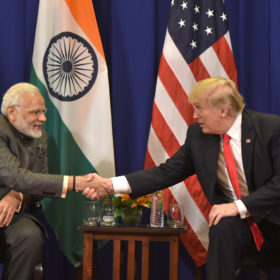
Reuters reports that the United States is once again planning to take India back to a WTO ruling regarding an ongoing solar power dispute. Last year India lost the case against the U.S., which had alleged discriminatory practices in favor of domestic firms and against foreign competitors.
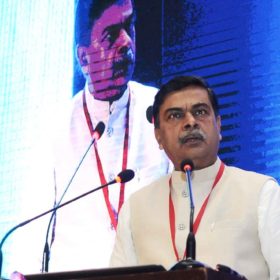
India electrifies over 15,000 villages in last three years – MNRE
MNRE head, RK Singh says 15,183 Indian villages have been electrified, out of 18,452, as of November 30. Free electricity connections have also been granted to 44.41 lakh below poverty line (BPL) households under the government’s rural electrification scheme.

Stable outlook for Indian power sector – Moody’s
Moody’s Investor Services and its Indian affiliate, ICRA Limited have announced that India’s power sector will see stability over the next 12 to 18 months, reflecting the government’s policy initiatives and established industry.
India concludes renewable and power roadmap
Ministry of Power and New & Renewable Energy has finalized the resolution for several future roadmaps designed to reform the power sector and ensure 24×7 power for all with other states and union territories.

Intersolar India highlights challenges, opportunities of residential PV market
This week’s Intersolar India 2017 in Mumbai, which ran from Tuesday to Thursday at the Bombay Exhibition Centre (BEC), highlighted both the potential and the challenges of India’s vast residential PV market. Everything from policy to unique environmental challenges and installation processes was discussed.

CEEW commences ISA’s National Focal Points Conclave 2017
The conclave happened the day after ISA became a recognized legal intergovernmental body based in India. The event observed some intense discussions on the ISA’s ambitious programs. The main topic was the finance, where ISA aims to ease the process, with CEEW supporting via common risk mitigation study.

Karnataka issues 860 MW solar tender
The state’s Karnataka Renewable Energy Development Limited (KREDL) announces tender for 43 individual solar plants located in taluks – small districts dotted across the state of Karnataka.
Goa approves new solar policy
Under the new policy, the government of India’s smallest state is aiming to install around 150 MW of PV capacity by 2022.
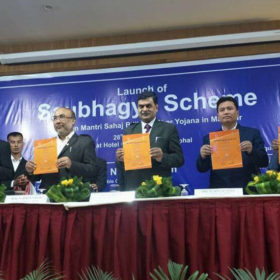
Manipur: Government launches ‘Saubhagya – Power to all’ scheme for state
175,000 households of Manipur will receive 24×7 electricity supply. The scheme is scheduled to be completed by March 2019. The electricity will be produced through various sources – including renewable resources like solar micro and mini-grid applications. However, BNEF says that the 24×7 energy supply seems far away.
The weekend read: Will duties ADD doubt to India’s solar growth?
The threat of India’s government imposing anti-dumping duties (ADD) against solar cells and modules from China, Taiwan and Malaysia is very real, and runs counter to its own ambitions of hitting 100 GW of solar by 2022. Or does it? Could duties help to boost India’s solar industry in other ways? And does the ongoing political uncertainty create opportunity or trepidation for industry?