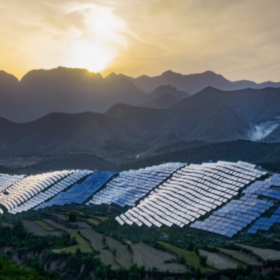
Mahindra launches renewable energy asset care company
Starting its journey as a department within Mahindra Group’s solar EPC company Mahindra Susten, the newly formed comprehensive asset care company for renewable energy customers aims to reach a 20 GWp global portfolio by 2022 from 4 GWp currently.
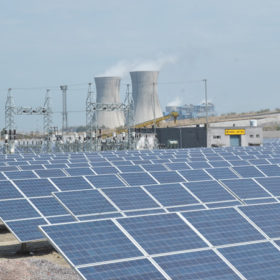
NTPC tenders 1 GW solar PV projects across India
State-owned power generator NTPC has invited bids for development of 1 GW grid-connected solar PV projects under Central Public Sector Undertaking (CPSU) scheme Phase-II (Tranche-I). The projects are to be set up on turnkey basis under domestic content requirement category, anywhere in India. These will be awarded through domestic competitive bidding followed by reverse auction.

Azure Power turns a profit
The NYSE-listed developer appears to have turned the corner after reporting a full year profit of Rs138,493 after a Rs10 lakh loss a year ago. Borrowings are on the rise though, as the company plans to drum up an ever larger project portfolio.
Lithium gigafactory target is raised to 50 GW, tender likely soon
The government is considering financial incentives such as import and export duty waivers to woo battery manufacturers to set up a globally competitive manufacturing base in India.
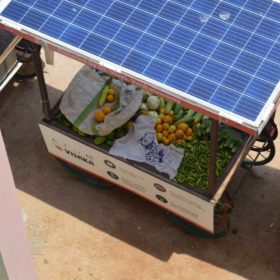
Visaka Industries installs solar rooftop on pushcarts
The ATUM integrated solar roofing system using 320W panels generates enough electricity to power a light bulb, a fan and a mobile phone.
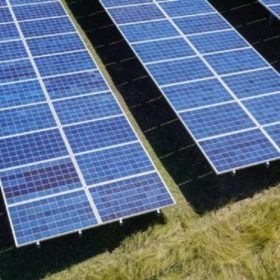
BHEL wins 135 MW solar EPC projects
Cumulatively valued at Rs 520 crore, the projects include a 50 MW plant for Maharashtra State Power Generation Company Ltd, a 75 MW plant for Gujarat State Electricity Corporation Ltd and a 10 MW plant for Gujarat Narmada Valley Fertilizers & Chemicals Ltd.

Telangana pitches for 5 GW lithium-ion battery plant
Following the Indian government’s 40 GW plan for the states, Telangana has pitched for setting up a 5 GW lithium ion plant by announcing the ready availability of 200 acres of land and power and water for the fab at a concessional rate.
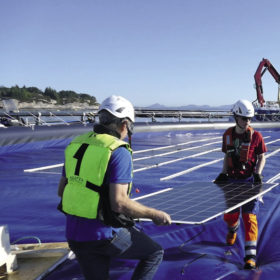
The long read: Floating PV’s watershed moment
With PV’s cost declines, the growing question is: where to put it all, particularly in densely populated areas. Ingenuity to the rescue – a technology that took its first steps in 2007 is entering full market maturity. And its potential is rather impressive.
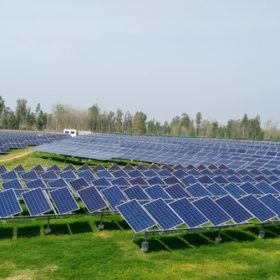
Asun Trackers and IIT Delhi design a solar tracker for Indian market
Pitched as a solution between dual-axis and single-axis trackers, the 2-axis solar tracker offers a yield increase comparable with dual-axis trackers at a significantly lower cost.
UPNEDA floats solar plus battery tender
Uttar Pradesh New and Renewable Energy Development Agency (UPNEDA) has invited bids for the supply, installation and commissioning of an aggregate 6 MW capacity of solar power generation projects along with LiFePo4 battery backup at various sites in Uttar Pradesh. Bidding closes on June 24.